

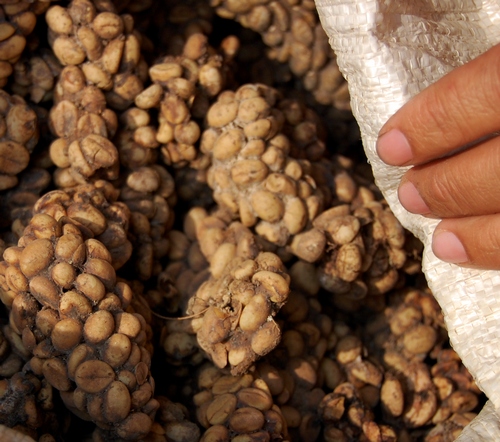
Scientists have finally cracked the code on why coffee beans plucked from civet droppings command eye-watering prices. The answer, it turns out, is surprisingly straightforward: fat.
A new study published in Scientific Reports reveals that beans harvested from the feces of Asian palm civets contain significantly higher levels of fats and flavor-enhancing compounds than their conventionally picked counterparts. The research offers the first concrete chemical explanation for why kopi luwak, as the coffee is known, can sell for more than $1,000 per kilogram.
The process itself sounds like something dreamed up by a caffeinated mad scientist. Wild civets eat ripe coffee berries, digest the fruit pulp, and excrete the beans. Farmers then collect the droppings, extract the beans, and sell them at astronomical prices. It’s been happening for over a century, yet nobody had definitively proven whether the journey through a civet’s gut actually changed the beans in any meaningful way.
A Chemical Journey Through the Digestive Tract
Palatty Allesh Sinu and his team spent January 2025 collecting 68 fecal samples from wild civets roaming five Robusta coffee estates in Karnataka, India. They also gathered regular ripe berries from the same estates for comparison. After cleaning and grinding both sets of beans, they ran them through chemical analysis.
The differences were stark. Civet beans packed significantly more total fat than manually harvested beans. They also showed elevated levels of two specific fatty acid methyl esters, or FAMEs: caprylic acid methyl ester and capric acid methyl ester. These compounds aren’t just chemical curiosities. They’re flavor powerhouses.
“The chemical differences in the civet coffee are a result of fermentation of the beans in the digestive system of the civets, and the differences likely affect the coffee’s final flavour.”
The higher fat content, the researchers explain, would reshape the coffee’s aroma and taste profile in fundamental ways. Meanwhile, those two FAMEs might contribute something unexpected: a creamy, dairy-like flavor note. It’s a chemical transformation that happens in darkness and warmth, somewhere between a civet’s stomach and its intestines.
The Roasting Question Remains
Before coffee enthusiasts start celebrating, though, the researchers offer two important caveats. First, they analyzed unroasted beans. Roasting is where coffee truly comes alive, where hundreds of chemical reactions create the complex flavors we recognize as coffee. How the civet beans’ unique chemistry survives that fiery transformation remains unknown.
“The authors caution that they analysed unroasted beans, and that the roasting process will further affect the beans’ chemical composition.”
Second, this study examined Robusta beans, the hearty but less prestigious cousin of Arabica. Most commercial kopi luwak uses Arabica beans, which have different baseline chemistry. Whether Arabica beans undergo similar transformations in a civet’s digestive system is an open question.
The findings also arrive at an ethically complicated moment for civet coffee. The industry’s explosive growth has led to widespread reports of civets being caged and force-fed berries, a far cry from the traditional practice of collecting beans from wild animals. This study, notably, used only samples from wild civets, though the researchers don’t explicitly address the ethical dimensions of the trade.
Still, the chemistry tells a story that’s hard to ignore. Whatever is happening inside those civets, it’s real, it’s measurable, and it’s affecting the beans in ways that might actually justify at least some of the premium. Whether that justifies the price tag is another question entirely, one that probably depends more on marketing and mystique than on fatty acid methyl esters.
For now, at least, we know this: the world’s most expensive coffee isn’t just expensive because of its unusual origin story. The poop, chemically speaking, actually matters.