

Key Takeaways
- Camaena cicatricosa contains a sugar molecule called CCG, which shows promise as a new anticoagulant.
- Traditional blood thinners like heparin work broadly but increase bleeding risks; CCG targets a specific enzyme complex, potentially minimizing that risk.
- In animal studies, CCG reduced thrombus formation without increasing bleeding, unlike existing anticoagulants.
- CCG’s unique structure with galactose side chains enhances its effectiveness, differing from current anticoagulants that often target antithrombin.
- Further research is needed to evaluate CCG’s safety and efficacy in humans, as clinical trials may take a significant amount of time.
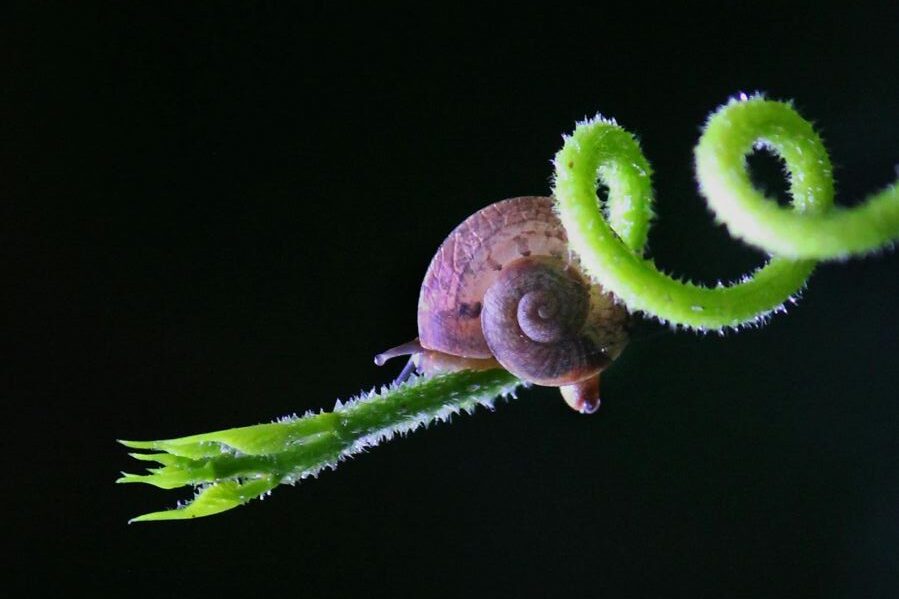
Camaena cicatricosa is not a glamorous creature. It moves slowly, carries a modest spiral shell, and spends most of its existence scraping algae from stone in the humid forests of southern China. But inside its soft body, biochemists at the Kunming Institute of Botany have found something rather remarkable: a sugar molecule that does what generations of cardiologists have been asking for, and that heparin, the most widely used blood thinner on Earth, has never quite managed.
Heparin has been saving lives since 1916. Originally extracted from dog liver, and now produced mainly from pig intestine, it prevents the clots that cause strokes, deep vein thrombosis, and pulmonary embolism. The problem is that it is not selective. Heparin thins blood the way a flooding river manages a fire: effective, but not precise. Patients taking it bleed more easily from minor injuries, surgical sites, even small skin cuts. The search for something better has been underway, in earnest, for several decades.
Mingyi Wu and colleagues at the Kunming Institute had been working through mollusk species systematically, looking for bioactive polysaccharides with useful properties. Earlier studies from the same group had found glycosaminoglycans, a broad family of complex sugars, with anti-inflammatory and wound-healing activity in slugs and other snails. None of those, it turned out, had anticoagulant properties worth pursuing. Camaena cicatricosa, a land snail, was on the list partly by chance and partly by the logic that gastropod biochemistry tends to be rich and undercharacterised.
The compound they isolated, which the team calls CCG (for Camaena cicatricosa glycosaminoglycan), has a heparin-like backbone. Same basic sugar architecture. But there are differences that matter considerably. CCG has galactose side chains that heparin lacks; it has a distinct sulfation pattern; and it is missing the specific pentasaccharide sequence that heparin uses to bind antithrombin, the protein through which most of heparin’s anticoagulant effects are mediated. These structural details are not footnotes. They determine, fairly precisely, what CCG can and cannot do inside the bloodstream.
Blood clotting is handled by two parallel systems running on slightly different triggers. When you cut yourself, the extrinsic pathway kicks in, initiated by tissue factor exposed at the wound site, producing a clot that seals the injury. The intrinsic pathway, triggered by things like bacterial molecules, free DNA, or polyphosphates, amplifies clot formation inside vessels, where it contributes mainly to pathological thrombus. Both pathways converge on the same downstream machinery, which is why anticoagulants that hit those common factors unavoidably interfere with normal wound healing.
This is the problem CCG apparently sidesteps. The molecule targets a specific enzyme complex (iFXase, assembled from two coagulation factors called FIXa and FVIIIa) that sits at the rate-limiting step of the intrinsic pathway. Crucially, FIXa and FVIIIa play a less central role in normal hemostasis than in pathological clotting, which is why researchers studying the intrinsic pathway have been increasingly convinced it offers a route to anticoagulants with a safer side-effect profile. CCG binds tightly to FIXa and reduces that protein’s affinity for FVIIIa; the enzyme complex fails to assemble; the amplification loop that drives thrombus growth is interrupted. The factors responsible for sealing actual wounds are untouched.
The animal studies, reported this week in ACS Central Science, bear this out. In rat models of deep vein thrombosis, CCG administered by injection reduced thrombus formation in a dose-dependent manner, with near-complete inhibition at 20 milligrams per kilogram. At comparable anticoagulant doses, heparin and enoxaparin significantly increased blood loss in a mouse tail-cut bleeding model; CCG, administered at five times the effective antithrombotic dose, did not increase bleeding at all. The antithrombotic effect tracked linearly with a standard measure of intrinsic pathway activity (activated partial thromboplastin time), suggesting the mechanism is working as the team hypothesised. The compound also reduced clot formation and clot incidence in a sepsis-enhanced thrombosis model, where endotoxin roughly doubles the rate of deep vein thrombosis; at 10 milligrams per kilogram, CCG cut that incidence from about two-thirds of animals down to less than one in ten.
The selectivity profile is what distinguishes this from earlier naturally derived anticoagulants, including the marine glycosaminoglycans from sea cucumbers and scallops that have attracted interest in recent years. Most of those work through antithrombin, putting them in essentially the same mechanistic category as heparin, with the same basic bleeding problem. CCG inhibits iFXase without involving antithrombin at all, something the team confirmed by testing it against a range of individual coagulation factors in the presence and absence of antithrombin. It had no meaningful effect on FXa and FIIa, the factors in the common pathway that heparin knocks down and that are most directly involved in hemostasis.
The authors are careful about what this means clinically, as they should be. CCG has been tested in rodent models; the pharmacokinetics, long-term toxicology, and dose translation to humans remain to be established. The molecule’s structure is also complex enough that understanding precisely which parts drive which activity, and whether a synthetic version can be built efficiently, will require significant chemistry. One iFXase inhibitor, a derivative of a marine glycosaminoglycan called dHG-5, has reached clinical trials, which at least suggests the target is real. Whether CCG proves more tractable than that compound remains to be seen.
What the discovery does demonstrate, perhaps as much as the specific molecule, is that mollusks are worth continued attention as sources of structurally unusual polysaccharides. The galactose side chains in CCG are, apparently, what drive its anticoagulant activity: when the team stripped away those branches, the resulting molecule was largely inactive. That is the kind of structural relationship that gets more interesting, not less, the longer you look at it. CCG works by a mechanism different enough from existing anticoagulants that it plausibly occupies therapeutic space none of them reach, particularly for patients in whom long-term anticoagulation currently carries unacceptable bleeding risk: the elderly, those with renal impairment, people with bleeding disorders who still need clot prevention.
A land snail, moving slowly across a wet rock somewhere in Yunnan Province, is not aware of any of this. But the chemistry it contains has been sitting there, available for inspection, since before the first human being thought to look.
DOI / Source: https://doi.org/10.1021/acscentsci.5c02230
Frequently Asked Questions
Most anticoagulants work by inhibiting clotting factors that are active in both pathological clot formation and the normal wound-sealing process. Heparin, for instance, blocks several factors shared by both systems, so reducing its effect on dangerous clots inevitably reduces the body’s ability to seal a cut. The intrinsic coagulation pathway, which drives clot amplification inside blood vessels, is more involved in thrombosis than in routine hemostasis, making it a more selective target.
Glycosaminoglycans, the class of sugar molecules CCG belongs to, are structurally complex polysaccharides that interact with a wide range of proteins, including coagulation factors. Many animals produce variants with distinct sugar sequences and chemical modifications, and those structural differences can translate into quite different biological activity. Heparin itself was originally derived from animal tissue, so the basic idea of sourcing anticoagulants from biological material has a long history.
In mouse and rat models, CCG prevented thrombus formation comparably to heparin while causing significantly less bleeding at equivalent anticoagulant doses. Whether that advantage translates to humans is still unknown; the pharmacokinetics and safety profile in clinical settings require further study. The more relevant claim is that CCG hits a mechanistic target that current drugs don’t, which could make it useful in patient groups where bleeding risk currently rules out long-term anticoagulation.
The intrinsic tenase complex (iFXase) is an enzyme assembly made up of two coagulation factors, FIXa and FVIIIa, that forms on activated platelet membranes and drives the amplification phase of clot formation inside blood vessels. It is the rate-limiting step in the intrinsic pathway, meaning clot growth largely depends on how much iFXase activity is present. Because this complex is less essential to normal wound-sealing than to pathological thrombosis, inhibiting it specifically offers a route to preventing dangerous clots without the same degree of bleeding risk.
CCG has cleared preclinical testing in rodent models, which is the first stage of a long development pathway. Establishing that it is safe and effective in humans would require toxicology studies, pharmacokinetic characterisation, and clinical trials, a process that typically takes a decade or more even for promising candidates. The structural complexity of the molecule also means that producing it reliably at scale will need significant chemical work. One comparable compound from a related molecule class has already entered clinical trials, which suggests the underlying target is credible.