

Key Takeaways
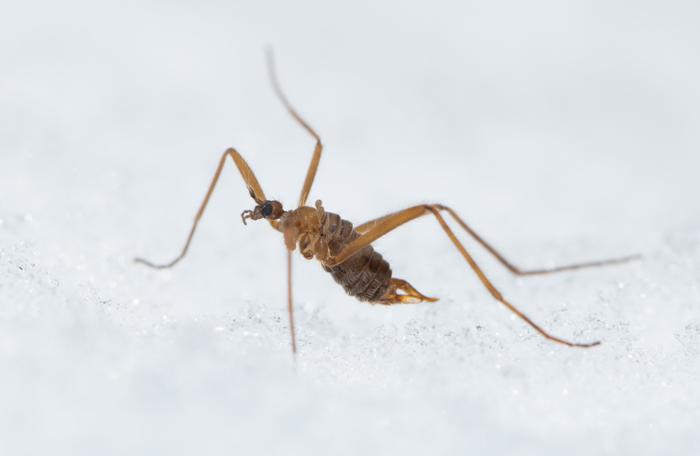
- Snow flies, specifically Chionea alexandriana, survive extreme cold through three main adaptations: antifreeze proteins, thermogenesis, and a blunted pain response.
- Their antifreeze proteins prevent ice crystal growth, while internal heat generation helps tolerate temperatures near the freezing point.
- Recent research at Northwestern University sequenced the snow fly’s genome, revealing unique adaptations compared to other cold-adapted insects.
- Experiments confirmed that snow flies generate heat internally when exposed to cold, suggesting novel physiological mechanisms.
- The findings may inspire new approaches to cryopreservation in medical applications through the use of antifreeze proteins.
The Arctic woolly bear caterpillar freezes solid each winter, sometimes ten or fifteen times, and simply thaws back to life each spring. The Antarctic midge survives dehydration severe enough to kill most other organisms. The Saharan silver ant tolerates body temperatures close to 50 degrees Celsius by foraging in short, precisely timed bursts. Insects have found a way into almost every thermal corner of the planet, and yet there remains a category of adaptation that should, by most biological logic, be unavailable to them: generating your own warmth and chemically suppressing the formation of ice inside your own body, simultaneously, as a small cold-blooded arthropod walking on snow in the middle of winter. That is, apparently, what the snow fly does.
A new study from Northwestern University, published this week in Current Biology, reports that Chionea alexandriana, a wingless crane fly found in the Cascade Mountains of Washington State and across the northern hemisphere, has evolved at least three overlapping strategies to remain active at temperatures down to about -6 degrees Celsius. The researchers sequenced the fly’s genome for the first time, compared it against related insects, and then tested their predictions in the laboratory, measuring the animal’s internal temperature during cold exposure and engineering fruit flies to carry one of its antifreeze proteins to demonstrate that it actually works.
Snow flies are not especially well studied. They were first described by a Swedish entomologist named Johan Wilhelm Dalman in 1816, who initially mistook one for a spider on a snow-covered path near his home. Adults emerge in autumn, spend the winter wandering the snow surface searching for mates, and then retreat to the subnivean zone, the compressed space between snowpack and ground, when temperatures drop too far. Dalman noted that the insect “almost in all respects seems to deserve the insect researcher’s particular attention,” which turned out to be rather prescient. There are at least 32 known species across the Holarctic region, most of them restricted now to mountainous areas where snow lingers. They prefer a temperature range of roughly 0 to -3 degrees Celsius and begin to die at around -7 degrees. The margin they live in is genuinely narrow.
Snow flies use at least three overlapping strategies: antifreeze proteins that bind to ice crystals and prevent them from growing, a capacity to generate brief bursts of internal body heat through cellular metabolism (similar to how mammals use brown fat), and a blunted pain response that allows them to tolerate the chemically damaging byproducts of running those metabolic pathways continuously.
Antifreeze proteins bind directly to the surface of ice crystals in body fluids, blocking crystal growth and lowering the effective freezing point of water. They were first discovered in Antarctic fish and have since been identified in beetles, midges, bacteria, and fungi. Snow flies appear to have evolved structurally similar proteins independently from those in Arctic fish, a striking case of convergent evolution across very different lineages.
Researchers implanted thermal probes into the thorax of live snow flies and size-matched crickets, then cooled both on a temperature-controlled plate. Snow flies remained measurably warmer than crickets during cooling in nine out of eleven tested pairs. Dead snow flies showed no such differential, confirming an active biological process rather than an artifact of tissue composition or thermal inertia.
Potentially. Antifreeze proteins that can be expressed transgenically, as demonstrated in the fruit fly freezing experiments, could have applications in preservation of cells, tissues, and transplant organs. The specific proteins identified in snow flies were not recognized by any existing database until structural prediction tools revealed their function, suggesting that other cold-adapted organisms may contain undiscovered cryoprotective molecules with similar potential.
What the Northwestern team wanted to understand was why that margin exists at all, and how the fly manages to function within it.
The genome, sequenced from a single male collected in the Cascades, turned out to be unexpectedly strange. Comparative analysis against related crane flies, mosquitoes, Drosophila, and the Antarctic midge Belgica antarctica (another cold-adapted insect, though with a very different lifestyle and much smaller genome) revealed 24 gene families that have specifically expanded in the Chionea lineage. Seven of those expansions involve enzymes active in the mitochondria and peroxisomes, the cellular organelles responsible for fat metabolism and energy production. Mitochondria in particular are the site of a well-characterised heat-generating process in mammals, in which the proton gradient used to synthesize ATP is instead allowed to leak, dissipating the energy as heat rather than chemical fuel. Brown adipose tissue in bears, rodents, and human infants runs on exactly this principle. The snow fly’s genome appears to encode a number of the regulatory proteins involved in that same thermogenic pathway, including expanded families of TMEM135, GADD45 gamma, and retinol dehydrogenases, all of which have been directly implicated in brown fat thermogenesis in mice.
Marco Gallio, the Soretta and Henry Shapiro Research Professor in Molecular Biology at Northwestern and one of the study’s senior authors, described the sequencing results with a certain degree of disbelief. “Initially, I thought we must have sequenced some alien species,” he said. “It’s very rare for an active gene, which makes a protein, to not have a match.” The genes that confounded the database searches turned out to be antifreeze proteins, expressed at very high levels. Some of them bear structural resemblance to antifreeze proteins in Antarctic fish, which bind to nascent ice crystals and prevent them growing, lowering the effective freezing point of water in the hemolymph. This kind of convergent evolution, the same molecular solution appearing independently in phylogenetically distant lineages, is the sort of thing that probably tells you something important about how cold a problem really is.
To confirm that the antifreeze protein actually functions as advertised, Matthew Capek, a graduate student in the Gallio lab and the study’s first author, engineered Drosophila to express one of the snow fly proteins, CaAFP-1, under a constitutive promoter. Normal fruit fly larvae placed at -10 degrees Celsius for three minutes have a survival rate of around 12 percent. Larvae expressing CaAFP-1 survived at roughly 55 percent. The protein works. Notably, its sequence had no meaningful homology to anything in the public databases; it was identified only because AlphaFold structural prediction revealed a beta-solenoid fold characteristic of insect antifreeze proteins. Sequence similarity searches, which underpin most genome annotation, had simply missed it.
The thermogenesis question required a different kind of experiment, and a rather laborious one given the circumstances. Snow flies are not available year-round, and even in season they are not abundant. Capek and Gallio collected flies from the Cascades and tested whether they could generate internal heat by implanting ultra-sensitive thermal probes into the thorax of both snow flies and size-matched crickets, placing each animal on a Peltier cooler in a cold room, and recording internal temperatures as the plate was chilled to -8 degrees Celsius. The cricket served as a thermal control, its body temperature tracking the plate closely since it has no cold-active physiology to speak of. In nine out of eleven snow fly-cricket pairs, the snow fly’s internal temperature was measurably higher than the cricket’s during cooling, by between 0.3 and 1.5 degrees Celsius. Dead snow flies showed no such differential. The effect is modest, lasts only a few minutes before decaying, and the animals showed no evidence of shivering or rapid muscle contractions. Marcus Stensmyr, a co-author from Lund University, was direct about the contrast with better-understood insect strategies: “Other insects, like bees and moths, shiver to increase their heat. But we found no evidence of shivering.” The heat, if it is indeed being produced, appears to come from within the cell rather than from muscular activity. Snow flies, of course, have no flight muscles; they lost their wings entirely at some point in their evolutionary history, which eliminates the most common insect heat-generating mechanism by default.
A one-degree burst lasting five minutes might seem trivial, but the geometry of the snow fly’s life makes it possibly significant. At -6 degrees, supercooled water in the hemolymph is close to the tipping point at which a single ice crystal can nucleate and then propagate explosively through the tissue. A brief period of slightly elevated internal temperature, produced on demand in response to rapid cooling, could plausibly delay that cascade long enough for the animal to find shelter. It is not thermoregulation in any mammalian sense. It is more like a last-resort buffer against a specific failure mode.
The third layer of the snow fly’s cold adaptation involves pain, or rather the absence of it. Cold exposure generates reactive oxygen species (ROS), damaging molecules that accumulate in cells under stress and, in most animals, activate a conserved irritant receptor called TRPA1. TRPA1 acts as a molecular alarm for noxious conditions; in humans it responds to chemical irritants, extreme temperatures, and oxidative stress. The team cloned the snow fly’s TRPA1 homolog and measured its sensitivity to hydrogen peroxide in patch-clamp recordings. The snow fly channel requires roughly 35 times the concentration of hydrogen peroxide to activate compared to its Drosophila counterpart, and a higher threshold than any other TRPA1 ortholog on record. The fly’s expanded peroxisomal and mitochondrial pathways, it turns out, produce hydrogen peroxide as a byproduct; running those pathways continuously would overwhelm a standard irritant receptor. Dialing down the channel’s sensitivity is perhaps the most economical solution.
The paper is careful not to overclaim on the thermogenesis side, where the evidence remains physiological rather than biochemical. The precise mechanism by which uncoupled respiration is regulated in the snow fly, if that is indeed what is happening, will require tissue samples and targeted biochemical work, and the animal’s rarity and seasonal availability make that difficult. What the study does establish is a coherent picture: antifreeze proteins to suppress ice crystal formation, a blunted pain response to tolerate the oxidative cost of high mitochondrial activity, and some form of endogenous heat production when conditions approach the lethal limit. These are not independent adaptations. They suggest a coordinated physiology built around the specific problem of being small, active, and ectothermic in a narrow thermal band just above the freezing point, where standard insect strategies (dormancy, diapause, freeze tolerance) were simply abandoned in favor of something else entirely. What “something else” turns out to look like, at the molecular level, is an insect genome that went looking for solutions in the thermal biology of mammals and fish, and apparently found some.
Whether similar strategies are operating quietly in other cold-active insects, species that have not yet had their genomes sequenced or their internal temperatures measured, remains an open question. The snow fly is not the only insect active in winter. It may, however, be the one most willing to push the boundary of what the category allows.