

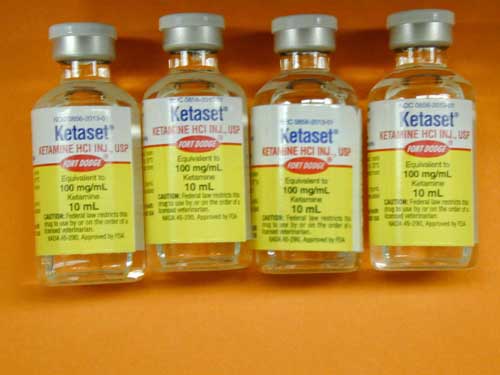
Deep in the prefrontal cortex, a small population of neurons is doing something that shouldn’t be happening. Under chronic stress, these cells (called somatostatin interneurons) grow larger, extend more synaptic connections, and clamp down on the surrounding circuitry with increasing force. The result is a kind of neural silencing: the prefrontal cortex, a region critical to emotion regulation and decision-making, goes quiet. Not because its principal cells are broken, exactly, but because they’re being held down. When researchers at Weill Cornell Medicine looked closely at what ketamine actually does in the brain, they found something that cuts through decades of assumptions about how the drug works: it briefly releases that grip. And that release, lasting maybe 15 to 20 minutes, appears to be enough to set an entire recovery process in motion.
Two studies published this spring, both from overlapping teams at Weill Cornell, offer what may be the clearest picture yet of ketamine’s antidepressant mechanism, and a roadmap toward drugs that could achieve the same effect without the dissociation, the blood pressure swings, and the addiction risk that make ketamine a complicated treatment to offer patients.
Tracing the Mechanism to a Single Cell Type
For years, the standard explanation for ketamine’s rapid antidepressant effects centered on NMDA receptors, the ion channels it blocks when used as an anesthetic. That story was never entirely satisfying. Block NMDA receptors with other drugs and you don’t get the same antidepressant response. Then came a series of human studies (and, later, converging animal data) suggesting something else was also going on: block opioid receptors in patients receiving ketamine and the antidepressant effect disappears. Which implied ketamine was working, at least partly, through the opioid system. The question was where, and how, and which opioid receptors mattered.
The Weill Cornell team, led by Conor Liston and Joshua Levitz, traced the answer to a surprisingly specific location. Mu-opioid receptors on the somatostatin interneurons. In mice, these interneurons showed robust responses to MOR stimulation while surrounding pyramidal neurons did not. More importantly, the team showed that when they knocked out MOR signaling specifically in the somatostatin interneurons of the prefrontal cortex, ketamine’s behavioral effects vanished entirely.
The picture that emerged is almost mechanical in its elegance. Chronic stress causes those interneurons to bulk up their presynaptic boutons (the little bulbs from which inhibitory signals are released) and to fire with increasing enthusiasm. They effectively suppress the pyramidal neurons beneath them. Ketamine, acting as a weak partial agonist at the mu-opioid receptors on these cells, briefly quiets them. “Ketamine targets these opioid receptors,” Levitz said, “relieving inhibition by the interneurons and reactivating prefrontal cortex cells for a very brief period of time, maybe only for 15 or 20 minutes. That seems to be enough to kickstart this whole program of cortical reawakening.”
What happens during those 15 minutes, though, is doing a lot of work. The prefrontal cortex, temporarily freed from suppression, begins rebuilding connections. Dendritic spines, the tiny protrusions through which neurons receive signals, start to recover in both the prefrontal cortex and the hippocampus. Within 24 hours, the behavioral effects persist long after the drug itself has cleared. The interneuron brake has been lifted briefly, but the cortex seems to remember.
Two Phases, Two Studies
The second study (published in Science Advances on May 1st) looks at what sustains those longer-term effects. Here the Weill Cornell group, with Francis Lee’s laboratory now involved, confirmed a role for a receptor called mGluR5 in maintaining ketamine’s antidepressant action. When ketamine and other antidepressants trigger the release of a growth-promoting protein called BDNF, it sets off a cascade: the TrkB receptor activates and interacts with mGluR5, collectively strengthening synaptic connections. “Ketamine was always known to target different receptors, called NMDA receptors, in the brain,” Lee said. “Finding that mGluR5 receptors are involved in ketamine’s antidepressant effects is novel.” The interaction also, usefully, removes some mGluR5 receptors from the cell surface, a built-in brake on over-signaling that might otherwise destabilize the very connections being restored.
The implication is that ketamine appears to work in two phases. An initial, opioid-dependent burst of cortical reactivation. Followed by a slower, BDNF-mediated strengthening of synaptic connections that requires both TrkB and mGluR5. The first phase is brief and depends on hitting a very specific cellular address. The second phase is where the lasting changes consolidate. Researchers in Lee’s group are now exploring whether combining low doses of existing mGluR5-targeting drugs with low-dose ketamine might preserve the sustained phase while reducing the side effects associated with a full ketamine infusion.
A Roadmap to Something Safer
The more immediately striking clinical prospect, though, comes from the Cell paper. Having identified the somatostatin interneurons as the key initial target, the Weill Cornell team used RNA sequencing to scan the gene expression profiles of those specific cells for other drug-accessible receptors. They found 44 candidate G protein-coupled receptors enriched in the somatostatin interneuron population, receptors for which, in many cases, existing compounds already exist. They then designed a three-drug cocktail (combining a partial mu-opioid agonist with a serotonin receptor agonist and a glutamate receptor modulator), each at doses too low to produce behavioral effects on their own. Together, the combination reproduced ketamine’s antidepressant-like effects in mice with a markedly different side effect profile: no motor problems on the rotarod, no working memory disruption in the maze tasks, and, perhaps most significantly, no conditioned place preference, the standard preclinical measure of abuse liability. “This synergistic strategy could produce rapid antidepressant effects at much lower doses of each compound,” Liston said. “By avoiding higher doses, we can avoid side effects.”
The logic here is almost pharmacological judo: rather than hitting one target hard and hoping the wanted effects outweigh the unwanted ones, hit several targets softly and let them cooperate. Each receptor is expressed in multiple cell types across the brain, so a full dose of any single drug recruits the wrong populations. Low doses of several drugs, all enriched in the somatostatin interneurons, are more likely to engage specifically the cells you want. Liston’s group is preparing a clinical trial to test whether this approach translates, using compounds that are already approved or have established human safety data, which could meaningfully compress the development timeline. “If that’s true, we could get these new therapies to patients on an accelerated timeline,” he said.
About one third of people with depression never find adequate relief from existing medications. Ketamine helps some of them, sometimes dramatically, but the delivery, the monitoring requirements, the cost, the dissociation, and the addiction potential mean it reaches only a fraction of those who might benefit. The questions that Lee framed at the close of this work are the ones that will shape what comes next: whether circuit mechanism-guided drug design can do what decades of monoamine-focused pharmacology could not, and whether the prefrontal interneurons that depression quietly hijacks can be coaxed, by something safer than ketamine, into letting go.
Frequently Asked Questions
Why does ketamine work so much faster than regular antidepressants?
Standard antidepressants take weeks because they work indirectly, gradually adjusting serotonin or noradrenaline levels and waiting for downstream changes to accumulate. Ketamine appears to work by briefly silencing a specific population of inhibitory neurons in the prefrontal cortex, which allows the surrounding circuitry to reactivate almost immediately. That initial burst of activity seems to trigger a cascade of synaptic strengthening that persists long after the drug clears. The precise cellular address matters: ketamine reaches specific opioid receptors on these interneurons and nowhere else, which is why it produces effects in minutes rather than months.
What’s the problem with just using ketamine for everyone with treatment-resistant depression?
Ketamine is genuinely effective for some patients, but it carries real risks that limit its use. Dissociative effects, changes in blood pressure and heart rate, and addiction potential mean it requires supervised clinical settings and can’t simply be prescribed as a take-home medication. Its antidepressant effects also tend to fade within days or weeks, requiring repeated infusions. The research emerging from Weill Cornell suggests these side effects stem from ketamine hitting far more than its intended neuronal target, which is precisely the problem the new drug-cocktail approach is designed to solve.
How does chronic stress actually change the brain in depression?
One mechanism identified in this research involves the somatostatin interneurons of the prefrontal cortex becoming physically larger and more active under chronic stress. Their presynaptic terminals grow, they release more inhibitory signals, and the pyramidal neurons they contact become increasingly suppressed, quieting the region involved in emotional regulation and decision-making. Simultaneously, those pyramidal neurons lose dendritic spines, the small protrusions through which they receive incoming signals. The new research suggests this pattern of over-inhibition from above and structural shrinkage from within is a core feature of stress-induced depression, and ketamine’s value lies in briefly disrupting that inhibition to allow recovery to begin.
Could this research lead to antidepressants that don’t cause dissociation?
That is precisely the goal of the clinical trial Liston’s group is preparing. The three-drug cocktail tested in mice reproduced ketamine’s behavioral effects while showing no signs of motor impairment, memory disruption, or addiction-related behavior in preclinical assays. The key is that none of the three drugs is a full-dose ketamine analogue: each targets a receptor enriched in the relevant interneurons, at doses too low to engage those receptors in other brain areas where side effects originate. Whether this specificity holds in human biology is the question the clinical trial is designed to answer, using compounds that already have human safety data.
Is this research saying ketamine is actually an opioid?
Not exactly, though the distinction is nuanced. Ketamine does appear to bind and partially activate mu-opioid receptors, but it does so very weakly compared to drugs like morphine, and through a different molecular mechanism (it doesn’t trigger the internalization pathway that drives tolerance and dependence in classical opioids). The Weill Cornell research doesn’t resolve the long-running debate over whether ketamine acts directly at these receptors or indirectly by promoting release of the brain’s own opioid-like molecules, and researchers are candid that both mechanisms probably contribute. What the research does establish clearly is that blocking opioid receptors abolishes ketamine’s antidepressant effects, which makes the opioid system an unavoidable part of the story even if ketamine itself isn’t a conventional opioid.
Source: Munguba et al., Cell, 2026