

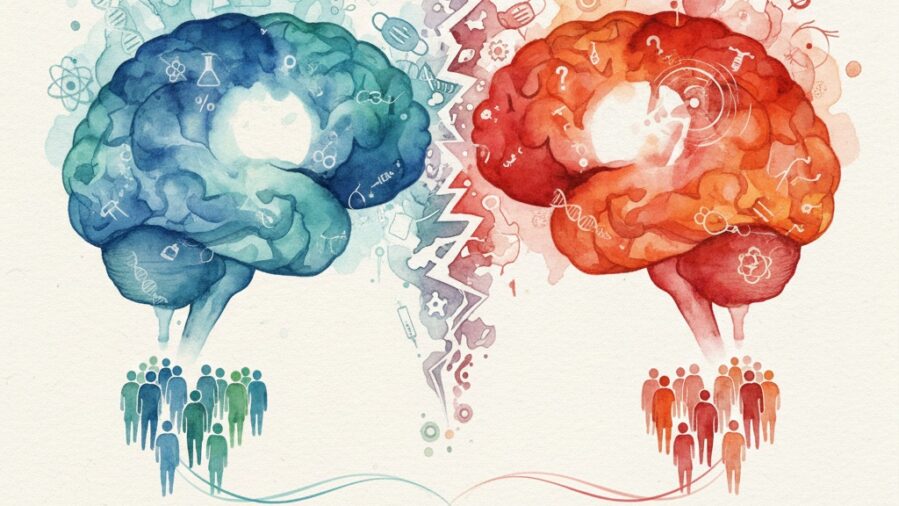
A new survey of more than 6,000 American adults reveals a striking pattern: while most people trust scientists for cancer information, political ideology creates a clear divide in how much. The findings show trust levels dropping from 94% among very liberal respondents to 71% among very conservative ones.
Researchers from Temple University and the University of Texas analyzed data from the Health Information National Trends Survey, a nationally representative study conducted by the National Cancer Institute. The survey ran from March through September 2024, smack in the middle of a presidential election year and amid ongoing debates about scientific authority.
The overall numbers look reassuring. Eighty-six percent of respondents reported having “some” or “a lot” of trust in scientists as sources of cancer information. But drill down into the political breakdown and a different picture emerges.
The Conservative Trust Gap
Lead author Christopher Wheldon and his colleagues measured political views on a seven-point scale from very liberal to very conservative. For each one-point shift toward conservatism, the odds of reporting high trust in scientists dropped 25%.
“Individuals with more conservative political ideologies will report significantly lower levels of trust in scientists as sources of cancer information compared with individuals with more liberal political ideologies,” the researchers wrote, confirming their primary hypothesis.
The study controlled for age, education, family cancer history, and trust in doctors. Even after accounting for these factors, the political gradient held steady. Older adults showed somewhat lower trust regardless of ideology. College graduates reported higher trust. And people who trusted their doctors for cancer information were far more likely to trust scientists too, which suggests credibility can transfer from your oncologist to the broader research community.
What explains the gap? The researchers point to broader political polarization in American life, accelerated by pandemic-era conflicts over vaccines, masks, and public health mandates. Conservative skepticism toward some health interventions predates COVID-19, but recent years have sharpened ideological divisions around scientific authority itself.
Implications for Cancer Communication
The findings carry practical consequences for public health officials trying to reach Americans with information about cancer screening, prevention, and treatment. If nearly 30% of very conservative adults approach scientists with skepticism, standard communication strategies will miss them entirely.
“Effective communication requires more than information dissemination,” the authors argue, suggesting that scientists must “avoid hierarchical dynamics, emphasize cooperation, and foster supportive dialogue” to build trust across ideological lines.
The researchers recommend identifying trusted messengers who can connect with politically diverse audiences. That might mean partnering with community leaders, faith organizations, or local figures who command respect across the political spectrum. They also emphasize compassion-based messaging that acknowledges fears rather than dismissing concerns.
National Cancer Institute-designated Cancer Centers already have a mandate to reduce cancer burden through outreach and education in their regions. This study suggests those efforts need to account for political context, not just demographic factors like age, race, or income.
The study has limitations worth noting. The 27% response rate raises questions about who chose to participate and who didn’t. Single-item measures of trust and political ideology may oversimplify complex attitudes. And the cross-sectional design captures only a snapshot during a particularly polarized moment.
Still, the core finding stands. Scientists remain broadly trusted on cancer information, even among conservatives. That 71% trust level among the most conservative respondents isn’t a crisis. It’s a foundation, assuming researchers and public health officials are willing to meet people where they are.