

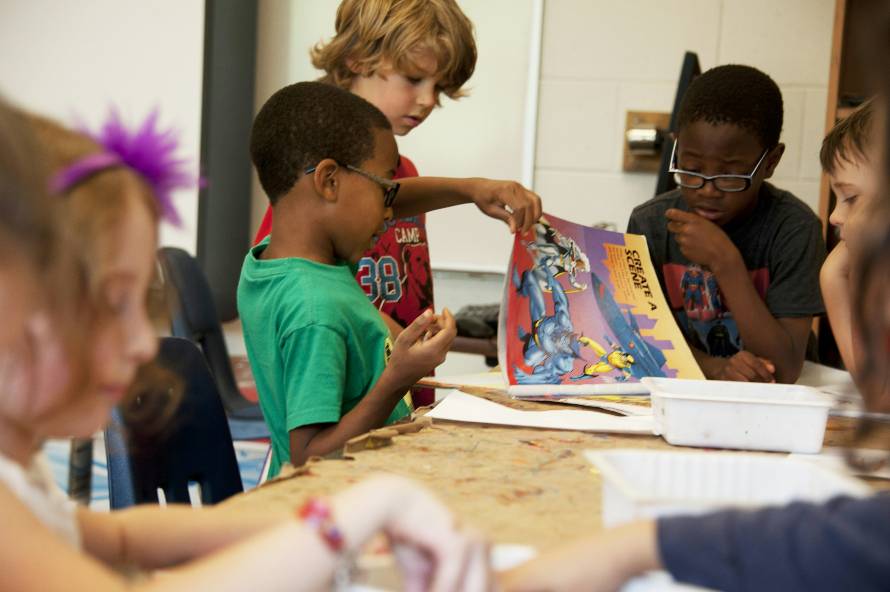
THE Norwegian classroom looks much the same as any other; small desks, colourful posters, windows letting in weak winter light. But probe beneath the surface and you’ll find something rather unexpected: a biological mismatch between how schools operate and what roughly half the students actually need.
Girls are happier at school than boys. This isn’t opinion or stereotype, it’s data from 1,620 Norwegian children aged six to nine, and the pattern is consistent across every measure researchers examined. “Girls are happier than boys,” says Professor Hermundur Sigmundsson at the Norwegian University of Science and Technology. “This applies both in class and at school in general.”
The gap isn’t subtle. When asked how they feel at school, girls scored significantly higher. When asked how much they like their class, girls scored higher again. The difference persists whether you’re measuring general wellbeing, subject preferences, or perceived competence – girls, it seems, find the whole enterprise more congenial.
Why so? The answer might lie not in psychology but in biochemistry.
Girls derive more dopamine, that somewhat inaccurately named “happiness hormone,” through social relationships and being together. Boys obtain more of their dopamine through self-focused behaviour. Add to this that boys have higher testosterone levels, creating a greater need for physical activity, and you start to see the problem. Long school days spent sitting still simply don’t suit boys’ neurochemistry. It’s a bit like asking fish to climb trees and then wondering why they seem less enthusiastic than the squirrels.
“It can be said that school is better suited for girls,” Sigmundsson says. “This may have biological causes, among other things.”
The study, published in the European Early Childhood Education Research Journal, examined children in grades one through four across 17 primary schools in Norway during autumn 2023, using emoji-based scales to gauge everything from how safe children feel at recess to whether they reckon they’re any good at maths. Because even seven-year-olds have surprisingly firm opinions about their mathematical prowess. Overall, the children reported high levels of wellbeing and safety (scoring above four on a five-point scale), but the gender differences emerged consistently across multiple domains.
Girls reported greater enjoyment of reading and science. Boys preferred physical education and felt more confident in maths.
What’s particularly interesting is the correlation between feeling safe and feeling happy – ranging from moderate (.29 between having friends and liking your class) to strong (.57 between feeling safe at school generally and feeling safe at recess specifically). “We find a significant correlation between well-being and all the questions we asked,” Sigmundsson notes. “Enjoying school and feeling safe at school are strongly connected.” The architecture of happiness, it seems, rests on a foundation of security.
There’s also a tight relationship between liking subjects and performing well in them, correlations hovering around .47 to .56 depending on the subject. Whether enjoyment breeds competence or competence breeds enjoyment remains uncertain (probably both), but the connection is robust. “Here we found a strong connection between liking subjects and doing well,” Sigmundsson says. “This was true for in reading, maths, science and physical education.”
Perhaps most telling: students who enjoy reading and those who enjoy physical education appear to be almost entirely different populations. “We only find a weak correlation between feeling good about reading and physical education,” Sigmundsson observes. The bookworms and the athletes, it seems, occupy separate developmental niches.
The findings align with broader research showing Norwegian boys report poorer relationships with teachers and peers compared to girls, and perceive school as more unfair. Which raises an awkward question: if we’re designing an education system that systematically disadvantages half the population based on their biology, shouldn’t we perhaps redesign the system rather than simply documenting the casualties?
Sigmundsson’s recommendation is straightforward: more physical activity and what he calls “passion class” every day – essentially giving students time to pursue practical-aesthetic activities like music, chess, or dance that they actually choose themselves. The approach, inspired by Iceland’s “Ignition Project,” aims to increase autonomy and wellbeing simultaneously. Early results suggest it works for everyone, not just the fidgeting boys.
The study also revealed that wellbeing declines as children progress from first to fourth grade – a pattern that continues into adolescence across various countries. Younger children scored higher on both “How are you feeling at school?” and “How much do you like your class?” The reasons remain somewhat murky (probably a combination of increasing academic pressure and the gradual erosion of childhood optimism), but the trend underscores the need for sustained support rather than assuming that initial enthusiasm will somehow maintain itself.
What emerges from this research isn’t a simple story about boys being disadvantaged or girls being advantaged. Rather, it’s about recognising that different neurochemistries require different environmental conditions to flourish. The traditional classroom – sedentary, socially focused, heavy on reading and writing – happens to align well with female neurobiology while creating friction with male neurobiology. That’s not girls’ fault, and it certainly isn’t boys’ fault. It’s just biology meeting architecture, and the current architecture could use some renovation.
Study link: https://www.tandfonline.com/doi/full/10.1080/1350293X.2025.2586675