

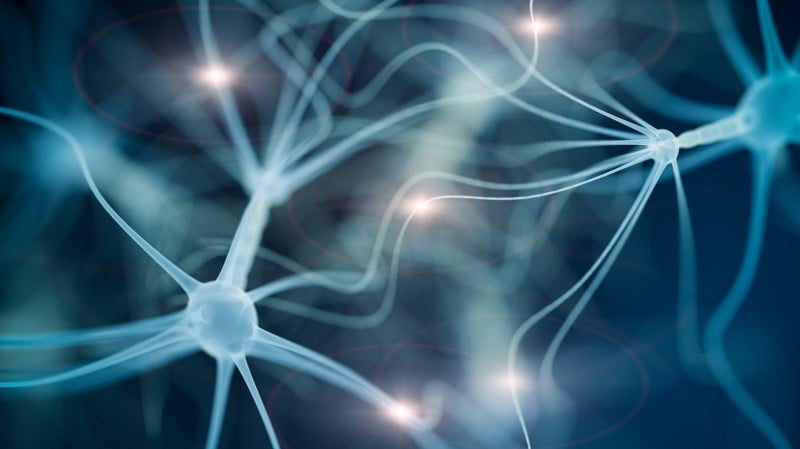
Sarah Kim watched the neurons on her screen, some glowing brightly with toxic protein clumps, others somehow pristine despite the same genetic mutation. After years studying Alzheimer’s disease, the UCLA Health neuroscientist knew this wasn’t random; some brain cells possessed an invisible shield against tau, the protein that forms the devastating tangles that kill neurons and steal memories. The question was: what made them different?
Now, a collaboration between UCLA Health and UC San Francisco has cracked that mystery. Using cutting-edge CRISPR gene-editing technology, researchers systematically tested nearly every gene in the human genome to identify what protects vulnerable neurons from tau accumulation. The work, published in Cell, reveals a previously unknown cellular defense system, a protein complex called CRL5^SOCS4^ that tags toxic tau for destruction before it can kill the cell.
“We wanted to understand why some neurons are vulnerable to tau accumulation while others are more resilient,” says Dr Avi Samelson, assistant professor of neurology at UCLA Health and the study’s first author. His team didn’t just find one protective mechanism—they found over 1,000 genes that influence tau levels in neurons, revealing an intricate cellular ecosystem that determines which brain cells survive and which succumb to disease.
The discovery matters because tau tangles are the hallmark of Alzheimer’s and several other dementias affecting millions globally. While we’ve known for decades that tau clumps kill neurons, we’ve never understood why certain brain regions, and specific types of neurons within them, bear the brunt of the damage while neighbouring cells remain unscathed. This selective vulnerability has frustrated attempts to develop effective treatments.
Samelson’s team took lab-grown human neurons carrying an actual disease-causing tau mutation and used CRISPRi technology to methodically knock down individual genes, watching what happened to toxic tau levels. Among the thousand-plus genes they identified, the CRL5^SOCS4^ complex emerged as a master regulator. This protein machinery attaches molecular “eat me” signals to tau proteins, marking them for destruction by the cell’s recycling system called the proteasome.
The team then examined brain tissue from deceased Alzheimer’s patients—and found something striking. Neurons with higher expression of CRL5^SOCS4^ components were significantly more likely to survive despite tau accumulation around them. In other words, cells that ramped up this defense system could resist the disease even when surrounded by pathology.
But the research revealed an unexpected second discovery. When the scientists disrupted mitochondria—the cellular powerhouses that generate energy—they triggered production of a specific tau fragment about 25 kilodaltons in size. This fragment closely resembles NTA-tau, a biomarker found in the blood and spinal fluid of Alzheimer’s patients that’s emerging as one of the most accurate predictors of disease progression.
“This tau fragment appears to be generated when cells experience oxidative stress, which is common in ageing and neurodegeneration,” Samelson explains. The stress reduces efficiency of the proteasome, causing it to improperly chop up tau proteins. The researchers demonstrated that this abnormal fragment changes how tau clumps together in test tubes, potentially accelerating disease progression.
The findings provide multiple promising leads for drug development. Therapies that enhance CRL5^SOCS4^ activity could help neurons clear tau more effectively. Strategies to maintain proteasome function during cellular stress might prevent formation of toxic tau fragments. And because the research identified several unexpected pathways—including a protein modification system called UFMylation and enzymes involved in building cellular membrane anchors—pharmaceutical companies now have a roadmap of potential drug targets.
What makes the work particularly powerful is the systematic approach. Previous studies might identify one or two protective factors through educated guessing. By screening the entire genome in actual human neurons, Samelson’s team captured the full complexity of cellular defense mechanisms. They found that genes controlling autophagy (the cell’s waste disposal system), mitochondrial function, and protein degradation all influence tau levels,often in interconnected ways.
The research also highlights how oxidative stress and mitochondrial dysfunction, hallmarks of brain ageing, directly impact tau processing. This connection helps explain why Alzheimer’s risk increases so dramatically with age, and why maintaining mitochondrial health might delay disease onset.
Analysis of the Seattle Alzheimer’s Disease Brain Cell Atlas revealed that CUL5 expression correlated with neuronal resilience across multiple cell types, not just in Alzheimer’s but in frontotemporal dementia and progressive supranuclear palsy as well. Higher expression of CUL5 and its partner protein ARIH2 was significantly associated with neuronal survival in brain regions under attack from tau pathology.
The findings don’t promise immediate treatments—translating laboratory discoveries into therapies typically requires years of additional research, including determining how to safely boost CRL5^SOCS4^ activity without disrupting its many other cellular roles. The protein complex regulates hundreds of substrates beyond tau, so enhancing it indiscriminately could cause serious side effects.
But for the first time, researchers have a comprehensive map of the cellular factors that determine neuronal fate in tauopathies. They know which neurons are most vulnerable, which molecular pathways protect them, and how oxidative stress tips the balance toward disease. That knowledge transforms drug development from shooting in the dark to targeting specific, validated mechanisms that actually operate in human brains.
Perhaps most importantly, the research demonstrates the power of human cellular models. By using neurons derived from stem cells—rather than relying solely on mouse models that don’t perfectly recapitulate human disease—Samelson’s team ensured their findings reflect mechanisms actually relevant to human patients. “These cells naturally have differences in tau processing, giving us confidence that the mechanisms we identified are relevant to human disease,” he notes.
The work was funded by the Rainwater Charitable Foundation/Tau Consortium, the National Institutes of Health, and other sources, reflecting growing recognition that understanding selective neuronal vulnerability is key to defeating Alzheimer’s and related dementias.
Study link: https://www.cell.com/cell/fulltext/S0092-8674(25)01487-4