
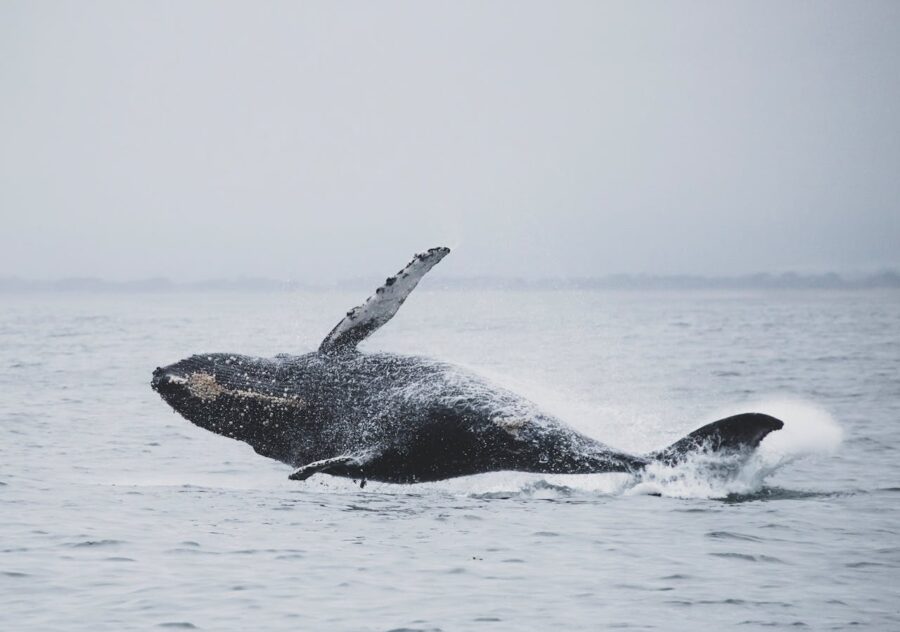
Researchers hovering consumer drones over whale blowholes in northern Norway have detected cetacean morbillivirus circulating in Arctic waters for the first time – a pathogen linked to mass strandings of whales and dolphins worldwide since its discovery in 1987. The approach marks a shift toward non-invasive health surveillance for marine mammals in regions where traditional sampling methods prove difficult or dangerous.
Between 2016 and 2025, teams equipped off-the-shelf drones with sterile Petri dishes and piloted them through the exhaled spray of humpback, sperm, and fin whales across the Northeast Atlantic. The collected respiratory droplets, along with skin biopsies and one organ sample from a stranded pilot whale, underwent molecular screening for infectious agents. The virus turned up in multiple humpback whale groups, one visibly unhealthy sperm whale, and the stranded pilot whale – all sampled above the Arctic Circle.
Why This Virus Worries Marine Biologists
Cetacean morbillivirus attacks the respiratory and neurological systems of whales, dolphins, and porpoises while simultaneously compromising their immune defenses. The strain found in Norwegian waters was first identified in dolphins, raising questions about how the pathogen moves between species and geographic regions. Since 1987, the virus has triggered several mass mortality events in cetacean populations, though researchers still don’t fully understand transmission patterns or what environmental conditions amplify outbreaks.
The timing concerns scientists because Arctic whales congregate densely during winter feeding seasons – precisely when respiratory pathogens spread most efficiently. These aggregations also draw seabirds and human observers, creating potential interaction points that complicate disease dynamics. Herpesviruses showed up in humpback whales across Norway, Iceland, and Cape Verde, though avian influenza and Brucella bacteria – both previously linked to strandings – were absent from samples.
“Drone blow sampling is a game-changer,” Professor Terry Dawson from King’s College London explains. “It allows us to monitor pathogens in live whales without stress or harm, providing critical insights into diseases in rapidly changing Arctic ecosystems.”
Surveillance in a Warming Ocean
The technique itself is surprisingly straightforward. Consumer drones hover above surfacing whales, positioning sterile collection dishes directly in the path of exhaled breath spray. Each blow contains respiratory droplets loaded with cells, mucus, and potentially viral or bacterial genetic material. Back in the lab, molecular tests screen for known pathogens, building a real-time picture of what’s circulating in whale populations without requiring physical contact or capture.
Traditional whale health monitoring relies on stranded animals or invasive tissue sampling from live individuals – methods that miss early disease signals and stress already vulnerable populations. The drone approach flips this dynamic, enabling routine screening during normal behavior patterns. For Arctic regions where warming waters are already reshaping marine ecosystems, baseline pathogen data becomes essential for distinguishing natural disease patterns from climate-driven changes.
Lead author Helena Costa from Nord University points to continued surveillance as the next priority. Understanding how emerging stressors – warming temperatures, shifting prey availability, increased human activity – interact with pathogens like morbillivirus will shape conservation responses over the coming decades. The virus itself may have been present in Arctic waters before detection, but the ability to monitor systematically offers a chance to track changes as they unfold rather than documenting them after mass strandings occur.
The research, published in BMC Veterinary Research, involved collaboration between King’s College London, Nord University, The Royal (Dick) School of Veterinary Studies, UiT-The Arctic University of Norway, the University of Iceland, and BIOS-CV in Cape Verde. Funding came from King’s College London and the Research Council of Norway.
Discover more from Wild Science
Subscribe to get the latest posts sent to your email.