

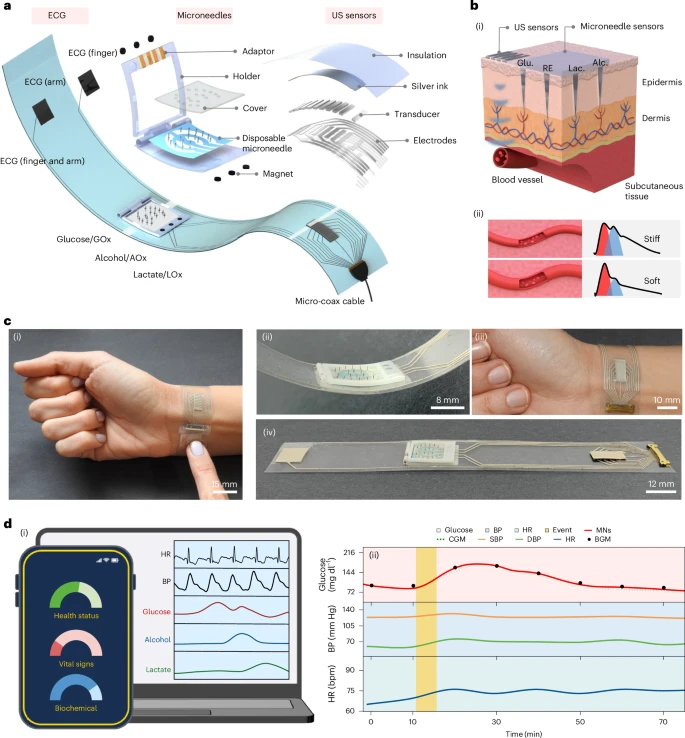
A flexible wristband that simultaneously monitors blood sugar, cardiovascular signals, and alcohol levels could transform diabetes management by providing the comprehensive health data that single-glucose monitors miss.
The device, developed at UC San Diego, uses painless microneedles to continuously measure glucose, lactate, and alcohol in the fluid beneath the skin, while ultrasound sensors track blood pressure and arterial stiffness in real time. In tests with healthy participants and people with prediabetes, the wristband matched commercial devices with accuracy rates exceeding 96% while revealing previously hidden connections between daily activities and health.
Beyond Blood Sugar Monitoring
“Comprehensive and effective management of diabetes requires more than just a single glucose reading,” explains An-Yi Chang, a postdoctoral researcher who co-led the development. Diet, exercise, stress, and alcohol all influence blood sugar and heart health in complex ways that traditional monitors cannot capture.
The wristband addresses a critical gap: while diabetes significantly increases cardiovascular disease risk, current continuous glucose monitors provide no information about heart health. People with diabetes face double the risk of heart disease, yet they rarely receive continuous cardiovascular monitoring outside clinical settings.
How the Technology Works
The system integrates multiple sensing technologies on a single flexible platform:
- Microneedle array (800 micrometers long) penetrates the skin’s surface to sample interstitial fluid
- Three different enzymes embedded in the needles react with glucose, lactate, and alcohol
- Ultrasound transducers measure blood pressure by tracking arterial diameter changes
- ECG sensors detect heart rate from wrist pulses
- All sensors transmit data wirelessly to a smartphone or computer
The microneedle array can be replaced easily, allowing users to customize wear periods and minimize skin irritation—a common problem with long-term sensor use.
Real-World Performance
During testing, the wristband revealed how different activities affect multiple health markers simultaneously. When participants consumed sugary drinks, glucose levels rose as expected, but the device also captured accompanying increases in blood pressure (from 110/62 to 129/78 mmHg) and heart rate (from 58 to 71 bpm).
More striking were the differences between healthy participants and those with prediabetes. After meals, people with prediabetes showed not only higher glucose spikes but also elevated lactate levels that took over 60 minutes to return to baseline—compared to 30 minutes in healthy individuals. Their blood pressure remained approximately 10 mmHg higher throughout daily activities.
Arterial Stiffness: The Hidden Metric
A unique feature not found in other wearables is the measurement of arterial stiffness through the augmentation index (AIx). This metric, calculated from blood pressure waveforms, indicates vascular health and cardiovascular risk.
The researchers found that fasting improved arterial elasticity (AIx decreased from 0.26 to 0.37), potentially reducing cardiovascular risks. Exercise also temporarily reduced arterial stiffness, with effects varying based on fitness level. These insights could help people with diabetes understand how lifestyle choices affect their vascular health in real time.
Alcohol Monitoring Reveals Individual Variations
The alcohol sensor demonstrated remarkable individual differences in response to drinking. A non-drinker showed significant cardiovascular changes after one glass of wine—blood pressure increased from 78 to 109 mmHg and heart rate rose from 62 to 70 bpm. The same amount barely affected a regular drinker’s vital signs.
This personalized response data could be crucial for people with diabetes, who face higher hypertension risk even from moderate alcohol consumption.
Future Implications
The research team envisions expanding the platform to monitor additional markers like insulin and cortisol, while incorporating machine learning to predict health events before they occur. Solar or sweat-powered versions could eliminate battery concerns.
For the 537 million people worldwide living with diabetes, this technology represents a shift from reactive to proactive health management. By revealing the hidden connections between daily choices and physiological responses, the wristband could enable more personalized and effective diabetes care.
The study appears in Nature Biomedical Engineering.