

A divorce during infancy does not just disrupt family routines. According to new research, it may also rewire a child’s immune system in ways that triple their odds of developing psoriasis years or even decades down the road.
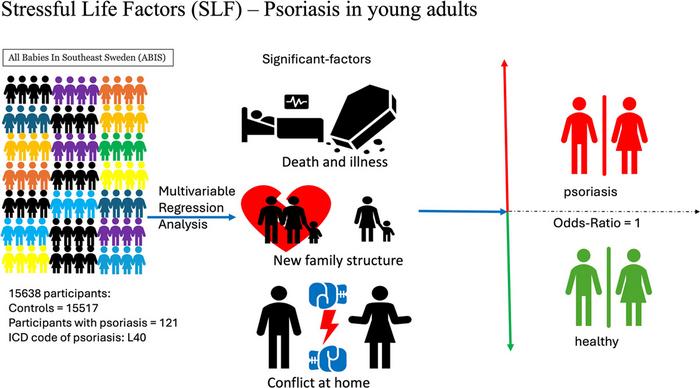
The finding comes from a longitudinal study tracking more than 17,000 Swedish children from birth through early adulthood, published in the Journal of Investigative Dermatology. Among the cohort, 121 participants eventually developed psoriasis, a chronic autoimmune condition that causes red, scaly patches on the skin. When researchers examined what set these individuals apart, one pattern emerged with startling clarity: severe family disruptions in the first 12 months of life, such as parental separation, divorce, or the death of a family member, correlated with a threefold increase in psoriasis risk later on.
The timing matters. Stress experienced at ages three, five, or eight showed no such association. Only that narrow window right after birth seemed to leave a lasting immunological mark.
When Security Vanishes, the Body Remembers
Dr. Johnny Ludvigsson, the study’s lead investigator from Linköping University, frames the vulnerability in stark terms. Changes in family structure during infancy, he explains, trigger an acute sense of insecurity and fear in the young child. The infant brain and immune system are still forming, still learning how to distinguish threat from safety. When that foundation is shaken, the body’s defense systems may overreact for years to come.
“Changes in family structure like divorce or separation of parents, death in the family, and/or new adult or new/step siblings leading to an acute sense of insecurity and fear for the young child, seems to make the child extra vulnerable when it happens in the first year of life.”
The mechanism likely involves cortisol, the body’s primary stress hormone. Elevated cortisol levels during this sensitive developmental period can influence how the immune system matures, potentially setting the stage for autoimmune disorders like psoriasis to emerge later. It is a kind of biological memory, written not in genes but in the body’s learned responses to the world.
Previous research on psoriasis had focused on stress experienced shortly before diagnosis, often in adulthood. This study is the first to look back at the earliest days of life and find a signal there. The All Babies in Southeast Sweden cohort allowed researchers to track stressful life factors at multiple checkpoints: ages one, three, five, and eight. Only the first year showed a significant effect.
Beyond Genes and Lifestyle
Psoriasis has long been understood as a condition shaped by both genetic predisposition and environmental triggers like smoking, diet, and infections. But this study suggests the social environment, particularly in infancy, may be just as important. Dr. Yi Xiao, a dermatology researcher at Xiangya Hospital in China and an editor at the Journal of Investigative Dermatology, notes that prevention strategies may need to expand beyond the usual suspects.
“Prevention must go beyond genetics and lifestyle. Both public health and clinical practice should integrate the identification and mitigation of adverse social factors into complementary care pathways.”
Dr. Luigi Naldi, a psoriasis expert in Italy, calls the finding a reminder that the disease is not written solely in immune circuits or DNA. Lived experiences, beginning in the cradle, may also shape the story. The study’s novelty lies in focusing on a developmental window when neuroendocrine and immune systems are still plastic, still forming their responses to the world.
The researchers caution that their cohort is limited to a relatively homogeneous population in southeast Sweden, so the findings may not generalize everywhere. But the biological plausibility is hard to dismiss. Infants are exquisitely sensitive to disruption. Their bodies are learning how to regulate stress, how to calibrate immune responses, how to interpret social cues. When those lessons are learned in chaos, the effects can echo for years.
Dr. Ludvigsson offers no easy prescriptions. You cannot always prevent divorce or loss. But he argues that everything possible should be done to shield young children from factors that threaten their sense of security and emotional well-being. The first year of life, it turns out, may be a window not just for bonding and development, but for long-term immune health as well.
The study adds to a growing body of evidence that the origins of chronic disease often lie much earlier than we thought, sometimes in the first breaths and cries of infancy.
Journal of Investigative Dermatology: 10.1016/j.jid.2025.08.026