

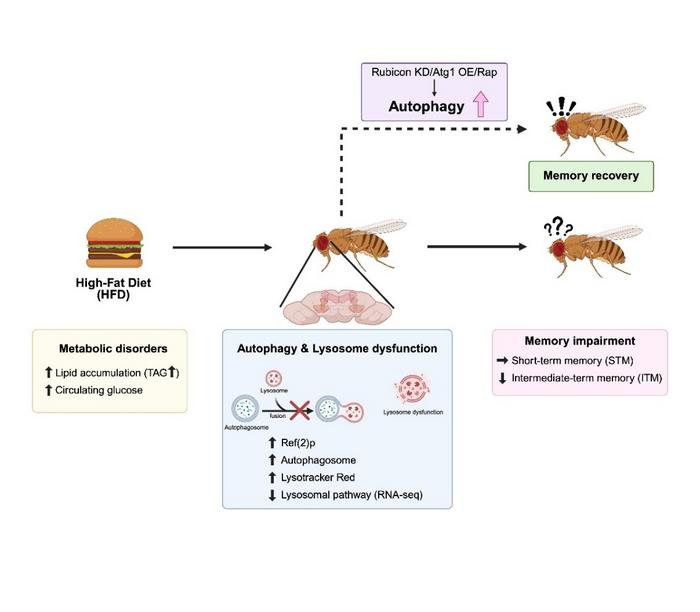
A new study using fruit flies reveals an unexpected connection between high-fat diets and memory problems that goes far deeper than anyone imagined. While scientists have long suspected that greasy foods might affect brain function, researchers at Chiba University have pinpointed exactly how this happens at the cellular level.
The research, published in PLOS Genetics, shows that high-fat diets don’t just make you sluggish – they actually interfere with your brain’s housekeeping system in ways that could explain why fast-food diets seem linked to cognitive decline and dementia risk.
Memory Under Attack
The Japanese research team fed fruit flies either normal food or a high-fat diet for seven days, then tested their ability to form different types of memories. The results were striking: while short-term memory remained intact, the flies’ intermediate-term memory – the kind that lasts several hours – took a significant hit.
“Our findings suggest that diet-induced cognitive decline is not irreversible and may be improved by lifestyle interventions that promote autophagy, such as exercise or intermittent fasting.”
What makes this discovery particularly intriguing is how selective the damage was. The flies could still learn and remember things for a few minutes, but their ability to hold onto memories for hours became severely compromised. This mirrors patterns seen in early cognitive decline in humans, where people might remember what they had for breakfast but struggle to recall conversations from earlier in the day.
The high-fat diet didn’t just affect memory – it fundamentally altered the flies’ metabolism. Their blood sugar and fat levels spiked dramatically, mimicking the metabolic changes seen in people who consume high-fat, high-calorie diets regularly.
The Cellular Cleanup Crew Goes on Strike
The real breakthrough came when researchers discovered why memory formation was failing. Every cell in our bodies has a sophisticated recycling system called autophagy – literally “self-eating” – that cleans up damaged components and maintains cellular health. Think of it as a microscopic garbage collection and recycling service that keeps neurons functioning properly.
The high-fat diet essentially caused this cleanup system to malfunction. Brain cells began accumulating cellular debris that would normally be cleared away, while the formation of new recycling compartments dropped significantly. It’s like having your garbage collectors go on strike while your recycling plant shuts down.
When researchers artificially boosted this cellular cleanup system in the flies’ brains, something remarkable happened: the memory problems caused by the high-fat diet virtually disappeared. The flies regained their ability to form lasting memories despite continuing to eat the fatty food.
The team tested this rescue effect in multiple ways. They genetically enhanced autophagy proteins, suppressed inhibitory factors, and even treated flies with rapamycin, a drug known to boost cellular recycling. In each case, improving autophagy restored memory function.
“This research advances our understanding of how dietary habits influence brain health. Our findings may also accelerate the identification of autophagy-enhancing interventions to combat diet-induced cognitive decline and preserve cognition in the aging population.”
But there’s a crucial balance involved. When researchers enhanced autophagy too much in flies eating normal diets, memory performance actually declined slightly. This suggests that cellular cleanup systems need to operate within an optimal range – too little causes problems, but so does too much.
The study revealed that high-fat diets specifically disrupt the final stages of cellular recycling. Brain cells could still form the initial recycling compartments, but these couldn’t properly fuse with cellular disposal units called lysosomes. It’s like having recycling bins that never get emptied because the truck can’t connect to them properly.
Gene expression analysis showed that high-fat feeding significantly reduced activity in genes responsible for lysosomal function – the cellular equivalent of waste processing plants. This creates a bottleneck where recyclable materials pile up but can’t be processed, eventually overwhelming the cell’s ability to maintain itself.
The implications extend beyond fruit flies. The cellular recycling pathways studied are remarkably similar between flies and humans, suggesting these findings could translate to human health. The research provides a mechanistic explanation for epidemiological studies linking high-fat diets to increased risk of Alzheimer’s disease and other forms of dementia.
What’s particularly encouraging is that the memory deficits appeared reversible. Unlike permanent brain damage, the problems caused by disrupted autophagy could be corrected by restoring proper cellular function. This opens possibilities for therapeutic interventions that could protect cognitive function even in people who struggle to maintain perfect diets.
The study also offers hope for preventive approaches. The researchers noted that lifestyle interventions known to boost autophagy – such as regular exercise, intermittent fasting, and certain dietary compounds – might help protect memory function in people consuming high-fat diets.
While this research focused on fruit flies, the fundamental cellular processes involved are shared across species. The next crucial step will be determining whether similar autophagy-enhancing interventions can protect human memory from the effects of high-fat diets, potentially offering new strategies for preventing diet-related cognitive decline.