

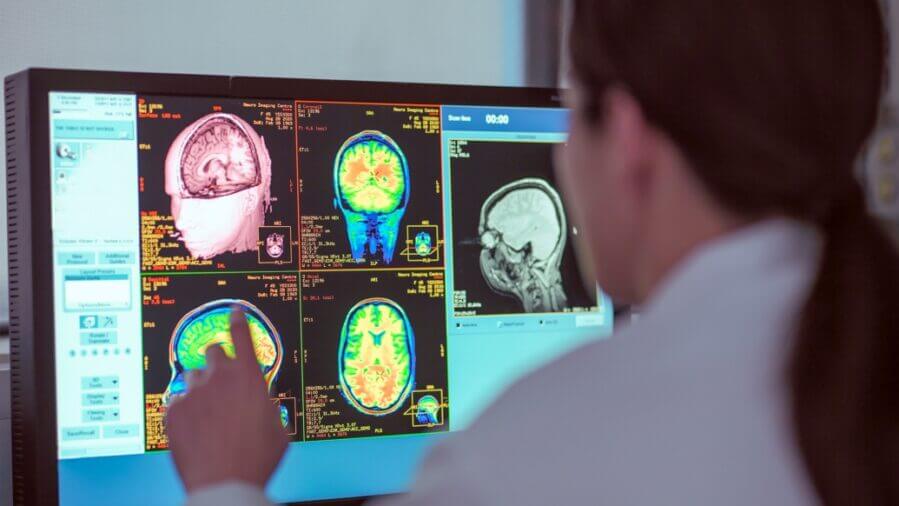
Nearly 4 million children. Twenty-one years of follow-up data. And a finding that might make parents think twice about that “routine” CT scan.
A sweeping new study led by UC San Francisco and UC Davis researchers has drawn a direct line between medical imaging radiation and childhood blood cancers, estimating that roughly 3,000 cases – about 10 percent of all pediatric blood and bone marrow cancers – could be traced back to radiation exposure from medical scans.
The investigation, published September 17 in The New England Journal of Medicine, represents the first comprehensive North American assessment quantifying how medical imaging radiation affects cancer risk in children and adolescents. The researchers tracked 3.7 million young patients born between 1996 and 2016 across six U.S. health care systems and Ontario, Canada.
“Children are particularly vulnerable to radiation-induced cancer due to their heightened radiosensitivity and longer life expectancy.”
The words belong to Dr. Rebecca Smith-Bindman, a UCSF radiologist and the study’s lead author, but they underscore a medical reality that has long concerned pediatric specialists. What makes this research different is its scope and specificity: the team didn’t just observe correlations, they calculated exact risk increases tied to cumulative radiation doses.
The CT Scan Dilemma
Here’s where the numbers get sobering. Children who received just one or two head CT scans faced an 1.8-fold increased risk of developing blood cancer. Those who needed more scans – and thus absorbed higher radiation doses – saw their risk jump to 3.5 times that of unexposed children.
To put this in perspective, a single head CT scan delivers about 13.7 milligray (mGy) of radiation to a child’s bone marrow. The average exposed child in the study received 14 mGy total, while those who developed cancer had absorbed an average of 24.5 mGy.
The study documented 2,961 blood cancers during the observation period, with lymphoid malignancies like leukemia and lymphoma accounting for nearly 80 percent of cases. About 58 percent occurred in boys, and roughly half were diagnosed before age 5.
CT scans, which help detect everything from brain injuries to internal tumors, emerged as the primary concern. Head and brain CTs were the most common type performed, and the researchers attributed about a quarter of subsequent blood cancers in these children to radiation exposure. Chest X-rays, by contrast, deliver much lower doses and were associated with only a small fraction of cancer cases.
Balancing Life-Saving Diagnostics With Long-Term Risks
The research doesn’t suggest abandoning medical imaging – a point the authors emphasize repeatedly. These scans save lives by enabling timely diagnosis and treatment of serious conditions. But the findings do raise questions about medical decision-making, particularly around pediatric CT use.
“While medical imaging can be lifesaving, our findings underscore the critical need to carefully evaluate and minimize radiation exposure during pediatric imaging to safeguard children’s long-term health.”
Dr. Diana Miglioretti, the UC Davis Health biostatistics chief who co-authored the study, noted that the research provides “robust, directly observed evidence” of a dose-response relationship. In other words, more radiation consistently meant higher cancer risk.
The study’s design allowed researchers to follow each child’s complete imaging history, creating what amounts to a radiation exposure biography for nearly 4 million young patients. This retrospective approach, spanning over three decades of follow-up data, offered unprecedented statistical power to detect even small increases in cancer risk.
Among the study’s more practical findings: substituting ultrasound or MRI for CT scans could prevent many unnecessary radiation exposures without compromising diagnostic accuracy. The authors suggest that up to 10 percent of childhood blood cancers could be prevented through better imaging protocols and dose optimization.
The research builds on international studies showing heightened radiation sensitivity in children, whose rapidly dividing cells and longer life expectancy create a perfect storm for radiation-induced cancers. What sets this work apart is its North American focus and its ability to track individual patients’ complete imaging histories rather than relying on estimated exposures.
For parents navigating medical decisions, the study offers both reassurance and caution. Medical imaging remains essential for proper diagnosis and treatment, but the research suggests these decisions deserve careful consideration – particularly when multiple scans might be involved.
The excess cancer risk, while statistically significant, remains relatively small in absolute terms. Among children exposed to at least 30 mGy of radiation, about 26 additional blood cancers would occur per 10,000 children by age 21. Still, when multiplied across millions of pediatric patients, these individual risks translate into thousands of potentially preventable cancers.
As medical technology continues advancing, the study’s authors hope their findings will inform both clinical guidelines and individual treatment decisions, helping ensure that life-saving imaging technology serves children’s immediate needs without compromising their long-term health.