

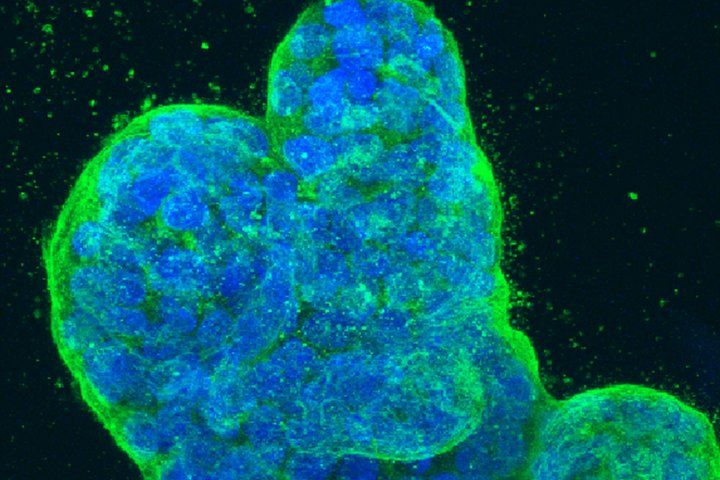
In what reads like science fiction, researchers have successfully weaponized bacteria to infiltrate tumors and deliver immune-boosting genetic payloads directly to cancer cells. The experimental therapy, called ACTM-838, shrank tumors in mice and prevented them from returning, even when scientists tried to re-infect cured animals with fresh cancer cells.
The approach exploits a peculiar biological quirk: certain bacteria naturally gravitate toward tumors like moths to a flame. Scientists at Actym Therapeutics took a strain of Salmonella Typhimurium (the bacteria that causes food poisoning) and stripped away its disease-causing features while preserving its tumor-seeking behavior. They then loaded it with genetic instructions for two immune-activating proteins.
When injected into the bloodstream, ACTM-838 bee-lines for tumors while largely avoiding healthy tissue. Once inside, immune cells called macrophages engulf the bacteria, triggering the release of IL-15 and a modified version of STING, both known for jump-starting immune responses. The result: a localized immune assault on the tumor from within.
From Food Poisoning to Cancer Fighter
The engineering required to make this work was substantial. Earlier attempts to use bacteria as cancer therapies failed because the immune system mounted such violent responses that patients became dangerously ill. The research team, led by first author Kyle Cron and corresponding author Akshata Udyavar, deleted genes controlling flagella (the whip-like tails bacteria use to move), modified the bacterial coating to reduce inflammation, and removed enzymes that suppress T-cells.
“STACT is a modular, genetically engineered live attenuated S. Typhimurium bacterial platform that enables tissue-specific localization and cell-targeted delivery of large, multiplexed payloads via systemic administration.”
The modifications paid off. Compared to its parent strain, ACTM-838 produced significantly lower levels of inflammatory molecules in the bloodstream while maintaining its ability to colonize tumors at concentrations 1,000 times higher than in the spleen or liver.
In preclinical studies, a single intravenous dose cured 50% of mice with aggressive triple-negative breast cancer tumors. When scientists waited 30 days and then injected those cured mice with new cancer cells, 50-70% resisted the tumors entirely, suggesting the treatment had trained their immune systems to recognize and destroy cancer.
Synergy With Existing Drugs
Perhaps most intriguing for oncologists: ACTM-838 worked synergistically with anti-PD1 drugs, a widely prescribed class of immunotherapy. In mice whose tumors normally resist anti-PD1 treatment, combining the bacterial therapy boosted cure rates from 20% to 70%.
The mechanism appears to involve a wholesale renovation of the tumor microenvironment. Genetic analysis revealed that treated tumors showed increased activity in genes related to immune cell infiltration and activation, while genes associated with cell division and DNA repair were suppressed. Flow cytometry confirmed the arrival of tumor-killing T-cells and the retreat of regulatory T-cells that normally dampen immune responses.
“ACTM-838 showed durable anti-tumor efficacy in multiple murine tumor models and synergized with anti-PD1 therapy in combination.”
Single-cell RNA sequencing revealed something even more nuanced: the therapy was reprogramming immunosuppressive macrophages into antigen-presenting cells capable of teaching T-cells which targets to attack. Neutrophils, often accomplices in tumor growth, showed markers suggesting they had switched sides.
The bacteria proved equally adept at finding metastatic tumors. In a mouse model of spontaneous breast cancer metastasis, ACTM-838 reduced both the number of primary tumors and the formation of lung metastases. Importantly, the therapeutic proteins were detected only in tumors, not in the bloodstream or healthy organs, reducing the risk of systemic side effects that have plagued other immunotherapies.
Safety features include the bacteria’s inability to grow without purines (abundant in tumors but scarce elsewhere) and sensitivity to common antibiotics, providing an off-switch if needed. The team eliminated antibiotic-resistance genes by removing an essential bacterial gene from the chromosome and placing it on the therapeutic plasmid instead.
ACTM-838 is now being evaluated in a Phase I clinical trial, the first test of safety in human cancer patients. If it proves safe, the platform could potentially deliver other therapeutic genes beyond the IL-15 and STING combination, opening possibilities for personalized payloads tailored to specific tumor types.
The research appears in the journal Oncotarget, published October 6, 2025.