

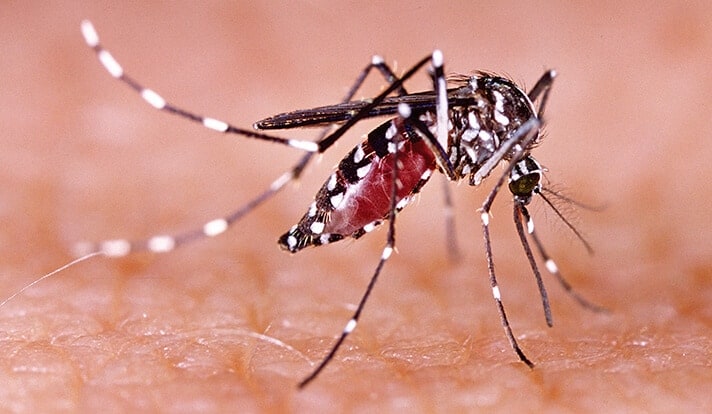
Strip away enough forest and the mosquitoes don’t leave. They just change what they eat. Researchers working in what’s left of Brazil’s Atlantic Forest have found that local mosquitoes are feeding heavily on people, not because they prefer us, but because we’re what’s available now that the birds and mammals are gone.
The team, based at the Oswaldo Cruz Institute in Rio de Janeiro, spent months trapping insects at two protected sites during twilight hours. They collected over 1,700 mosquitoes from 52 species. Then came the lab work: extracting blood from engorged females and running genetic tests to see what they’d been eating.
Only 24 samples gave clean results. Eighteen were human blood.
The technical side was messy
Out of 145 blood-filled mosquitoes, the DNA analysis worked on just 24. That’s a success rate of about 16 per cent, which the researchers admit is frustratingly low. Some samples were too degraded. Others contained blood from multiple hosts, which complicates the genetic barcoding. A few mosquitoes had fed on a human and then a bird, or a dog and then something else entirely.
The Atlantic Forest used to run the length of Brazil’s coast. Now about a third of it remains, broken into fragments by roads, farms, and cities. Animals that need large territories have mostly disappeared from these patches. Sergio Machado, a microbiologist at the Federal University of Rio de Janeiro, says the mosquitoes are just being pragmatic.
“With fewer natural options available, mosquitoes are forced to seek new, alternative blood sources,” Machado says.
Which means us.
Why this matters beyond the itch
These aren’t just nuisance biters. The region harbours mosquitoes that can carry yellow fever, dengue, Zika, chikungunya, Mayaro virus, and Sabiá virus. If insects that once fed on dozens of species are now concentrating on humans, the maths for disease transmission shifts. More bites means more chances for a pathogen to jump.
Jeronimo Alencar, the senior author and a biologist at Oswaldo Cruz, points out that preference matters here. In a biodiverse forest, a mosquito has options. When it chooses humans anyway, that’s when public health officials should pay attention. But when humans are the only abundant host left, the insect isn’t choosing. It’s stuck with us.
The study, published in Frontiers in Ecology and Evolution, is careful about its limitations. The low identification rate means the picture is incomplete. Mixed meals suggest some mosquitoes are opportunistic enough to bite whatever crosses their path. Better molecular tools might reveal feeding patterns the current methods are missing.
But the trend is clear enough. Forests that lose their animals become riskier places for the people who live near them. The researchers argue that monitoring what mosquitoes eat could flag areas where disease outbreaks are more likely. Protect the biodiversity, and you protect the humans too.