

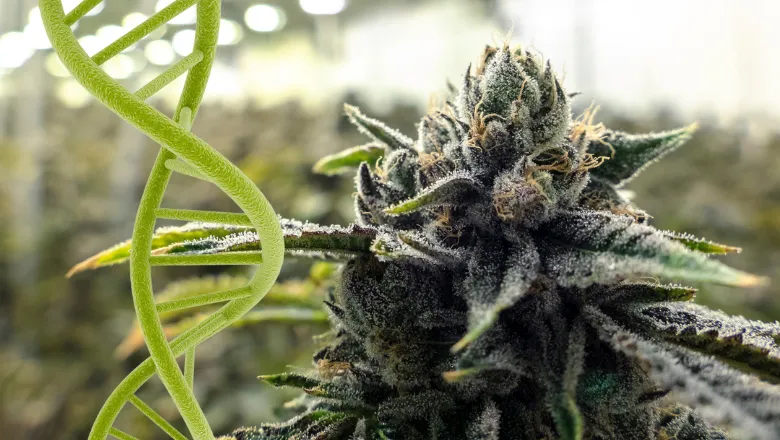
For all the talk about terpenes and strain names, the cannabis world has never agreed on what anything actually smells like. That gap, long ignored, is now getting its first real blueprint for a shared language.
In a peer reviewed study published in PLOS One, researchers at Oregon State University created and tested a 25 term aroma lexicon for Cannabis sativa L., using trained panelists to evaluate 91 hemp and cannabis samples under legally compliant conditions. Led by food science professor Tom Shellhammer, the team found that hemp and cannabis occupy overlapping sensory space yet still divide into distinct aromatic families, revealing patterns that do not match expectations from terpene chemistry alone.
What Cannabis Really Smells Like When People Stop Guessing
The researchers recruited 24 panelists ages 21 to 70, then trained them using aroma standards ranging from fruity and citrus to woody, skunky, and even vomit or fecal. Panelists evaluated intact plant material, not smoke, and their reactions formed clear clusters. Hemp samples leaned toward berry, candy, and citrus notes. Cannabis samples were more often called skunky, musty, earthy, or animalic, with some showing the kind of savory funk that dominates modern type I cultivars.
“Aroma plays a key role in how consumers judge cannabis quality, yet until now there’s been no standardized language to describe it,” said Tom Shellhammer.
The differences felt visceral in the lab. Sweet samples prompted descriptors like fruit, berry, and candy. Others delivered sharp chemical or citrus notes that panelists recognized instantly. A third group pushed into cheesy and vomit or fecal territory. And the final cluster, dominated by type I cannabis, carried the unmistakable skunky, woody, musty, fuel like edge familiar to many dispensary shoppers. These were not subtle distinctions. They were sensory anchors that panelists reached for again and again.
Yet when researchers compared these aroma families to terpene and sulfur compound profiles, nothing lined up neatly. Myrcene, limonene, and caryophyllene explained plenty of chemical variation but rarely mapped to what panelists smelled. Volatile sulfur compounds appeared in hemp, but did not predict sensory outcomes either. Only one terpene, terpinolene, consistently aligned with citrus and chemical descriptors. Everything else defied the tidy labels common in cannabis marketing.
“As the cannabis industry transitions from unregulated to legal frameworks, it’s critical to offer consumers tools for assessing product quality beyond terpenes and THC,” Shellhammer said.
Why A Common Lexicon Could Change How Cannabis Is Grown And Sold
The emerging lexicon is not just an academic exercise. It gives growers, retailers, and consumers a stable vocabulary for qualities that have been described inconsistently for decades. A farmer selecting parent plants could target specific aroma clusters instead of relying on anecdotal terms. Retailers could label products with descriptors that actually reflect what people smell. And consumers could compare samples across brands and regions using shared language instead of hype around potency.
The work is still early. The descriptor set will likely expand, especially the broad categories of herbal and woody, which panelists used so frequently that they lost discriminating power. But the framework is already practical. It captures the sensory reality of cannabis in a way terpene charts do not, and it points toward a future where aromas are measured, communicated, and understood with the same clarity found in wine, coffee, or hops.
If adopted widely, a standard aroma language could reshape product quality, consumer expectations, and even breeding goals. It gives the industry a way to describe what its products actually smell like, not what marketing says they should. That shift could make the next generation of cannabis less about THC numbers and more about the sensory experience that people already use to judge quality every time they open a jar.