

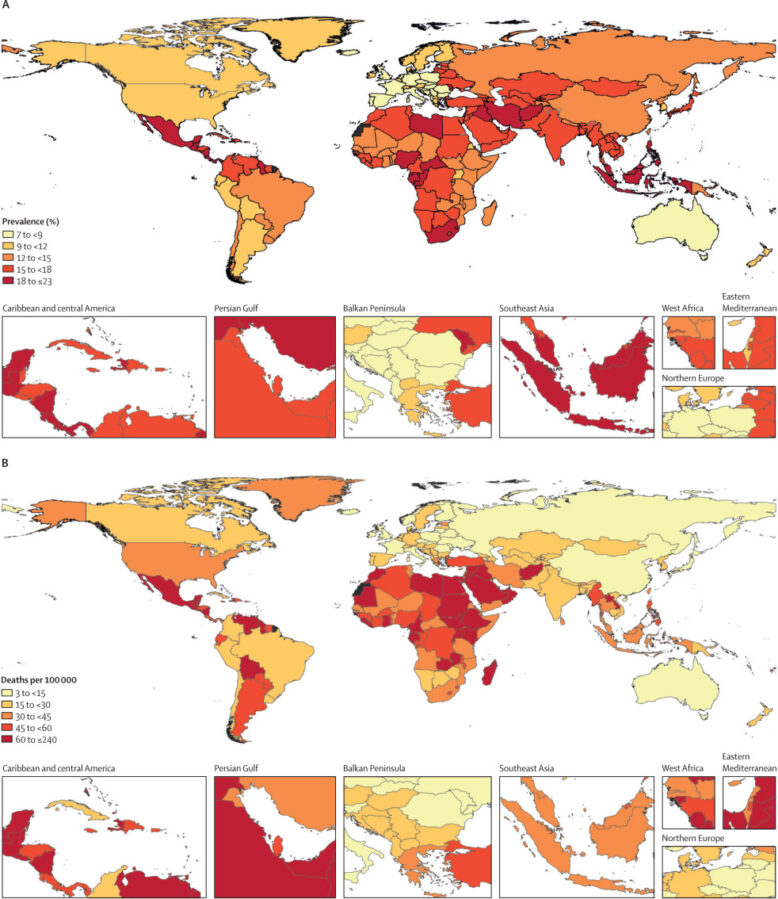
More than 788 million adults now live with chronic kidney disease, a number that has more than doubled since 1990 and shows no sign of slowing. The global analysis, published in The Lancet by researchers with the Institute for Health Metrics and Evaluation (IHME), reveals a relentless rise in kidney-related illness and death across nearly every region of the world.
In 2023, chronic kidney disease, or CKD, ranked as the ninth-leading cause of death worldwide, claiming almost 1.5 million lives. It was also the 12th-leading cause of disability and the seventh-leading driver of cardiovascular mortality, responsible for nearly 12 percent of heart-related deaths globally. The findings come from the Global Burden of Disease (GBD) 2023 study, which analyzed data from 204 countries and territories.
While mortality from heart disease and stroke has fallen in many regions, CKD continues to climb. The study found that the global age-standardized death rate rose from 24.9 per 100,000 people in 1990 to 26.5 in 2023. The rise, researchers say, reflects an intertwined set of health challenges: diabetes, obesity, high blood pressure, and poor diet.
The Hidden Cost of a Preventable Disease
Chronic kidney disease is often called a silent killer because symptoms rarely appear until kidney function has declined significantly. In its early stages, known as stages 1 through 3, the disease can progress unnoticed for years. By the time patients require dialysis or transplantation, options are limited and expensive.
China and India top the global list, with 152 million and 138 million adults affected, respectively. But the burden extends far beyond Asia. The United States, Indonesia, Japan, Brazil, Mexico, Nigeria, and several other countries each report more than 10 million cases. In total, CKD affects about 14 percent of adults aged 20 and older worldwide.
Regional differences are stark. The highest prevalence was found in North Africa and the Middle East (18.0 percent), followed by South Asia (15.8 percent) and sub-Saharan Africa (15.6 percent). Some of the most affected nations include Iran, Haiti, Nigeria, Panama, and Mexico.
“Chronic kidney disease is a growing global health crisis, yet much of its impact is preventable. Reducing deaths is essential to meeting the WHO target of cutting premature mortality from non-communicable diseases by one-third before 2030,” said Lauryn Stafford, co-author and researcher at IHME.
The GBD team drew on more than 2,200 data sources, combining national registries, surveys, and published studies. They also used advanced statistical modeling to estimate how kidney dysfunction contributes to deaths from other diseases. One of the most sobering findings is that impaired kidney function accounts for nearly one in eight cardiovascular deaths.
Uneven Access and Unequal Burden
Beyond the statistics lies a story of stark inequity. Access to kidney replacement therapies, including dialysis and transplantation, remains limited and uneven across much of the world. In high-income nations, such treatments are routine. In low- and middle-income countries, they are often out of reach.
Researchers point to an urgent need for earlier screening, lifestyle interventions, and affordable medications that slow disease progression. Drugs that lower blood pressure, control blood sugar, or block the renin-angiotensin system can help preserve kidney function. But prevention, the authors emphasize, is still the most powerful tool.
Dietary factors such as low fruit and vegetable intake and high sodium consumption also contribute substantially to CKD burden. Climate and environmental factors, including exposure to extreme heat and heavy metals, may further accelerate the disease in certain regions.
“Chronic kidney disease is both a major risk factor for other leading causes of health loss and a significant disease burden in its own right. Yet it continues to receive far less policy attention than other non-communicable diseases, even as its impact grows fastest in regions already facing the greatest health inequities,” said Dr. Theo Vos, Professor Emeritus at IHME and senior author of the study.
Globally, most people with CKD are in the early stages, when interventions can still make a difference. The researchers say that expanding access to diagnosis and affordable treatment could save millions of lives and reduce the massive economic toll on health systems worldwide.
With population aging, rising rates of obesity and diabetes, and widening global inequities, the trajectory of kidney disease mirrors a larger truth about chronic illness: prevention is no longer optional. The kidneys, silent and often overlooked, are becoming a global barometer of modern health itself.