

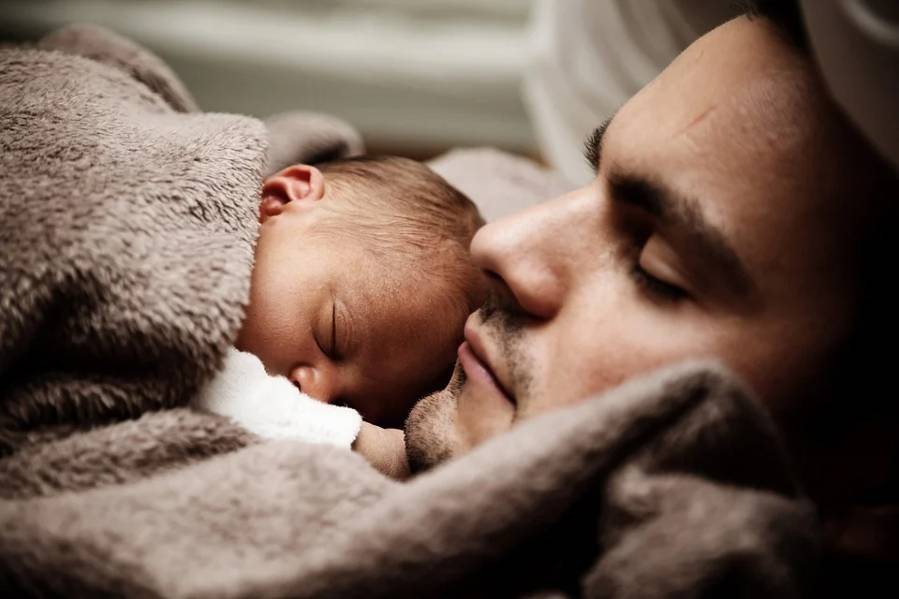
Emotional strength may be as vital as prenatal vitamins. A new study from the University of California Merced finds that a husband’s optimism, self-esteem, and resilience could help his partner carry their baby to term by lowering her inflammation during pregnancy.
Analyzing data from 217 mother-father pairs in the Community Child Health Network, researchers found that when married fathers scored higher on psychological resilience, their partners had lower levels of C-reactive protein (CRP), a marker of inflammation tied to preterm birth risk. Those mothers also tended to give birth later, improving outcomes for their babies.
Emotional Strength With Biological Consequences
Preterm birth, defined as delivery before 37 weeks, remains a leading cause of infant mortality and lifelong complications such as heart disease and developmental disorders. The UC Merced study suggests that fathers’ emotional resources can have measurable biological impacts on their partners during pregnancy.
“This is one of the first studies to show that a father’s inner strengths, such as his optimism and ability to cope with challenges, can ripple through the family in measurable, biological ways,” said Professor Jennifer Hahn-Holbrook, a co-author.
Every day in the womb counts for fetal health and development, and the link between paternal resilience and longer gestation appeared only among married couples. Among unmarried or cohabiting partners, the association disappeared, hinting at the importance of relationship context in shaping maternal biology.
Lead author and Ph.D. student Kavya Swaminathan emphasized that emotional support systems are more than social niceties—they can translate into biological protection. Fathers who feel confident and supported may engage in behaviors that reduce household stress, improve diet, and strengthen emotional bonds, all of which may affect inflammatory pathways.
From Psychology To Physiology
The research team drew on the biopsychosocial model, which integrates emotional, social, and biological factors. While previous studies have focused on how chronic stress harms pregnancy, this one flips the perspective to examine how psychological strengths might protect it.
“Fathers who feel confident and supported might engage in more positive daily behaviors, such as cooking healthy meals, offering encouragement and reducing stress at home,” said Hahn-Holbrook. “Emotional connections may also play a role, since couples tend to coregulate their moods and even their immune systems.”
In statistical models, paternal resilience predicted significantly lower maternal CRP levels, which in turn predicted longer gestational length (β=−0.39, P=0.009). Maternal resilience alone did not show this protective link. The findings, published in Biopsychosocial Science and Medicine, underscore that fathers’ psychological resources—optimism, mastery, and social support—may influence pregnancy outcomes in ways rarely acknowledged in clinical care.
As Swaminathan put it, “The people surrounding a pregnant woman can shape her biology in ways that affect both her health and her baby’s.” It is a reminder that family well-being is not just shared emotionally, but physiologically too.
Biopsychosocial Science and Medicine: 10.1097/PSY.0000000000001445