

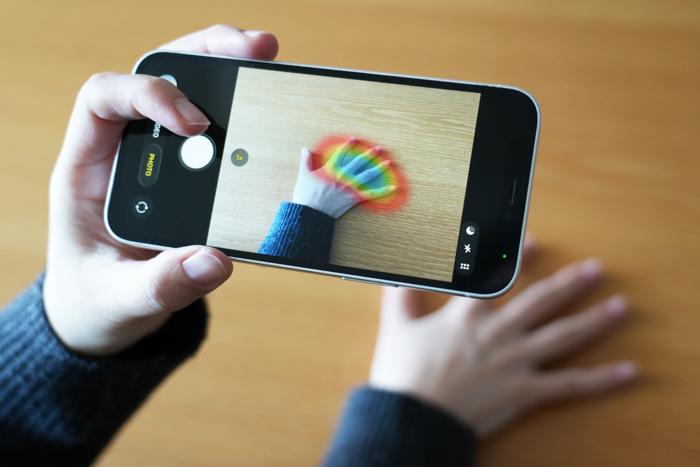
Hold out your hand, palm down. Spread your fingers. Now clench them into a fist. In Japan, a team of endocrinologists has just trained an artificial intelligence to read those two simple gestures and reliably detect a condition that typically takes a decade to diagnose. The results, published in the Journal of Clinical Endocrinology & Metabolism, suggest that something previously left to specialist intuition can now be performed by an algorithm — and done rather well.
The condition in question is acromegaly, a disorder caused by a pituitary tumour that pumps out excessive growth hormone. The hormone reshapes the body slowly, over years: the jaw broadens, brow ridges thicken, and the hands and feet grow noticeably larger. All of which sounds fairly conspicuous until you consider that the changes happen so gradually that many patients simply don’t notice. They attribute aching joints to age, ill-fitting shoes to changing brands. By the time someone raises the alarm, perhaps a decade of silent damage has already accumulated.
“Because the condition progresses so slowly, and because it is a rare disease, it is not uncommon to take up to a decade for it to be diagnosed,” says Fukuoka Hidenori, the endocrinologist at Kobe University who led the research. Untreated acromegaly carries a mortality risk roughly two to three times higher than in the general population, and it can shave about ten years from a patient’s life expectancy. There are treatments — surgery, medication, radiotherapy — but they work considerably better when the disease is caught early. The problem is knowing where to look.
Previous attempts to use AI for early screening had tried facial photographs. Promising in principle. Clinically awkward in practice, partly because of privacy concerns. An image of someone’s face is, obviously, an image of someone’s face; using it in automated screening systems raises questions about consent, data storage, and the blurry line between diagnostic tool and surveillance infrastructure. The approaches never really got off the ground.
Ohmachi Yuka, a graduate student at Kobe University, had a different idea. “Trying to address this concern, we decided to focus on the hands, a body part we routinely examine alongside the face in clinical practice for diagnostic purposes, particularly because acromegaly often manifests changes in the hands,” she says. Hands enlarge in roughly 90 percent of people with the condition. But crucially, the back of the hand and a clenched fist don’t contain fingerprints, and the team judged that knuckle crease patterns, while technically unique, are not commonly used as biometric identifiers in practice. Less identifying; equally informative. It’s a clever bit of lateral thinking.
They recruited 725 patients across 15 medical centres throughout Japan — a genuine nationwide effort — collecting over 11,000 photographs in total. The resulting dataset was split across institutions, with 12 facilities’ worth of images used to train and validate the model, and three held back for independent testing. That kind of facility-level split matters: it forces the algorithm to generalise rather than just memorise the particular lighting conditions or camera quirks of a single hospital.
The model they built, based on a neural network architecture called ResNet-50, achieved sensitivity and specificity of around 0.89 and 0.91 respectively on the test set. The area under the ROC curve — a combined measure of overall diagnostic accuracy — came in at 0.96. For context, ten experienced endocrinologists asked to assess the same photographs scored F1 values ranging from 0.43 to 0.63; the AI’s F1 score was 0.89. Ohmachi says she was not expecting this. “Frankly, I was surprised that the diagnostic accuracy reached such a high level using only photographs of the back of the hand and the clenched fist. What struck me as particularly significant was achieving this level of performance without facial features, which makes this approach a great deal more practical for disease screening.”
What exactly is the AI looking at? Gradient-weighted Class Activation Mapping — essentially a technique for visualising which parts of an image drive the model’s decision — suggests attention concentrated around finger joints, fingernails in the clenched fist, and the region near the base of the thumb. These are plausible locations; acromegaly causes characteristic thickening and widening there. Whether the model is detecting the same things an expert endocrinologist would notice, just faster, or whether it has latched onto subtler patterns that humans routinely miss, remains an open question.
There are caveats worth sitting with. More than half the acromegaly patients in the study had already undergone surgery and achieved partial or full remission, meaning the most obvious physical changes may have been less pronounced at the time of imaging. The model still performed well in this subgroup, which is somewhat encouraging — cartilage and joint changes tend to persist even after hormone levels normalise — but it also means the model has not been tested extensively on the florid, untreated presentations that might represent the real screening challenge. The patient population was also entirely Japanese, trained in specialist pituitary centres; how the algorithm would perform in a general primary care setting, or in populations with different baseline body proportions, is genuinely unknown.
But the point, as Fukuoka sees it, is not to replace the endocrinologist. “We believe that, by further developing this technology, it could lead to creating a medical infrastructure during comprehensive health check-ups to connect suspected cases of hand-related disorders to specialists. Furthermore, it could support non-specialist physicians in regional healthcare settings, thus contributing to a reduction of healthcare disparities there.” The model is a triage tool, a nudge toward a referral that might otherwise never happen. Acromegaly patients often first consult orthopaedic surgeons, dentists, cardiologists — specialists who aren’t necessarily primed to connect a patient’s jaw or shoe complaints to a pituitary tumour. A screening algorithm quietly running on a standard health check photograph might catch what those specialists missed.
The team’s next ambition is broader still. Rheumatoid arthritis, anaemia, finger clubbing — all conditions with visible hand manifestations that might, in principle, yield to the same approach. “This result could be the entry point for expanding the potential of medical AI,” says Ohmachi. For now, though, the most striking thing is how much diagnostic information was lurking in something as simple as a closed fist — and how long it took anyone to think to look there.
Study link: https://academic.oup.com/jcem/advance-article/doi/10.1210/clinem/dgag027/8494383