

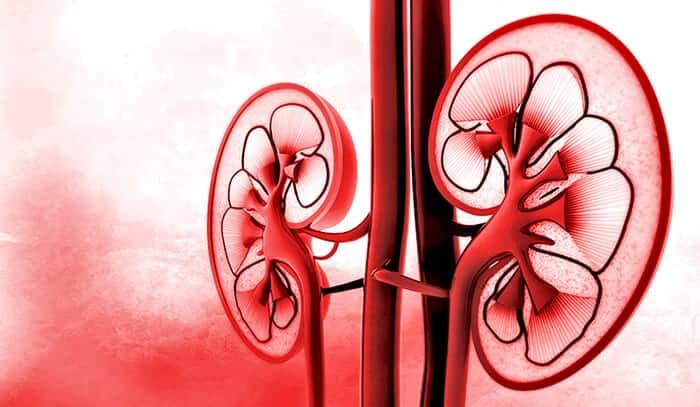
A kidney chemically stripped of its blood type markers and transplanted into a brain-dead recipient has provided the first direct evidence that enzyme-converted organs can function in humans without triggering immediate immune destruction.
The experiment, published today in Nature Biomedical Engineering, represents a decade of work that began with modifying red blood cells and culminated in observing how a living human immune system responds to an organ that has been molecularly redesigned. For two days, the type-A kidney converted to universal type O showed no signs of hyperacute rejection, the rapid antibody attack that typically destroys mismatched organs within minutes.
The recipient, a 68-year-old type-O patient with high levels of anti-A antibodies, received no blood-type desensitization treatment. That alone makes this unusual. Current protocols for blood-type incompatible transplants require days of plasmapheresis to strip antibodies from recipients, a process that increases bleeding risks and infection rates while requiring living donors who can coordinate the lengthy preparation.
“This is the first time we’ve seen this play out in a human model. It gives us invaluable insight into how to improve long-term outcomes.”
The words come from Stephen Withers, a University of British Columbia professor emeritus who co-developed the enzymes that make this possible. His team identified two highly efficient molecular scissors in 2019 that can snip away the sugar molecules defining type-A blood, effectively revealing the type-O structure beneath.
The Chemistry of Compatibility
Blood type antigens are sugar molecules coating cell surfaces and organ blood vessels. When a recipient’s immune system detects the wrong sugar, it attacks. Type-O patients, who make up over half of kidney waitlists, can only receive type-O organs because they have antibodies against both A and B sugars. Yet type-O kidneys are universally compatible and often given to other blood types, leaving type-O patients waiting two to four years longer than others. Many die waiting.
The UBC enzymes work by removing N-acetylgalactosamine, the sugar that distinguishes type A from type O. Applied during hypothermic perfusion at 4 degrees Celsius, the standard temperature for organ preservation, the enzymes removed over 96% of A-antigens within two hours. The kidney was then flushed and transplanted.
What happened next tells you something about the complexity of immune tolerance. The kidney produced 1,300 milliliters of urine in the first 24 hours and maintained good blood flow. No hyperacute rejection occurred. But by day three, some blood-type markers had regenerated on the organ’s surface, triggering a mild immune response. The damage was far less severe than typical mismatches, and researchers observed signs suggesting the body was beginning to tolerate the organ, a phenomenon called accommodation that sometimes occurs weeks after blood-type incompatible transplants.
What the Data Shows
The research team performed 40 biopsies over seven days, tracking antigen regeneration and immune responses in detail impossible to gather from animal models or lab dishes. Single-cell sequencing revealed elevated expression of accommodation-related genes, including those that inhibit complement activation and prevent cell death. Antibody-mediated rejection was diagnosed on day four, coinciding with antigen reappearance, but the injury pattern differed markedly from two clinical cases of hyperacute rejection the researchers examined for comparison.
Those comparison cases, removed within 24 hours of transplantation, showed extensive microvascular thrombosis, red blood cell congestion, and massive antibody and complement deposition. The enzyme-converted kidney, while showing immune activation, had significantly less damage even a week post-transplant.
“Our collaborators showed me their data where, using our enzymes, they had converted a human kidney and transplanted it into a brain-dead recipient. It was working beautifully.”
Jayachandran Kizhakkedathu, the UBC pathology professor who co-led enzyme development, received that update on an overseas trip in late 2023. He stayed up late to call Withers first thing in the B.C. morning.
The study design used a brain-dead recipient who had been denied organ donation due to severe medical complications. This allowed extended observation without risking a living patient, following an approach similar to recent xenotransplant experiments. The recipient’s family consented to the research, which was approved by ethics committees at West China Hospital of Sichuan University and the Second Affiliated Hospital of Chongqing Medical University.
Limitations are significant. Only one kidney was tested, in a recipient whose poor clinical condition and advanced age complicated interpretation. The frequent biopsies themselves caused physical damage. The observation period of seven days could not capture full accommodation, which typically develops over two to three weeks in blood-type incompatible transplants from living donors.
Still, the data provides something previously unavailable: direct observation of antigen regeneration kinetics in a functioning human organ within a human body. That information matters for designing immunosuppression protocols and determining when additional interventions might be needed.
The partner company Avivo Biomedical, a UBC spin-off, will pursue regulatory approval for clinical trials. Future approaches might include infusing enzymes as a drug starting around day two post-transplant, maintaining low antigen levels during the critical first weeks while accommodation develops. Previous studies showed that injecting similar enzymes into baboons and transgenic mice effectively reduced blood-type antigens in kidneys, hearts, and lungs.
The potential extends beyond kidneys. The same approach could apply to other solid organs and might finally make deceased-donor organs viable for blood-type incompatible transplantation, when timing matters most. More than 13% of U.S. patients on the 2021 waiting list had waited over five years for a match.
Whether this donor-centric approach proves safer and more practical than current recipient-centric desensitization protocols remains to be tested in clinical trials. But the enzyme technology has now cleared its first human hurdle, showing that chemically modified organs can survive initial contact with the human immune system long enough to matter.