

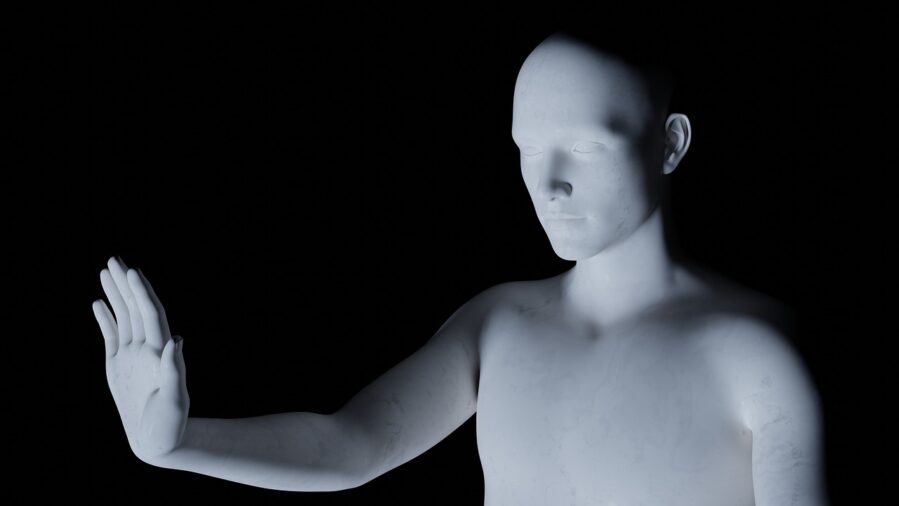
The brain remembers what the body has lost. In a first-of-its-kind study, scientists at the National Institutes of Health (NIH) and University College London discovered that the brain’s map of an amputated arm remains intact for years after surgery. Published in Nature Neuroscience, the study overturns decades of textbook claims that the cortex rewires itself when a limb is removed. Instead, the brain holds onto its representation of the missing limb, offering new clues to phantom limb sensations and future neuroprosthetics. Using functional MRI scans before and after amputation, the team showed that neural activity for phantom finger movements looked nearly identical to pre-surgery patterns, even five years later.
A Long-Standing Debate In Neuroscience
For decades, brain plasticity has been described as the cortex reorganizing after injury or amputation, with neighboring regions taking over abandoned neural space. Classic examples came from primate studies and human imaging that seemed to show the face encroaching on the brain’s hand area. Yet this never fully explained why amputees often feel sensations or pain in a missing limb. The new NIH study directly tackled this paradox with rare before-and-after data.
The Unique Opportunity
Researchers screened patients scheduled for medical amputations, eventually enrolling three individuals who agreed to undergo brain scans both before and after losing an arm. Twice before surgery, participants completed finger-tapping tasks inside an MRI scanner. Follow-up scans were conducted at multiple time points, ranging from three months to five years after amputation, while participants attempted the same movements with their phantom hand.
Machine Learning Meets Brain Maps
Brain activity patterns were remarkably stable. Even a machine learning algorithm trained on pre-amputation scans easily identified which phantom finger the participants were trying to move years after the surgery. The researchers also confirmed that neighboring circuits for lips and feet did not migrate into the arm’s cortical territory, countering long-held assumptions of large-scale remapping.
“This study is a powerful reminder that even after limb loss, the brain holds onto the body, almost like it’s waiting to reconnect in some new way,” said lead author Hunter Schone, Ph.D., who conducted the research as a graduate student at NIH (Nature Neuroscience).
Why Phantom Limbs Feel Real
The persistence of these maps helps explain why phantom limb syndrome is so vivid. The sensations, sometimes painful, are grounded in intact cortical representations rather than invasive takeover by other body parts. This challenges treatment approaches that assume plasticity-driven reorganization is the root cause of phantom pain.
Key Findings
- Sample size: 3 adults undergoing planned arm amputations, compared with 16 able-bodied controls
- Study design: Longitudinal functional MRI scans before amputation and up to 5 years afterward
- Main result: Stable cortical maps of hand and fingers, preserved after amputation
- Location: NIH (U.S.) and University College London (U.K.)
- Technology: Functional MRI plus machine learning pattern analysis
- Safety: Non-invasive brain imaging, approved by ethics committees
- Implications: Guides neuroprosthetics and rethinks phantom limb pain treatments
Implications For Technology And Therapy
The discovery has immediate implications for brain-computer interfaces. If the brain’s detailed hand map remains stable, engineers can design prosthetics that tap into this existing representation, potentially restoring fine sensations like texture or temperature. For pain management, it suggests that therapies should focus less on reversing cortical “reorganization” and more on leveraging the brain’s preserved maps.
Takeaway
The adult brain does not erase or reassign cortical maps after limb loss. Instead, representations of the missing limb persist for years, offering new insights into phantom limb sensations and a stable foundation for neuroprosthetic design and pain treatment strategies.
Journal: Nature Neuroscience
DOI: 10.1038/s41593-025-02037-7
