 New Scientist reports on a year-long study to find the world’s funniest joke. The Internet-based project was coordinated by psychologist Richard Wiseman and colleagues at the University of Hertfordshire, U.K. and involved more than 2 million votes on 40,000 submissions. The goal was to identify universal aspects to humor, which could one day allow computers to devise truly funny jokes. Before we get to the winner, an interesting aside is that the team found in the process the world’s funniest animal: the duck. “If you’re going to tell a joke involving an animal, make it a duck,” Wiseman says. Now to the ultimate rib-tickler, which folks from Asia to Africa, the States to Siberia all seemed to enjoy. A couple of New Jersey hunters are out in the woods when one of them falls to the ground. He doesn’t seem to be breathing, his eyes are rolled back in his head. The other guy whips out his cell phone and calls the emergency services. He gasps to the operator: “My friend is dead! What can I do?” The operator, in a calm soothing voice, says: “Just take it easy. I can help. First, let’s make sure he’s dead.” There is a silence, then a shot is heard. The guy’s voice comes back on the line. He says: “OK, now what?” Thank you folks, I’ll be here all week.

 This is a little complex, but bear with us. Nearly all cells house their DNA inside a nucleus. But a little one-celled critter called Tetrahymena houses different versions of its DNA in each of its two nuclei. Researchers have found that the smaller nucleus (called the micronucleus) just keeps the cell’s full genome safe, acting as a sort of “lock box.” The larger nucleus (called the macronucleus) uses the DNA to regulate the cell’s life functions. When the cell mates to create a new generation, the two work together to compare the cell’s current DNA against what’s been stored in the lock box. If any foreign genes have snuck in (like from a virus) they nuclei eliminate it, to make sure baby gets a fresh start. Pretty neat, with possible implications for larger organisms, too.
 Fifty pounds of romaine lettuce makes enough Caesar salad for a hundred people, but it?s just a one-day food supply for a manatee in captivity. To feed the endangered aquatic mammals more economically while they recover from injuries or medical treatment, a University of Florida veterinarian has developed a new manatee chow that costs one-tenth the price of lettuce. The discovery comes at a time when manatee injuries and subsequent deaths have reached record rates. In 1986, 122 manatees died in Florida. Fifteen years later, that number climbed to 325.
 The lowly and somewhat gruesome bloodworm may have a few lessons to teach material scientists.The critter apparently is the first ever to be found to use a copper-containing mineral structure as part of its skeleton. The finding is remarkable first because the amount of copper detected in the jaw tip of the marine worm would normally be toxic to an organism. Second, the copper also occurs in non-mineral form in the bloodworm jaw where it may act as a sort of bridge, cross-linking long chains of fibrous proteins. And that has appealing commercial posibilities. “The marriage of protein with copper mineral as well as with bound copper ions is an intriguing concept per se but may also serve as a design prototype for new materials that need to be hard, lightweight, and durable.”
 Turns out all those CGI cats working on the “Jurassic Park” and “Lost World” films were pretty spot on. A mummified dinosaur uncovered in Montana looks shockingly like the creatures depicted on the big screen. Almost too much alike. Hey, wait a minute….
 Researchers say they’ve found that people with atopic dermatitis, a.k.a. eczema, are susceptible to bacterial infections in their skin because their bodies don’t produce enough of two antimicrobial peptides. The findings show that while an allergic reaction can cause a rash, true eczema is all about infection. And medicines containing or inducing the peptides could be used to fight the disorder, which affects millions worldwide.
 New Scientist reports on a year-long study to find the
  PC users of the world beware! A new worm called BugBear is making the rounds, and New Scientist says it reflects a worrying new trend in virus code. Instead of disabling your computer, or turning it into a denial of service pod to flood other machines with garbage, BugBear contains a Trojan horse program that can
  Results of an animal study published in the journal Science raise the possibility that the use of the rave fave drug Ecstasy ? methylene-dioxymethamphetamine ? can damage brain cells. The same cells, in fact, that are destroyed by Parkinson?s disease.
 A tough microbe called
  This weekend I sank my teeth into some delicious beef ribs. But researchers at the Forsyth Institute say they’ve done one better ? they’ve sunk pork teeth into rat guts. The experiment involved taking seeded cells from immature teeth of six-month-old pigs and placing them
 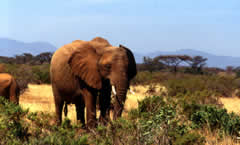 You learn a lot analyzing dung. Sampling specimens from wild African elephants, UC San Diego researchers have found the continent is home to three distinct types of Proboscidia, not two. Apparently the distinction in the past was between savanna and forest elephants. Now it turns out a third, genetically distinct species has evolved that swings both ways.
 As if Afghanistan didn’t have enough woes, the country has just lost its main agricultural insurance policy: two stores of carefully selected and maintained seeds representing the biodiversity of the nation’s native crops. The seeds were ruined when looters broke into a storage facility where they were kept and made off with the airtight jars that held them. The seeds themselves were tossed on the ground, and have now been so jumbled together that they