

Cells don’t just respond to their environment, they seem to balance on the edge of chaos, using the same principles that govern earthquakes and avalanches.
A new study in Nature Physics reveals that the cytoskeleton, the cell’s internal framework, can self-tune to a critical state where energy and information flow in sudden, scale-free bursts. The discovery adds to growing evidence that biological systems organize themselves near a tipping point to remain flexible, responsive, and robust.
Self-Organized Criticality in a Test Tube
The research, led by Zachary Gao Sun and Michael Murrell at Yale University in collaboration with Garegin Papoian’s group at the University of Maryland, used purified proteins to reconstitute minimal actomyosin networks in vitro. By controlling the branching architecture of F-actin and the assembly of myosin II motors, the team recreated the conditions inside a living cell with remarkable fidelity.
What they found was striking: disordered, branched cytoskeletal networks displayed intermittent energy releases that followed a power-law distribution—a hallmark of self-organized criticality (SOC). This same pattern is seen in natural disasters like earthquakes and landslides, where small tremors are common and massive ruptures, though rare, obey mathematical predictability.
Key Findings
- Branched actin networks exhibit heavy-tailed distributions of stress and displacement.
- Energy and force localization in the network mimics Anderson Localization from physics.
- Myosin motor activity and actin architecture interact through feedback loops that tune criticality.
- Myosin filament size—controllable through potassium concentrations—directly impacts energy dissipation patterns.
Tuning Between Flexibility and Rigidity
The cytoskeleton isn’t just a passive scaffold. It is an active, dynamic network where biopolymer architecture and motor-generated forces feed back on one another. This creates a system where energy is stored and released in bursts, and where motion is neither fully chaotic nor fully predictable.
At moderate levels of actin branching, cells exhibit Lévy flight distributions and 1/f noise in both spatial and temporal dimensions, signs of systems perched at the edge of a phase transition. At these points, small changes can ripple into large-scale rearrangements—ideal for processes like cell division, migration, and adaptation to mechanical stress.
Bridging Physics and Cell Biology
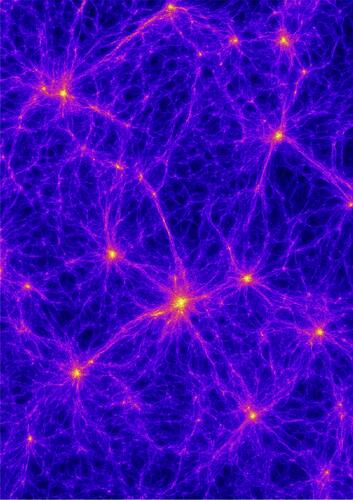
The work draws compelling parallels between cellular mechanics and condensed matter physics. As Sun explains in the paper, “Isn’t it amazing to see similarities across scale of objects under the microscope to the telescope?” In particular, the findings echo Anderson Localization, a phenomenon in which wave-like signals become trapped in disordered materials. Here, stress waves in the cytoskeleton are confined to localized stiff regions, preventing their spread across the network.
By adjusting the concentration of actin-branching proteins (like Arp2/3) and ionic conditions (like KCl), the researchers showed that cells could transition from “metal-like” long-range force propagation to “insulator-like” localized dissipation. These transitions don’t require a central controller—they emerge spontaneously from the interplay between geometry and internal stress.
A Universal Principle of Life?
The authors suggest that self-organized criticality might be a universal feature of living systems. Just as our planet releases energy through seismic shifts, so too might cells regulate their inner mechanics through molecular avalanches. Each cell, in this view, is its own dynamic universe, self-tuned to remain responsive yet stable.
“Whether the cell as a machinery is being poised at a critical state, and further, how, have been the central topic for some biophysicists in the past two decades,” Sun noted. “Here we have observed phenomenon in a well-controlled experimental setting, and proposed the mechanism.”
The implications ripple outward. Understanding how cells manage force and structure under critical conditions could transform our view of development, disease progression, and tissue engineering. It might also help physicists and engineers design artificial systems that emulate nature’s delicate balance between order and chaos.
Journal Reference
Published July 22, 2025 in Nature Physics
DOI: 10.1038/s41567-025-02919-4
