
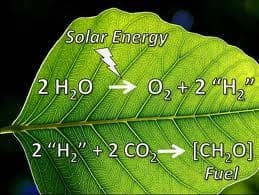
Technology for making an “artificial leaf” holds the potential for opening an era of “fast-food energy,” in which people generate their own electricity at home with low-cost equipment perfect for the 3 billion people living in developing countries and even home-owners in the United States. That’s among the prospects emerging from research on a new genre of “electrofuels” described in the current edition of Chemical & Engineering News, the American Chemical Society’s weekly newsmagazine.
In the article, C&EN Senior Correspondent Stephen K. Ritter describes research on electrofuels, made by using energy from the sun and renewable ingredients like water and carbon dioxide, reported at a gathering of experts sponsored by the U. S. Department of Energy’s Advanced Research Projects Agency (ARPA-E). Created in 2009 by the American Recovery & Reinvestment Act, ARPA-E is funding electrofuels research, with the goal of developing technologies that improve on nature’s approach — photosynthesis. Electrofuels is one of 12 programs funded by ARPA-E.
The artificial leaf is one of the electrofuels technologies. Made of inexpensive materials, the leaf breaks down ordinary water into the oxygen and hydrogen that can power an electricity-producing fuel cell. Just drop the credit-card-sized device into a bucket of water and expose it to sunlight. With the cost-conscious technology, one door-sized solar cell and three gallons of water could produce a day’s worth of electricity for a typical American home. The article describes a range of other electrofuel technologies, including ones based on engineered microbes, being developed in the quest for new ways of making fuels.
The American Chemical Society is a non-profit organization chartered by the U.S. Congress. With more than 163,000 members, ACS is the world’s largest scientific society and a global leader in providing access to chemistry-related research through its multiple databases, peer-reviewed journals and scientific conferences. Its main offices are in Washington, D.C., and Columbus, Ohio.
To automatically receive news releases from the American Chemical Society contact [email protected].
ScienceBlog.com has no paywalls, no sponsored content, and no agenda beyond getting the science right. Every story here is written to inform, not to impress an advertiser or push a point of view.
Good science journalism takes time — reading the papers, checking the claims, finding researchers who can put findings in context. We do that work because we think it matters.
If you find this site useful, consider supporting it with a donation. Even a few dollars a month helps keep the coverage independent and free for everyone.