

When a rocket blasted off from northern Sweden in November 2022, it carried an unusual passenger: freeze-dried bacteria that live in human intestines. The microbes were about to experience forces that would kill most living things: 13 times Earth’s gravity on ascent, six minutes of weightlessness at 260 kilometers altitude, then a screaming re-entry spinning 220 times per second while enduring 30 g of deceleration. Scientists wanted to know if these essential bacteria could survive the journey.
They did. Not only survived, but emerged completely unchanged.
The findings from this Australian-led experiment matter because space agencies are planning crewed missions to Mars within decades, and those missions will fail if the microorganisms that keep humans healthy die during launch. Bacillus subtilis, the species tested, plays crucial roles in immune function, gut health, and blood circulation. Without bacteria like it, long-term space colonies become significantly harder to sustain.
Distinguished Professor Elena Ivanova from RMIT University, who led the research, explained the significance:
Our research showed an important type of bacteria for our health can withstand rapid gravity changes, acceleration and deacceleration.
Previous space microbiology experiments focused on how bacteria behave during extended stays aboard space stations, sometimes lasting weeks or months. But nobody had rigorously tested what happens during those first brutal minutes of launch and the violent return through the atmosphere. Laboratory simulations can only approximate real conditions.
Why These Bacteria Were Chosen
B. subtilis isn’t delicate. When conditions turn hostile, it forms spores – dormant structures protected by coats made of roughly 70 different proteins. These spores can survive extreme heat, hazardous chemicals, and ionizing radiation. Previous studies showed they could endure nearly six years in space microgravity and withstand acceleration forces exceeding 400,000 times Earth’s gravity in laboratory centrifuges.
But those were controlled lab tests. This experiment subjected living organisms to the chaotic reality of an actual rocket flight.
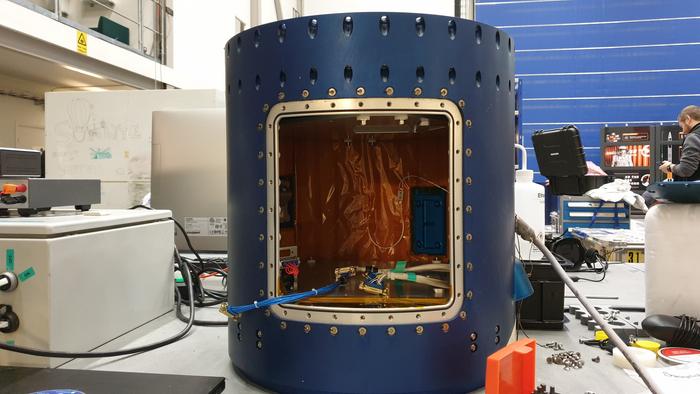
The SubOrbital Express 3 – M15 sounding rocket launched from Esrange Space Centre in Swedish Lapland, about 200 kilometers north of the Arctic Circle. Researchers from RMIT collaborated with space tech firm ResearchSat and drug delivery company Numedico Technologies, transporting their bacterial samples from Melbourne in airtight containers. The spores were loaded into six custom 3D-printed microtubes housed inside a payload module the size of a shoebox.
The rocket’s first stage generated 9 g at liftoff, inducing an immediate axial spin for flight stability. At 40 seconds, the main engine cut off at 100 kilometers altitude – the edge of space. A mechanical device immediately stopped the spin, and the rocket coasted upward in a parabolic arc, reaching maximum altitude at just over four minutes. Then came the fall back to Earth.
The Descent Was Worse Than Launch
Re-entry proved more violent than ascent. The rocket transitioned from a nose-up posture to flat-spinning, deliberately creating drag to slow its descent before deploying the heat shield and parachute. The payload experienced deceleration spikes above 30 g – forces that would render a human unconscious or worse. The bacterial samples spun violently on all three axes while plummeting through the atmosphere.
Throughout the flight, researchers maintained the payload at room temperature and standard atmospheric pressure. After touchdown and recovery, they examined the spores using scanning electron microscopy and standard viability tests. The results showed no morphological changes and no decrease in the number of living cells compared to control samples kept on the ground.
Associate Professor Gail Iles, a space science expert at RMIT, noted the broader implications:
This research enhances our understanding of how life can endure harsh conditions, providing valuable insights for future missions to Mars and beyond.
The team chose B. subtilis specifically because it’s tough and well-characterized, making it ideal for establishing a baseline. Future experiments could test more delicate microorganisms to map the full spectrum of microbial survival in space conditions. The researchers are now seeking additional funding to expand this line of inquiry.
The practical applications extend beyond space exploration. Understanding microbial resilience under extreme conditions could advance biotechnology applications in harsh Earth environments, inform the development of new antibacterial treatments, and potentially help combat antibiotic-resistant bacteria. The findings might also guide the search for extraterrestrial life by identifying which organisms could thrive in environments previously thought uninhabitable.
As space tourism grows and suborbital flights become routine, thousands of passengers will soon experience these same forces. They’ll bring along trillions of microbial companions in their gut, on their skin, and throughout their bodies. This research confirms those microscopic hitchhikers are tougher than expected – a small but essential piece of data for humanity’s expansion beyond Earth.