

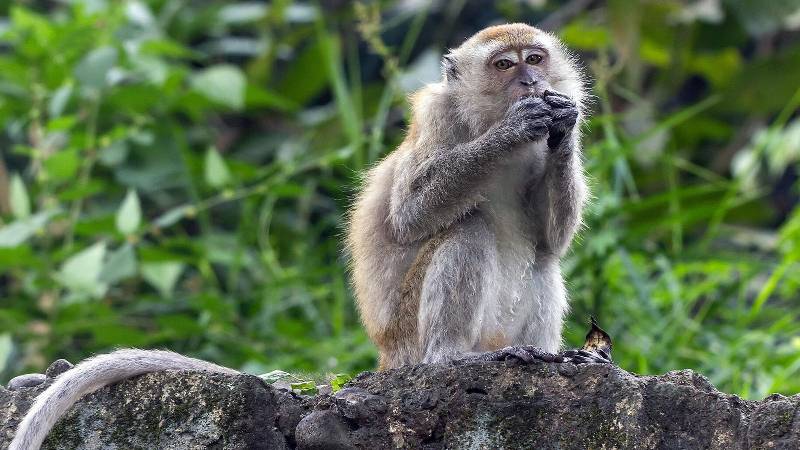
Japanese macaques living on Yakushima Island have mastered something humans struggle with daily: adapting their digestive systems to whatever food is available. New research reveals these snow monkeys deploy a sophisticated microbial strategy in their guts, essentially rewiring their internal chemistry to extract energy from bark and leaves when their preferred fruits disappear.
The findings, published in Ecology and Evolution, chronicle a year-long study of wild macaques as they navigated dramatic seasonal shifts from fruit-rich summers to the lean winter months when mature leaves and bark become dietary staples. What researchers discovered challenges conventional thinking about how animals cope with food scarcity.
The Microbial Balancing Act
Lead researcher Wanyi Lee from Kyoto University spent countless nights monitoring fermentation processes, often waking at 3 AM to check on laboratory samples before heading back to track monkeys through the forest.
“This study was challenging because I often had to wake up in the middle of the night to monitor fermentation and then continue following monkeys the next day. But it was worth it to see the in vitro fermentation assay reveal the hidden power of gut microbes.”
The team discovered that macaque gut bacteria employ a dual strategy that’s both stable and flexible. When processing fibrous leaves—the monkeys’ fallback food during harsh seasons—the microbial community maintains consistent fermentation efficiency. But when digesting easily digestible foods like fruits and commercial monkey chow, the same bacteria show remarkable variability in their activity levels.
This isn’t random fluctuation. The research suggests macaques have evolved a core group of fermentative bacteria that ensures reliable energy extraction from tough plant materials, while maintaining enough flexibility to capitalize on higher-quality foods when available.
Beyond Fiber: The Chemical Defense Challenge
Perhaps most intriguingly, the study found that simply consuming more fiber doesn’t automatically boost the gut microbiome’s performance. Instead, eating mature leaves specifically (rather than fiber intake in general) enhanced the bacteria’s ability to break down plant materials.
“By linking both microbial composition and function, our study provides a comprehensive perspective that can be applied not only to other primates but also to a wide range of wild animals.”
This suggests the gut bacteria aren’t just processing cellulose and other structural fibers. They’re likely tackling the chemical defenses plants deploy to avoid being eaten (compounds like tannins and alkaloids that make leaves bitter and potentially toxic). The microbes that thrive on mature leaf consumption appear specially equipped to neutralize these plant weapons while extracting whatever nutrition remains.
The research team tracked 22 individual macaques through behavioral observations, collecting fresh fecal samples and analyzing both microbial composition and fermentation capability. They used laboratory fermentation tests with actual foods from the monkeys’ natural diet, including leaves from Eurya japonica plants that the macaques commonly consume during food-scarce periods.
Seasonal dietary data revealed dramatic shifts: macaques consumed fruit-dominated diets from May through July, transitioned to seed-heavy meals from August through December, then relied increasingly on mixed diets incorporating leaves from December through April. Fiber content in their food peaked during summer months at over 40% but dropped to around 29% during other seasons.
The implications extend beyond understanding monkey digestion. As climate change and deforestation alter wildlife habitats globally, this research provides crucial insights into how much digestive flexibility can help animals survive when their preferred foods become unavailable. The microbial buffering capacity appears substantial but not unlimited (it’s constrained by the fundamental chemistry of available foods).
Japanese macaques occupy the northernmost range of any non-human primate, enduring colder temperatures and more extreme seasonal variation than their tropical cousins. Their gut microbiome strategy may represent a key adaptation that enabled this expansion into marginal primate habitat.
The study also revealed specific bacterial genera that drive fermentation efficiency, including Streptococcus, Ligilactobacillus, and Bifidobacterium. These microbes remained active across different food types and seasons, suggesting they form a functional core that maintains digestive stability even as dietary options fluctuate wildly.
Understanding these mechanisms becomes increasingly important as wildlife faces unprecedented environmental pressures. The research demonstrates that while gut bacteria provide significant buffering against food shortages, this biological insurance policy has limits. Conservation strategies may need to account for these digestive constraints when predicting how species will respond to habitat changes.