

The first camera made from perovskite crystals has captured individual gamma rays, setting a new bar for nuclear medicine imaging. In a study published in Nature Communications, an international team led by Northwestern University and Soochow University demonstrated that perovskite detectors can produce sharper, faster, and more affordable scans than the costly systems hospitals rely on today.
For patients, that could translate into shorter scan times, lower radiation doses, and clearer diagnoses. For clinics, it could mean access to high-performance equipment without the price tag of cadmium zinc telluride (CZT) detectors, which can run into the millions.
“Perovskites are a family of crystals best known for transforming the field of solar energy,” said Mercouri Kanatzidis, senior author of the study. “Now, they are poised to do the same for nuclear medicine.”
At the heart of nuclear medicine is SPECT, or single-photon emission computed tomography. A patient receives a radiotracer such as technetium-99m, which emits gamma rays as it decays. Current detectors, usually based on CZT or sodium iodide, capture those rays to reconstruct images of organ function. But the trade-offs are stark: CZT detectors are brittle and prohibitively expensive, while sodium iodide systems are cheaper but blurrier, like shooting through frosted glass.
The team’s prototype perovskite camera delivered a record energy resolution of 2.5% at 141 keV, the key energy for technetium-99m, and as fine as 1.0% at 662 keV. In imaging tests, it could clearly distinguish tiny radioactive sources spaced just 3.2 millimeters apart. Even faint signals were picked up with impressive sensitivity, indicating the detectors could operate with lower tracer doses.
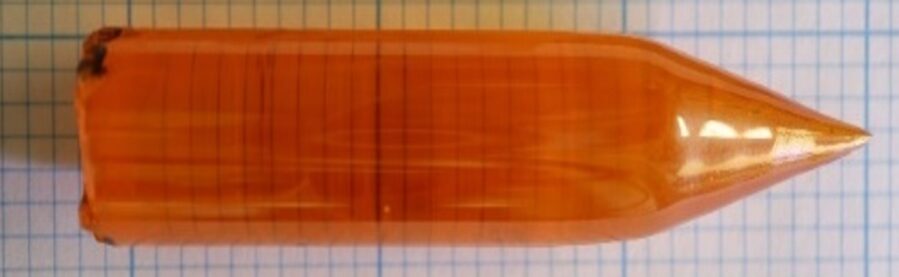
The trick was in crystal craftsmanship. The researchers grew high-purity boules of cesium lead bromide (CsPbBr3), then polished the surfaces to near-perfect smoothness to minimize charge loss. By arranging the detector into a pixelated array, much like a smartphone camera sensor, they achieved both uniform response and the ability to reconstruct detailed images. A custom multi-channel readout system tied it all together.
“Designing this gamma-ray camera and demonstrating its performance has been incredibly rewarding,” said Yihui He of Soochow University. “This work shows the real potential of perovskite-based detectors to transform nuclear medicine imaging.”
Unlike CZT, perovskites can be grown with relative ease and at far lower cost. That economic angle may be as important as the physics: Actinia Inc., a Northwestern spinout, is already working to commercialize the technology. If successful, more hospitals could afford advanced scanners, leveling access to high-quality nuclear imaging worldwide.
The real surprise may be that perovskites, once pigeonholed as a solar-cell curiosity, are now being repurposed as the building blocks for a medical camera. And the story is still unfolding: the team sees opportunities to refine detector designs, scale up production, and even push beyond current imaging methods.
Journal: Nature Communications (2025). DOI: 10.1038/s41467-025-48113-8