

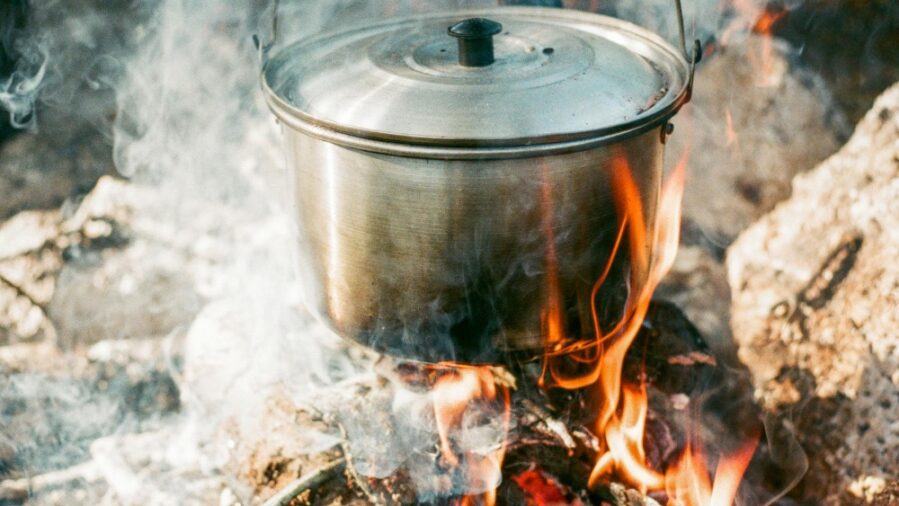
A mother in a crowded settlement feeds plastic wrappers into her cooking fire because firewood costs too much. The room fills with acrid smoke. Her children breathe it while she stirs dinner. This scene, invisible to most policy discussions, repeats across thousands of neighborhoods where waste collection doesn’t reach and clean energy remains unaffordable.
New research from Curtin University reveals burning plastic for household energy is far more common than recognized. Surveying over 1,000 community workers, government officials, and local experts across 26 countries in the Global South, the study found one in three respondents aware of families using plastic not just to dispose of trash but to cook meals, heat homes, and light fires. Many had witnessed it firsthand. Some had done it themselves.
The practice emerges where two crises collide: unreliable sanitation services and energy poverty. Households relying on simple stoves, three-stone fires, or charcoal burners can easily toss plastic bags, bottles, and packaging into the flames alongside wood or charcoal. Researchers call this “fuel stacking,” and it intensifies toxic emissions. The study, published in Nature Communications, found plastic burning most prevalent in Sub-Saharan Africa and other low-income regions where biomass fuels have become scarce as urban populations grow.
PVC Ranks Third Among Burned Materials
Not all plastics pose equal danger, but the most commonly burned types include some of the worst offenders. Polyvinyl chloride, known as PVC and found in pipes and packaging, ranked third on the list. When burned, it releases dioxins and furans, compounds that persist in the environment, accumulate in food chains, and are linked to cancer, immune damage, and reproductive harm.
“People only do this because they have no safer alternatives, due to root causes such as extreme energy poverty, unaffordable cleaner fuels and inadequate waste services,” Peta Ashworth, co-author and CIET Director, explains.
Sixty percent of respondents believed these toxins are contaminating local food and water. The smoke doesn’t just hang in the air. It settles on crops, seeps into water sources, and coats cooking surfaces. Women, children, older adults, and people with disabilities face the highest exposure since they spend more time near indoor fires.
Lead researcher Bishal Bharadwaj notes the practice has escaped global attention precisely because it happens in marginalized communities. Families burn everything from bags and wrappers to bottles, meeting basic needs with whatever fuel they can access. Telling them to stop without offering alternatives simply pushes the practice further indoors, increasing exposure.
Energy Access, Not Education
The findings challenge the framing of plastic burning as ignorance or carelessness. It’s a structural problem. As plastic production is expected to triple by 2060, the collision of waste and energy poverty will intensify unless waste collection expands and clean cooking becomes affordable for the poorest urban households.
Co-author Hari Vuthaluru emphasizes the long-term stakes. These emissions create a hidden health crisis for communities already facing significant challenges. The study identifies biogas, electricity, and other clean cooking technologies as necessary interventions, but only if they’re priced within reach and supported by reliable infrastructure.
What emerges is not a story about pollution, but about what happens when cities grow faster than the systems meant to serve them. Plastic burning won’t stop because people understand the risks. It will stop when they have another way to cook dinner and somewhere else to put the trash.