The Coating That Heals Its Own Scars and Fights Germs

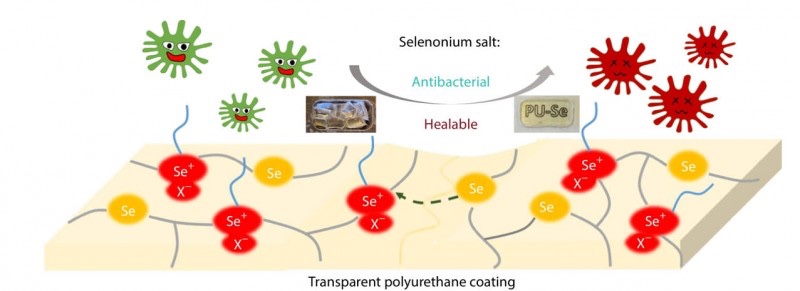
Schematic representation of the preparation process of PUa-C7 Seb+ materials.

Every scratch on a phone screen or scuff on a pair of safety goggles isn’t just cosmetic damage. Those tiny cracks trap bacteria, cloud the surface, and weaken structural integrity. For years, materials scientists have faced a stubborn trade-off: make a coating hard enough to protect a device, and it’s too rigid to repair itself. … Read more

New AI Reads Brainwaves Faster by Mixing Neural Noise

flowchart of findings

Brain-computer interfaces have a frustrating problem. The deep learning models that power them are data gluttons, but getting clean brain recordings is expensive and slow. Every person’s brain is different, which makes training these systems a nightmare. Now, researchers from Tianjin University and UC San Diego think they’ve found a workaround that’s both clever and … Read more

When Water Becomes A Battery: Flexible Skin Patch Pulls Power From Thin Air

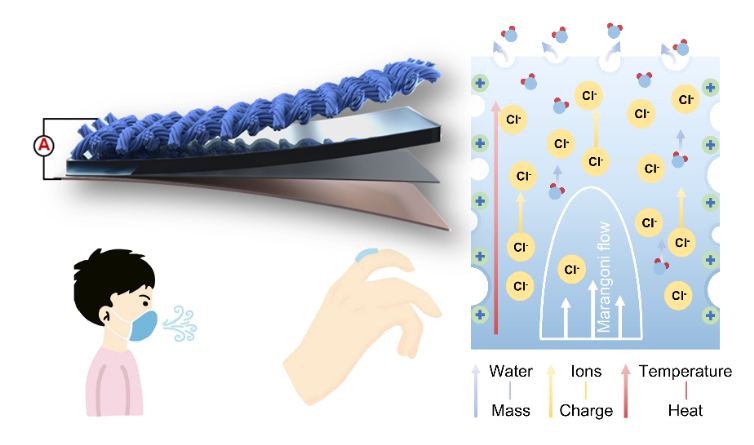
A flexible EIG generates electricity through coupled mass, charge, and heat transfer, making it well suited for wearable devices.

Imagine a bandage-like strip on your skin quietly turning humidity, breath and body heat into electricity for your devices. In a new study in the journal Wearable Electronics, a team led by researchers at Nanjing University reports a flexible evaporation-induced generator that uses a carefully engineered “water-ion-temperature” gradient to reach a peak power density of … Read more

How Taiwan’s Giant Genomics Project Is Rewriting the Future of Disease Prediction

Chinese women of Han descent

A sweeping genomic effort in Taiwan has revealed something that global precision medicine has long overlooked, that the best way to predict disease is to study the people who will be living with its consequences. Researchers at Academia Sinica have now shown that building genetic risk tools tailored to Han Chinese populations can transform how … Read more

Body Heat Sparks A New Era Of Self Expanding Stents

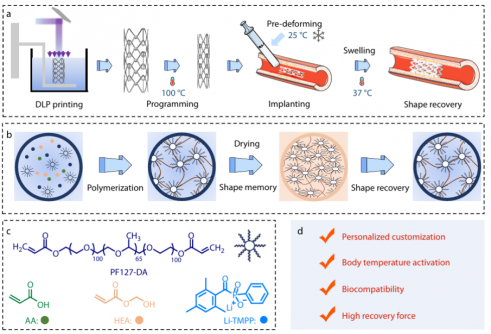
The stent is first 3D printed, heated into a temporary shape, compressed for implantation, and then it returns to its original form once it warms and swells inside the body. Its material contains tiny micelles that link together during polymerization to create a strong, flexible network. The system is customizable, activates at body temperature, is biocompatible, and can recover its shape with substantial force.

A tiny stent that unfurls inside the body using nothing more than warmth and moisture could reshape the future of minimally invasive vascular care. A new study in the Chinese Journal of Polymer Science from Northwestern Polytechnical University introduces a dual stimuli shape memory polymer that expands at body temperature and in physiological fluid. Using … Read more

Yeast Cells Coaxed Into Making Medical Cannabinoids

Cannabis leaf

Scientists have successfully reprogrammed baker’s yeast cousin to manufacture cannabis compounds in a laboratory, potentially bypassing the need for acres of hemp plants and unpredictable growing seasons. The engineered microbes produced cannabigerolic acid (CBGA), a precursor to CBD and other therapeutic molecules, at levels that could eventually support commercial production. The research team, led by … Read more

Contact Lenses That Monitor Your Health While You Blink

MXene-based smart contact lenses can track eye health, deliver treatments, and keep the eyes comfortable. Transparent MXene films add features like infection protection, moisture control, and light-based therapy, though challenges remain in making them stable and widely usable.

Scientists have developed contact lenses that do far more than correct vision. These experimental devices can track eye pressure, detect glucose levels in tears, kill bacteria on contact, and even deliver heat therapy directly to the eye. The secret ingredient: a class of two-dimensional materials called MXenes, which are essentially atomically thin sheets of metal … Read more

Paper-Thin LED Shines Like the Sun Indoors

A paper-thin device uses quantum dots, similar to those described in this work, to light up LEDs.

Light bulbs have changed a lot since Edison, yet few could be mistaken for wallpaper. Now, researchers in China have engineered a light-emitting diode (LED) so thin it could roll onto your wall like a sticker—and it glows with a sunlike warmth. The breakthrough, published in ACS Applied Materials & Interfaces, could transform how we … Read more

AI Safety Net Blocks Toxic Chemical Recipes While Preserving Scientific Progress

Overview of AI risks and SciGuard framework.

Scientists have created a digital gatekeeper that could prevent artificial intelligence from accidentally becoming a how-to manual for making dangerous chemicals, while still allowing legitimate research to flourish. The system, called SciGuard, acts like a sophisticated bouncer for AI models used in chemistry labs worldwide. When someone asks an AI system how to synthesize a … Read more