

People who smoke cannabis may end up drinking less alcohol—but the reasons and risks remain complex. In a first-of-its-kind clinical trial, researchers at Brown University found that THC reduced alcohol consumption in the lab, lending empirical support to the “California sober” approach gaining cultural traction.
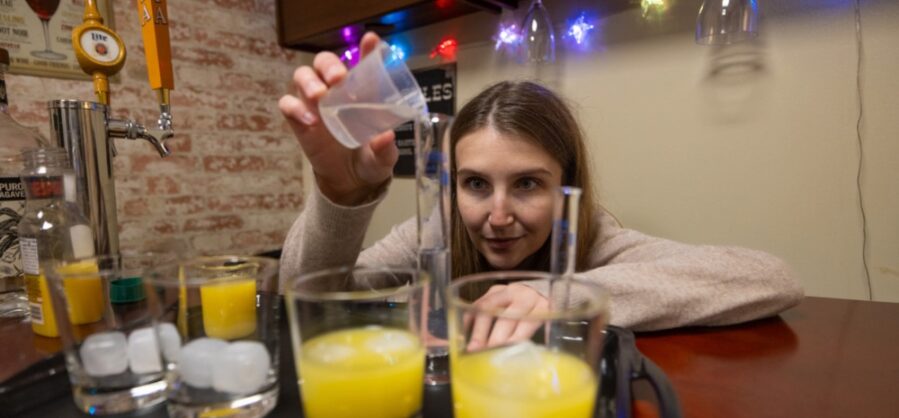
Published November 19, 2025, in the American Journal of Psychiatry, the randomized, placebo-controlled crossover trial was led by Dr. Jane Metrik and colleagues at Brown University. It tested the acute effects of cannabis on alcohol craving and drinking in 138 adults who reported heavy episodic drinking and frequent cannabis use. Participants smoked cannabis cigarettes with 0.03% (placebo), 3.1%, or 7.2% THC under double-blind conditions before entering a mock bar where they could choose to drink or earn small monetary rewards for abstaining. Both active THC doses significantly reduced alcohol consumption, by 19% and 27%, respectively, compared to placebo.
“We Saw the Opposite”
“What we found was consistent with this idea of the substitution effect popularized by the California sober trend,” said Dr. Jane Metrik. “Instead of seeing cannabis increase craving and drinking, we saw the opposite. Cannabis reduced the urge for alcohol in the moment, lowered how much alcohol people consumed over a two-hour period and even delayed when they started drinking once the alcohol was available.”
All participants refrained from alcohol and cannabis for 24 hours before each session, ensuring any changes were due to the cannabis dose itself. Notably, even the lower THC dose delayed the first sip and reduced overall drinking. Yet the cannabis did not consistently reduce alcohol craving as measured by a validated questionnaire—it mostly affected a single urge rating immediately after smoking. Physiological data showed THC increased heart rate and subjective intoxication, but craving in response to alcohol cues remained similar across all conditions.
The findings complicate the popular belief that cannabis always fuels more drinking. In some real-world surveys, cannabis users report heavier alcohol use and worse alcohol use disorder outcomes. But observational studies have also found the reverse: medical cannabis users, for instance, tend to drink less than recreational users. Timing also matters. People who use cannabis before alcohol on a given day tend to drink less than those who start with alcohol or combine them simultaneously.
“We Can’t Tell Anyone Yet”
“We saw that cannabis reduces the urge in the moment,” said Dr. Metrik. “What we don’t know from this study is what is the long-term effect. We can’t tell anyone yet, ‘you should use cannabis as a substitute for problematic or heavy drinking.’”
The researchers caution that these results don’t justify recommending cannabis as a therapeutic substitute for alcohol. Over three-quarters of the participants met criteria for cannabis use disorder, and many used cannabis nearly daily. The study used standardized cannabis cigarettes with relatively low THC content compared to legal-market products, so real-world effects may differ. In addition, while participants drank less, they still drank after using cannabis, suggesting partial substitution rather than full replacement.
Importantly, the cannabis used in this study contained only trace amounts of cannabidiol (CBD), a non-intoxicating compound known to reduce alcohol intake in animal models. Future studies will explore the roles of both THC and CBD, as well as what happens when cannabis and alcohol are consumed simultaneously. The team is already running a follow-up NIH-funded trial to examine those interactions in more realistic social settings.
Until more data emerges, the researchers urge clinicians to be cautious. Substituting one addictive substance for another may reduce short-term harms but could pose long-term risks, especially for people prone to developing substance use disorders. Still, the results offer early experimental evidence that cannabis might dampen alcohol use under certain conditions—without necessarily increasing it.