Skip to content
ScienceBlog.com
  • Featured Blogs
    • EU Horizon Blog
    • ESA Tracker
    • Experimental Frontiers
    • Josh Mitteldorf’s Aging Matters
    • Dr. Lu Zhang’s Gondwanaland
    • NeuroEdge
    • NIAAA
    • SciChi
    • The Poetry of Science
    • Wild Science
  • Topics
    • Brain & Behavior
    • Earth, Energy & Environment
    • Health
    • Life & Non-humans
    • Physics & Mathematics
    • Social Sciences
    • Space
    • Technology
  • Our Substack
  • Follow Us!
    • Bluesky
    • Threads
    • FaceBook
    • Google News
    • Twitter/X
  • Contribute/Contact

Archaeology

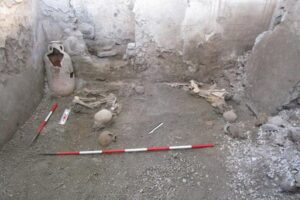
Scientists discovered two skeletons in the ruins of a Pompeii building and concluded that their deaths must have been caused by wall collapses triggered by earthquakes. Image: Pompeii Archaeological Park.

Earthquakes May Have Amplified Vesuvius Eruption’s Deadly Toll on Pompeii

The remains of the most sophisticated prehistoric native civilization north of Mexico are preserved at Cahokia Mounds State Historic Site in Illinois. Archaeologist Natalie Mueller's new study casts doubt on a popular theory about why the ancient city was abandoned.

New study adds to mystery of Cahokia exodus

Artist's impression of Denisovan family near cave opening

Ancient Human Species Thrived on Tibetan Plateau for 160,000 Years

Hundreds of huge stone statues known as moai built by earlier residents are taken by some as evidence of a onetime much larger population.

Easter Island’s Ingenious Rock Gardens Sustained Stable Population, Challenging “Ecocide” Narrative

Detail from the reconstructed stone tzompantli, or skull rack, at Chichén Itzá.

Surprising Insights into Child Sacrifice at Ancient Maya City of Chichén Itzá

A generated image showing an ancient Maya ballcourt with an inset of four plants – morning glory, lancewood, chili peppers, and jool leaves – arranged in a ceremonial offering

Ancient Maya Ballcourt Reveals Ceremonial Offerings of Hallucinogenic and Medicinal Plants

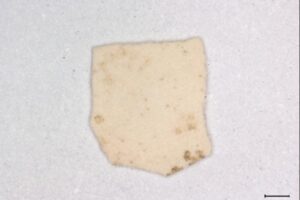
An eggshell fragment from the site of Bash Tepa, representing one of the earliest pieces of evidence for chickens on the Silk Road

When did the chicken cross the road? New evidence from Central Asia

The facial reconstruction of Emperor Wu who was ethnically Xianbei

Ancient DNA reveals the appearance of a 6th century Chinese emperor

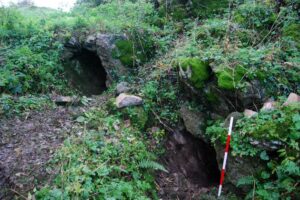
Killuragh Cave, County Limerick, Ireland.

Unearthing Ancient Dental Secrets: How Our Ancestors’ Mouths Differed from Our Own

A bustling London street scene in the late medieval or Tudor period (around 14th-16th century).In the foreground, depict a group of three magnificent horses, clearly taller and more robust than the surrounding ones.

Medieval Supercars: Elite Horses Imported to London from Across Europe, Study Reveals

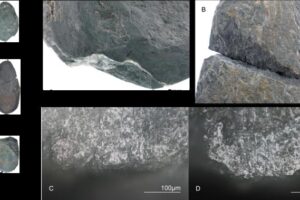
Characteristic macroscopic (top) and microscopic (bottom) traces might be used to determine how stone edges were used.

Scientists try out stone age tools to understand how they were used

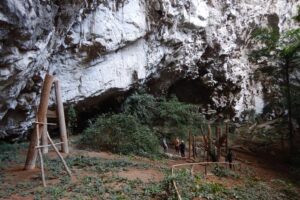
Caves and rock shelters dot the mountains in the northwestern highlands of Thailand. Over 40 in Mae Hong Son province contain wooden coffins on stilts, dating back 1,000 - 2,300 years.

Ancient Whispers from the Coffins: DNA Unravels Secrets of Thailand’s Iron Age People

wooly mammoth

Researchers chronicle lifetime travels of a single woolly mammoth which wandered the north more than 14,000 years ago

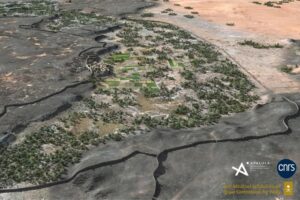
Digital reconstruction of the rampart network from the northern section of the Khaybar walled oasis 4,000 years ago.

Discovery of immense fortifications dating back 4,000 years in north-western Arabia

Older posts
Newer posts
← Previous Page1 Page2 Page3 Page4 Next →
Substack subscription form sign up

Comments

  • Karoly Mirnics on Common Prescription Drugs May Disrupt Cholesterol Pathways in the Womb and Raise Autism Risk
  • Aizen on Laziness helped lead to extinction of Homo erectus
  • Norwood johnson on Electrons in New Crystals Behave as If They Live in Four Dimensions
  • ScienceBlog.com on Hidden Geometry Could Finally Fix Quantum Computers
  • Theo Prinse on America Is Going Back to the Moon. This Time, It Plans to Stay
© 2026 ScienceBlog.com | Follow our RSS / XML feed