Skip to content
ScienceBlog.com
  • Featured Blogs
    • EU Horizon Blog
    • ESA Tracker
    • Experimental Frontiers
    • Josh Mitteldorf’s Aging Matters
    • Dr. Lu Zhang’s Gondwanaland
    • NeuroEdge
    • NIAAA
    • SciChi
    • The Poetry of Science
    • Wild Science
  • Topics
    • Brain & Behavior
    • Earth, Energy & Environment
    • Health
    • Life & Non-humans
    • Physics & Mathematics
    • Social Sciences
    • Space
    • Technology
  • Our Substack
  • Follow Us!
    • Bluesky
    • Threads
    • FaceBook
    • Google News
    • Twitter/X
  • Contribute/Contact

bacteria

a healthy senior adult smiling and waving to a group of young children (aged 2-5) playing together

Grandparents at Risk: Close Contact with Young Kids Linked to Pneumonia-Causing Bacteria

Artsy representation of human eye

Natural Compound Effective as Disinfectant for Contact Lenses

sperm illustration

Semen microbiome health may impact male fertility

artist's conception of an acne vaccine vial

Groundbreaking Research Paves the Way for Acne Vaccine

Bacterial swarm on a laboratory plate.

Bacteria store memories and pass them on for generations

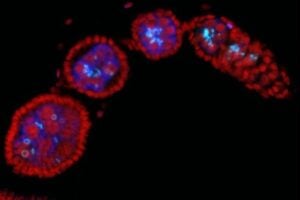
A mei-P26 mutant Drosophila melanogaster ovariole infected with wMel bacterial symbionts. DNA is stained in red, anti-Vasa protein is stained blue, and anti-Hu-li tai shao ring canal protein is stained cyan.

Bacteria can enhance host insect’s fertility

Toes. Pixabay

Skin behind the ears and between the toes can host a collection of unhealthy microbes

Small harbor with spilled oil in water

“Oil-eating” microbes reshape oil droplets to accelerate hydrocarbon biodegradation

Researchers found rubber and plastic wristbands had higher bacterial counts than metal ones.

Common wristbands ‘hotbed’ for harmful bacteria including E. coli, staphylococcus

Kitchen sponges. Pixabay

Bacteria in kitchen may not be as harmful as you think

Erik Kristiansson, Professor, Department of Mathematical Sciences, Chalmers University of Technology and the University of Gothenburg, Sweden

New study finds that antibiotic resistance genes are widespread in our environment

C difficile

The right cocktail of gut enzymes can stop c. diff in its tracks

Newer posts
← Previous Page1 Page2
Substack subscription form sign up

Comments

  • Karoly Mirnics on Common Prescription Drugs May Disrupt Cholesterol Pathways in the Womb and Raise Autism Risk
  • Aizen on Laziness helped lead to extinction of Homo erectus
  • Norwood johnson on Electrons in New Crystals Behave as If They Live in Four Dimensions
  • ScienceBlog.com on Hidden Geometry Could Finally Fix Quantum Computers
  • Theo Prinse on America Is Going Back to the Moon. This Time, It Plans to Stay
© 2026 ScienceBlog.com | Follow our RSS / XML feed