Skip to content
ScienceBlog.com
  • Featured Blogs
    • EU Horizon Blog
    • ESA Tracker
    • Experimental Frontiers
    • Josh Mitteldorf’s Aging Matters
    • Dr. Lu Zhang’s Gondwanaland
    • NeuroEdge
    • NIAAA
    • SciChi
    • The Poetry of Science
    • Wild Science
  • Topics
    • Brain & Behavior
    • Earth, Energy & Environment
    • Health
    • Life & Non-humans
    • Physics & Mathematics
    • Social Sciences
    • Space
    • Technology
  • Our Substack
  • Follow Us!
    • Bluesky
    • Threads
    • FaceBook
    • Google News
    • Twitter/X
  • Contribute/Contact

drug development

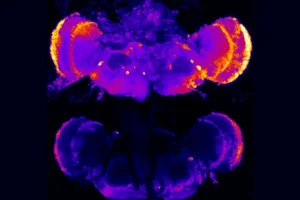
Mutations in the presenilin gene, PSEN1, causes early onset of Alzheimer’s disease in humans and in fruit flies modified to have this gene. A new study led by researchers at Penn State revels that disrupting heparan sulfate–modified proteins in fruit flies suppressed neuronal death and corrected other cell deficits common in early stages of Alzheimer’s and other neurodegenerative diseases. Pictured here are full fruit fly brains, stained with a marker that indicates cell death—brighter colors indicate higher presence of cell death. Top: A fly with deficits in the presenilin gene—a model for Alzheimer’s disease—with high levels of cell death. Bottom: A fly rescued by disrupting heparan sulfate–modified proteins.

Potential new target for early treatment of Alzheimer’s disease

A digital illustration showing a blood vessel with flowing red blood cells and a magnified view of the new anticoagulant molecule binding to thrombin

Anticoagulant with Built-In “Antidote” Promises Safer Blood Thinning

ai created antibiotic drawing

AI-Designed Antibiotics Show Promise in Fighting Resistant Bacteria

Credit: Catherine Boush, Broad Communications

Researchers Engineer Multi-Tailed mRNA, Unlocking Potential for Longer-Lasting Gene Therapies

red blood cells

Drug candidate may ‘unmask’ latent HIV-infected cells, mark them for destruction

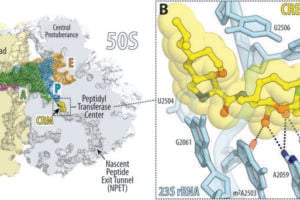
Overview and close-up of cresomycin bound to the bacterial ribosome of Thermus thermophilus.

New synthetic molecule cresomycin highly effective against drug-resistant superbugs

glioblastoma illustration

Early, promising glioblastoma treatment

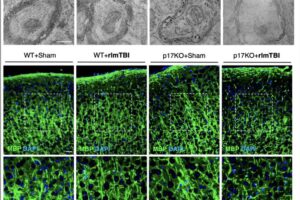
The p17 transporter in mice

Drug could protect brains from damage after concussions

A woman looking sad

Newly identified genes for depression may lead to new treatments

Senior man wearing headphones

Drug could prevent hearing loss from loud music and aging

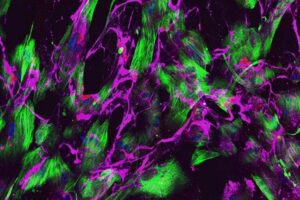
Disease mural cells stained for calponin (mural cells marker, green), collagen IV (magenta) and DAPI (nuclei, blue) Credit: Alessandra Granata/University of Cambridge

Lab-grown ‘small blood vessels’ point to potential treatment for major cause of stroke and vascular dementia

Predicting analgesic compounds based on a two amino acids peptide to treat chronic pain (image credit: Drs. Ulises Santiago and Samantha Perez-Miller)

New compound outperforms pain relievers

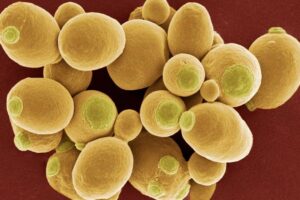
Genetically engineered yeast cells can be used to produce the naturally occurring substance, alstonine, which has shown promising results in terms of being used in the treatment of mental disorders. Photo: Steve Gschmeissner.

Yeast cells can produce drugs for treatment of psychotic disorders

Scientist at a computer research cannabis

Can cannabis-based meds help people manage oral cancer pain?

Older posts
Newer posts
← Previous Page1 Page2 Page3 Page4 Next →
Substack subscription form sign up

Comments

  • Marie Feret on The Silent Frequency That Makes Old Buildings Feel Haunted
  • Dax on The Silent Frequency That Makes Old Buildings Feel Haunted
  • Karoly Mirnics on Common Prescription Drugs May Disrupt Cholesterol Pathways in the Womb and Raise Autism Risk
  • Aizen on Laziness helped lead to extinction of Homo erectus
  • Norwood johnson on Electrons in New Crystals Behave as If They Live in Four Dimensions
© 2026 ScienceBlog.com | Follow our RSS / XML feed