Skip to content
ScienceBlog.com
  • Featured Blogs
    • EU Horizon Blog
    • ESA Tracker
    • Experimental Frontiers
    • Josh Mitteldorf’s Aging Matters
    • Dr. Lu Zhang’s Gondwanaland
    • NeuroEdge
    • NIAAA
    • SciChi
    • The Poetry of Science
    • Wild Science
  • Topics
    • Brain & Behavior
    • Earth, Energy & Environment
    • Health
    • Life & Non-humans
    • Physics & Mathematics
    • Social Sciences
    • Space
    • Technology
  • Our Substack
  • Follow Us!
    • Bluesky
    • Threads
    • FaceBook
    • Google News
    • Twitter/X
  • Contribute/Contact

Marine Biology

Juvenile crown-of-thorns starfish pictured with coral.

Reef-devouring predator survives coral bleaching and feasts on the survivors

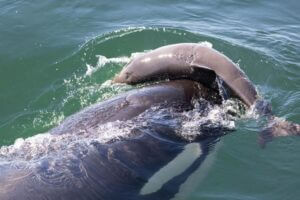
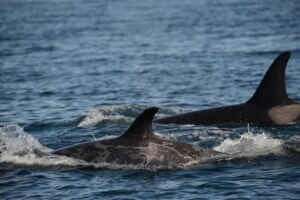
A killer whale in the Salish Sea is observed harassing a porpoise, a behavior that has long perplexed scientists. A study from Wild Orca and UC Davis' SeaDoc Society investigate what may be behind it.

Why are killer whales harassing and killing porpoises without eating them?

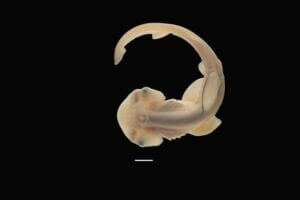
A baby hammerhead during development with a nascent hammerhead snout.

A look at how monsters form: How the hammerhead gets its hammer

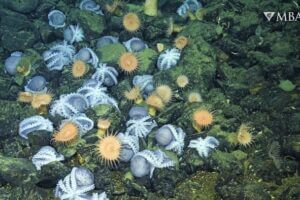
An aggregation of female pearl octopus (Muusoctopus robustus) nesting at the Octopus Garden, located near Davidson Seamount off the Central California at a depth of approximately 3,200 meters. Researchers used MBARI's advanced technology to confirm pearl octopus gather at the Octopus Garden to mate and nest. Warm water from hydrothermal springs accelerates development of octopus embryos, giving young octopus a better chance of survival.

Why thousands of octopus migrate to deep-sea thermal springs

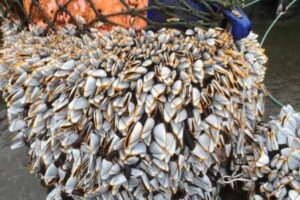
The buoy used to collect barnacles to conduct the growth experiment for this study.

Barnacles may help reveal location of lost Malaysia Airlines flight MH370

Ohio State logo

In Florida, endangered coral finds a way to blossom

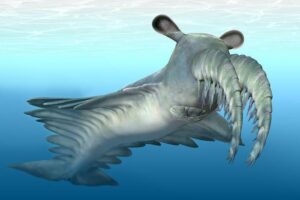
Apex predator of the Cambrian likely sought soft over crunchy prey

Ancient Sea Scourge Not So Fearsome After All

Scientists from SeaDoc Society, a UC Davis veterinary program, are concerned about gray patches observed on the skin of endangered southern resident killer whales.

Skin disease in endangered killer whales concerns scientists

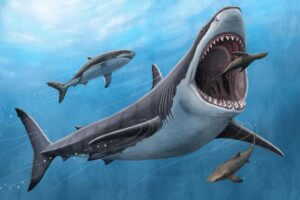
Megalodons, which went extinct 3.6 million years ago, are believed to have grown to lengths of 50 feet.

Megalodon, the Largest Marine Predator, Had Warm-Blooded Qualities that Contributed to its Extinction

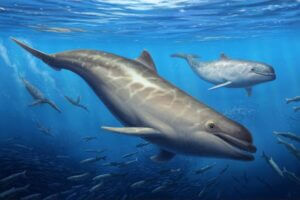
A new species of early toothed whale

New Species of Ancient Toothed Whale Unveiled: Olympicetus thalassodon

Oceans to get better protection with connected underwater technology

Influenced by light, biological rhythms say a lot about health

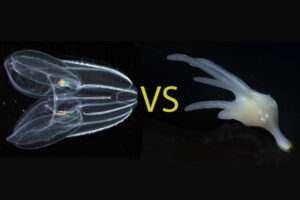
Scientists have long debated whether comb jellies (left) or sponges (right) are the sister group to all other animals. A detailed comparison of the chromosomes of these and other animals to the chromosomes of three single-celled non-animal groups finally resolves the question. (Photos courtesy of MBARI)

What did the earliest animals look like?

Fewer births due to lack of food are bad news for the right whale species

Right whales losing serious weight due to climate change

Older posts
Newer posts
← Previous Page1 Page2 Page3 Page4 Next →
Substack subscription form sign up

Comments

  • Karoly Mirnics on Common Prescription Drugs May Disrupt Cholesterol Pathways in the Womb and Raise Autism Risk
  • Aizen on Laziness helped lead to extinction of Homo erectus
  • Norwood johnson on Electrons in New Crystals Behave as If They Live in Four Dimensions
  • ScienceBlog.com on Hidden Geometry Could Finally Fix Quantum Computers
  • Theo Prinse on America Is Going Back to the Moon. This Time, It Plans to Stay
© 2026 ScienceBlog.com | Follow our RSS / XML feed