Skip to content
ScienceBlog.com
  • Featured Blogs
    • EU Horizon Blog
    • ESA Tracker
    • Experimental Frontiers
    • Josh Mitteldorf’s Aging Matters
    • Dr. Lu Zhang’s Gondwanaland
    • NeuroEdge
    • NIAAA
    • SciChi
    • The Poetry of Science
    • Wild Science
  • Topics
    • Brain & Behavior
    • Earth, Energy & Environment
    • Health
    • Life & Non-humans
    • Physics & Mathematics
    • Social Sciences
    • Space
    • Technology
  • Our Substack
  • Follow Us!
    • Bluesky
    • Threads
    • FaceBook
    • Google News
    • Twitter/X
  • Contribute/Contact

Medical Technology

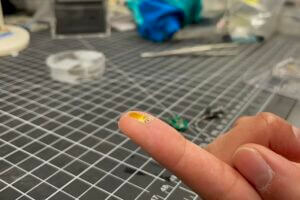
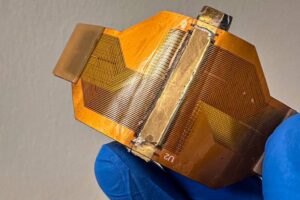
A small ultrasound sticker, worn on the skin, can monitor the stiffness of organs deep inside the body. The MIT-developed sensor could detect signs of disease such as liver and kidney failure, and the progression of solid tumors. Credits:Image: Courtesy of the researchers

This ultrasound sticker senses changing stiffness of deep internal organs

Postdoctoral researcher Caitlyn Seim takes measurements with a participant in the clinical trial. (Image credit: Andrew Brodhead)

Vibrating glove helps stroke patients recover from muscle spasms

Electric current. Pixabay

Twice daily electrical stimulation may boost mental processes in Alzheimer’s disease

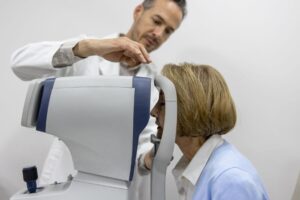
Women getting eyes checked

Eye scans provide crucial insights into kidney health

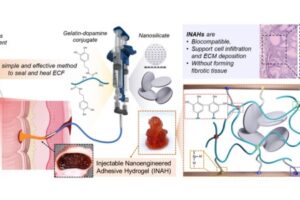
infographic about gel

Innovative gel offers new hope for treating gastrointestinal leaks

Woman sitting next to car that hit her while riding her bicycle

Eye-safe laser technology to diagnose traumatic brain injury

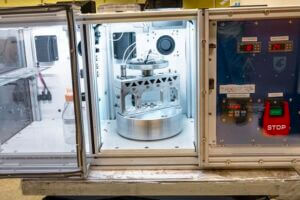
A minifridge-sized bioreactor developed by Washington State University researchers is able to manufacture cancer-killing white blood cells at 95% of the maximum growth rate – about 30% faster than current technologies.

Machine can quickly produce white blood cells for cancer treatment

A figure illustrating how a “closed-loop” implant called HAMMR (short for “hybrid advanced molecular manufacturing regulator”) will be used to treat recurrent ovarian cancer. The implant, which is small enough to be implanted with minimally invasive surgery, is being developed by a Rice University-led team of researchers from eight universities and two companies in seven states. The Advanced Research Projects Agency for Health awarded $45 million to fast-track development of the implant, which includes funding for a first-phase clinical trial within five years.

Feds fund research that could slash US cancer deaths by 50%

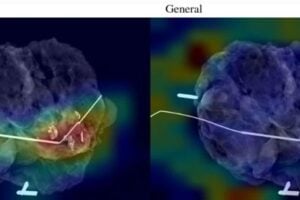
Analysis of pixel importance for radiology-specific and general models. Red/yellow indicates higher importance.

A new AI model has been developed to improve accuracy of breast cancer tumor removal

The tiny temperature implant is soft, flexible, and stretchable, conforming to the soft tissues of the kidney.

First device to monitor transplanted organs detects early signs of rejection

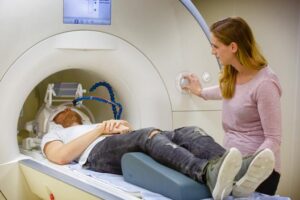
man in mri

Brain signals transformed into speech through implants and AI

I smell ... Covid.

Dogs can detect COVID-19 infections faster and more accurately than conventional technology, demonstrating readiness for mainstream medical applications

Brain. Pixabay

New concussion headset shows when it’s safe to return to play

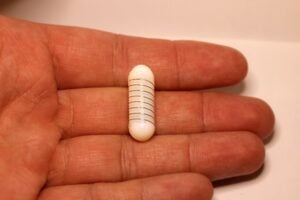
An ingestible capsule that delivers an electrical current can stimulate the release of the hormone ghrelin. Developed at MIT, the capsule could prove useful for treating diseases that involve nausea or loss of appetite, such as anorexia or cachexia. Credits:Image: Courtesy of the researchers

Ingestible “electroceutical” capsule stimulates hunger-regulating hormone

Older posts
Newer posts
← Previous Page1 Page2 Page3 Next →
Substack subscription form sign up

Comments

  • Norwood johnson on Electrons in New Crystals Behave as If They Live in Four Dimensions
  • ScienceBlog.com on Hidden Geometry Could Finally Fix Quantum Computers
  • Theo Prinse on America Is Going Back to the Moon. This Time, It Plans to Stay
  • george w on Hidden Geometry Could Finally Fix Quantum Computers
  • Tom Hughes on Years of Exercise, Blood Pressure Drugs Failed to Slow Cognitive Decline in Seniors at Dementia Risk
© 2026 ScienceBlog.com | Follow our RSS / XML feed