Skip to content
ScienceBlog.com
  • Featured Blogs
    • EU Horizon Blog
    • ESA Tracker
    • Experimental Frontiers
    • Josh Mitteldorf’s Aging Matters
    • Dr. Lu Zhang’s Gondwanaland
    • NeuroEdge
    • NIAAA
    • SciChi
    • The Poetry of Science
    • Wild Science
  • Topics
    • Brain & Behavior
    • Earth, Energy & Environment
    • Health
    • Life & Non-humans
    • Physics & Mathematics
    • Social Sciences
    • Space
    • Technology
  • Our Substack
  • Follow Us!
    • Bluesky
    • Threads
    • FaceBook
    • Google News
    • Twitter/X
  • Contribute/Contact

Quantum Computing

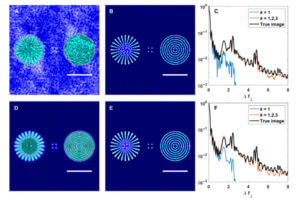
Insets (A) and (D) use classical information only. Insets (B) and (E) combine classical and quantum information.

Algorithm fuses quantum and classical information for high-quality imaging

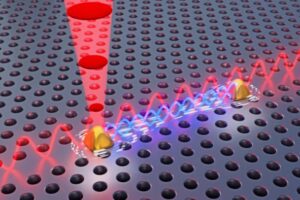
Illustration of two a chip comprising two entangled quantum light sources

Quantum physicists make major advance in entanglement

Researchers have found a way to create much stronger interactions between photons and electrons, in the process producing a hundredfold increase in the emission of light from a phenomenon called Smith-Purcell radiation. Credits:Courtesy of the researchers

Researchers increase light emission through photon-electron interaction

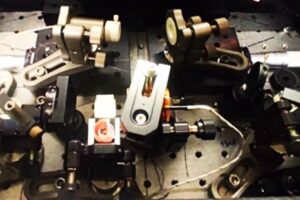
The optical parametric oscillator (OPO) used in the study

Researchers build light source with two entangled light beams

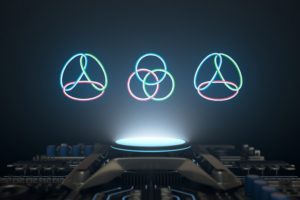
In Borromean rings, each circle holds the pattern together by passing through the other two circles.

A peculiar protected structure links Viking knots with quantum vortices

Newer posts
← Previous Page1 … Page3 Page4
Substack subscription form sign up

Comments

  • Karoly Mirnics on Common Prescription Drugs May Disrupt Cholesterol Pathways in the Womb and Raise Autism Risk
  • Aizen on Laziness helped lead to extinction of Homo erectus
  • Norwood johnson on Electrons in New Crystals Behave as If They Live in Four Dimensions
  • ScienceBlog.com on Hidden Geometry Could Finally Fix Quantum Computers
  • Theo Prinse on America Is Going Back to the Moon. This Time, It Plans to Stay
© 2026 ScienceBlog.com | Follow our RSS / XML feed