
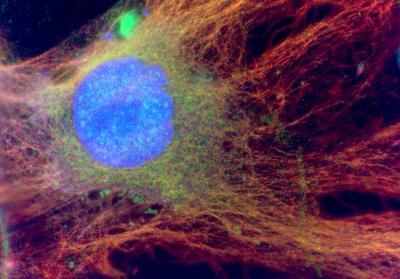
In most cases of amyotrophic lateral sclerosis (ALS), or Lou Gehrig’s disease, a toxin released by cells that normally nurture neurons in the brain and spinal cord can trigger loss of the nerve cells affected in the disease, Columbia researchers reported today in the online edition of the journal Neuron.
The toxin is produced by star-shaped cells called astrocytes and kills nearby motor neurons. In ALS, the death of motor neurons causes a loss of control over muscles required for movement, breathing, and swallowing. Paralysis and death usually occur within 3 years of the appearance of first symptoms.
The report follows the researchers’ previous study, which found similar results in mice with a rare, genetic form of the disease, as well as in a separate study from another group that used astrocytes derived from patient neural progenitor cells. The current study shows that the toxins are also present in astrocytes taken directly from ALS patients.
“I think this is probably the best evidence we can get that what we see in mouse models of the disease is also happening in human patients,” said the study’s senior author, Serge Przedborski, MD, PhD, the Page and William Black Professor of Neurology (in Pathology and Cell Biology), Vice Chair for Research in the Department of Neurology, and co-director of Columbia’s Motor Neuron Center.
The findings also are significant because they apply to the most common form of ALS, which affects about 90 percent of patients. Scientists do not know why ALS develops in these patients; the other 10 percent of patients carry one of 27 genes known to cause the disease.
ScienceBlog.com has no paywalls, no sponsored content, and no agenda beyond getting the science right. Every story here is written to inform, not to impress an advertiser or push a point of view.
Good science journalism takes time — reading the papers, checking the claims, finding researchers who can put findings in context. We do that work because we think it matters.
If you find this site useful, consider supporting it with a donation. Even a few dollars a month helps keep the coverage independent and free for everyone.