

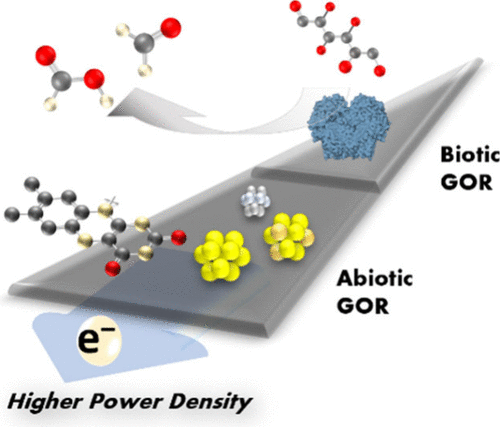
Household batteries rarely draw inspiration from breakfast. A new prototype does, tapping vitamin B2 and simple glucose to move electrons with surprising force. In ACS Energy Letters, a Pacific Northwest National Laboratory team reports a vitamin mediated glucose flow cell that rivals early metal based systems on power output while avoiding scarce catalysts.
Flow batteries store energy in liquid electrolytes that circulate through a cell. Here the anolyte carries glucose and a riboflavin mediator, while the cathode side uses either potassium ferricyanide for measurement or oxygen for practical operation. The riboflavin, a stand in for metabolic cofactors like FAD, shuttles electrons between sugar molecules and the electrode under alkaline conditions. The result is a chemical to electrical handoff that happens at room temperature and ambient pressure.
The claim is not modest. With oxygen at the cathode, the device reached a peak power density of 13 mW/cm2 at room temperature, which the authors say is 20 times higher than a comparable alkaline glucose system using methyl viologen. In ferricyanide tests, the team observed voltages near 1.0 to 1.2 V during discharge and polarization behavior consistent with a mediator that can be chemically recharged by glucose in the bulk solution. That is the high leverage idea. Let the liquid fuel regenerate the liquid catalyst, then extract the electrons at the electrode.
“When pairing with an O2 electrode under alkaline conditions, the glucose flow cell achieves a peak power density of 13 mW/cm2, 20 times greater than the previously reported value under similar conditions.”
Glucose has long tempted battery researchers. It is abundant, storable, and safe. The catch is kinetics. Direct oxidation of glucose on carbon is sluggish, so prior abiotic cells leaned on noble metals. This group replaces those with riboflavin 4′-phosphate, which flips between reduced and oxidized forms as it ferries charge. The authors quantify an activation period, essentially a state of charge of the mediator, that raises open circuit voltage as the glucose driven reduction proceeds in the dark. They also track side chemistry. In strong base, riboflavin can dimerize over longer rests, shifting reduction potentials. They mitigate light driven self discharge by wrapping cells in foil, and they document how oxygen ingress to the anolyte hurts performance by prematurely oxidizing the mediator.
How The Vitamin Mediator Lifts Power
Mechanistically, the mediator lowers the activation barrier for the glucose oxidation reaction. In the electrolyte, glucose reduces riboflavin to a charged form. At the anode, that charged riboflavin is oxidized, releasing two electrons per cycle. The team reports pseudo first order kinetics for the mediator glucose reaction with a rate constant of about 0.1 M^-1 s^-1 under their conditions, slower than enzyme catalysis but adequate for flow cell operation. Under constant current, discharge capacity scales with lower current density and with temperature, as expected when chemical regeneration competes with electrochemical depletion. Product analysis by NMR and HPLC indicates formate and acetone among the major products, suggesting C C bond cleavage pathways rather than the usual gluconic acid route.
The oxygen cathode matters too. Using a commercial non precious metal ORR electrode, the device delivered 13 mW/cm2 peak power in ambient air with alkaline electrolyte, and the authors show that flow rate and oxygen reduction kinetics cap performance in the current hardware. A hybrid catholyte with manganese EDTA and ferrocyanide lifts voltage at the same current density, hinting that better ORR management could free more of the anode side potential for useful work.
“Using non-toxic components that are both inexpensive and naturally abundant, this system offers a promising pathway toward safer and more affordable residential energy storage.”
What It Could Mean For Home Storage
Residential batteries need safety, low cost, and scalability. A sugar vitamin system checks those boxes on materials. The numbers remain modest next to lithium ion, but flow batteries solve a different problem. Tank size determines energy. Cell area determines power. If engineering advances push oxygen reduction and light stability further, a glucose flow battery could serve as long duration storage fed by inexpensive biomass derived sugar or industrial glucose streams. It helps that the cell runs at room temperature and uses carbon electrodes.
Caveats apply. The oxygen version lags ferricyanide in kinetics. Light can degrade riboflavin and trigger self discharge. Strong base is unfriendly outside lab settings. Yet the authors outline straightforward fixes. Keep photons out, tune mediator concentration and rest time to raise open circuit voltage, and redesign gas handling to improve ORR rates. The conceptual picture is crisp. A benign molecule carries charge where metals once stood, turning a pantry staple into an energy carrier that a household system could, one day, circulate in quiet loops.