

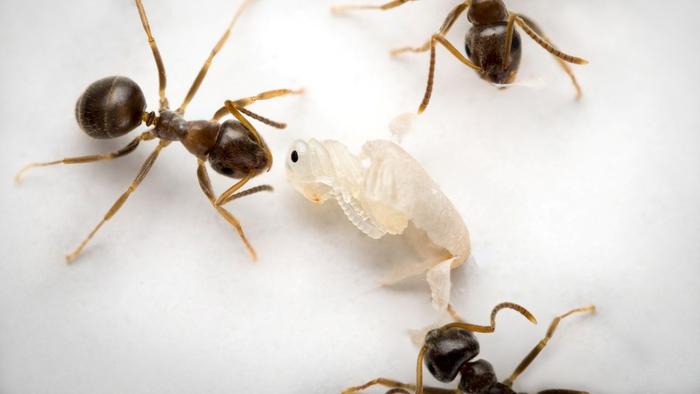
Most of us would probably try to downplay an illness, but for ant pupae, the best way to protect family is to scent their own death. Researchers at IST Austria have found that when young ants catch a truly deadly infection, they sound an invisible chemical alarm. The result isn’t a rescue. It’s a swift and surprisingly brutal culling, as worker ants treat their siblings with a dose of acid that wipes out both the pupae and the lurking pathogen. Over 400 invasive garden ant pupae played a role in this unusual drama, detailed in a new Nature Communications study.
The Price of Keeping the Colony Safe
Ant colonies run like finely-tuned machines, and every piece has its job—even if that job turns tragic. Most social animals try to hide when they’re sick; losing social status can mean death. But ant broods flip the script: when illness wins out and recovery is hopeless, worker-destined pupae emit a telltale surface scent. Think of it as a red flag pinned to their bodies. It’s not a wafting nest-wide warning, but a targeted signal just for the caretakers nearby.
The response is as practical as it is cruel: workers unpack the pupa from its cocoon, cut it open, and rub it down with formic acid. This acid, an ant specialty, doesn’t just clean—it kills both the infected ant and the fungus. If this chemical SOS is smeared onto healthy ants, workers don’t hesitate; the signal alone is enough to trigger their assassination protocol.
“What appears to be self-sacrifice at first glance is, in fact, also beneficial to the signaler: it safeguards its nestmates, with whom it shares many genes,” Erika Dawson, first author, said.
There’s a twist: only worker pupae ever send out the chemical alarm. Queen pupae, the future mothers of the colony, have a beefed-up immune system. Even massive infection doses can’t knock them out, and they never set off the signal. The colony invests in its future, not just its present—the healthiest, most vital ants get a chance to fight.
Why Ants Don’t Just Go Away to Die
Some older ants, when sick, simply wander away and die outside, minimizing risk to the group. But young, immobile brood can’t take that escape route. Instead, they need help—a “find-me and eat-me” chemical that attracts their nestmates for one final job. Dawson and colleagues figured out the scent itself—a spike in two cuticular hydrocarbon compounds—that set the workers moving. The alarm is precise: only terminal cases get flagged, and healthy or resilient individuals stay below the radar.
The kicker: the standard for a “chemical kill order” is high. Worker pupae have to be caught in a losing battle against infection before sending up the flare. Queen pupae, running robust internal defenses, crush the fungus on their own. It’s a literal chemical test of strength—fail, and the colony steps in to save itself, at your expense.
“This precise coordination between the individual and colony level is what makes this altruistic disease signaling so effective,” group leader Sylvia Cremer said.
So what does all this chemical drama mean outside the ant world? Social immunity systems, where group-level behavior mimics the immune response inside bodies, are everywhere. From white blood cells to quarantine rules, nature has figured out how to spot—and often sacrifice—the few to save the many. Ants just do it with a distinctive style, using signals invisible to us but vital to their way of life.
If you’re an ant, it’s not about hiding illness. It’s about making sure your colony, your genes, and your future survive—even if you don’t.