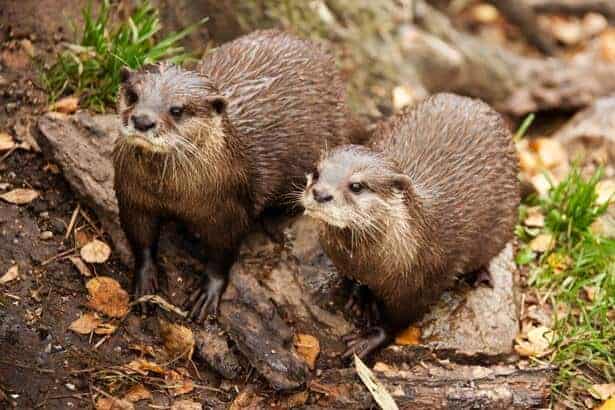
They dine where they defecate, swim where they hunt, and swallow prey crawling with parasites. North American river otters in Maryland’s Chesapeake Bay may not follow our hygiene rules, but their eating habits reveal a surprisingly important ecological role.
In a new study published in Frontiers in Mammal Science, Smithsonian Environmental Research Center scientists offer the first detailed look at these otters’ diets, latrine sites, and the parasites they consume—showing how their feeding behavior could help maintain balance in local food webs.
From Docks to Beaches, Otters Leave Clues in Scat
Elusive and mostly nocturnal, river otters are rarely spotted in the wild. Instead, researchers tracked them by locating “latrines,” shoreline sites where otters gather to eat, socialize, and leave scat. Over 11 months, the team identified 18 active latrines along the Rhode River near Edgewater, Maryland. While many were on natural beaches and riverbanks, five turned up on manmade structures such as docks, boardwalks, and even shoreline staircases.
“It is shocking how little information there is about their biology and ecology,” said Katrina Lohan, co-author and head of SERC’s Coastal Disease Ecology Lab.
These sites were hotspots of otter activity, often marked by flattened vegetation, woody debris, and easy access to open water. Researchers collected 90 scat samples, using gloves and sterile tools to prevent contamination, then analyzed them under microscopes and with genetic metabarcoding techniques.
What’s on the Menu? Fish, Crabs, and the Occasional Duck
DNA analysis revealed that finfish and crustaceans dominated the otter diet, making up 93 percent of all prey items. Blue crabs (Callinectes sapidus) and mummichogs (Fundulus heteroclitus) were among the top catches. Otters also dined on frogs, worms, and occasional birds, including ducks. Notably, they consumed two invasive species—the common carp and the southern white river crayfish—which could help curb their spread in the Bay.
- 93% of prey were finfish and crustaceans
- Amphibians, worms, and birds made up the rest
- Invasive common carp and white river crayfish appeared in scat
- Blue crabs were the single most common prey species
The team found that genetic testing identified more species than traditional microscopy, especially soft-bodied or small-scaled fish like catfish and gobies, which are hard to spot in digested remains.
Parasites: An Unlikely Benefit
Scat analysis also uncovered a diverse cast of parasites, including trematodes (flukes), monogeneans, myxozoans, and dinoflagellates. Most infected the otters’ prey, not the otters themselves. This could actually be an advantage for the ecosystem, as otters may remove sick or parasite-laden fish from the population, reducing disease spread and potentially making healthier prey populations more resilient.
“While parasites have negative impacts on individuals, they are extremely important in food webs,” Lohan said. “It is possible that river otters, like other top predators, wouldn’t be able to find enough food to eat without parasites.”
A few parasites, such as roundworms and certain apicomplexans, were likely infecting the otters directly. None of the parasites found were known to infect humans, though some were close relatives of human pathogens. As otters move into urban and suburban waterways, scientists note they could serve as “disease sentinels” for environmental monitoring.
Why This Matters for Chesapeake Bay
River otters are apex predators in estuarine habitats, influencing fish and crustacean populations through both direct predation and indirect effects like parasite removal. Their diet also highlights the mix of native and invasive species present in the Bay, offering clues for fisheries and conservation management.
The research underscores how non-invasive monitoring of latrines can reveal hidden ecological connections. “As mammals, river otters may be disease sentinels that we can study to learn more about environmental risks to humans,” said lead author Calli Wise, a research technician at SERC.
Looking Ahead
Future studies will expand beyond the Rhode River to other subestuaries in the Chesapeake, aiming to capture seasonal shifts in diet and parasite presence. With their playful antics and unbothered approach to messy meals, these otters could prove to be key allies in keeping the Bay’s ecosystems healthy—even if their table manners leave something to be desired.
Journal: Frontiers in Mammal Science
DOI: 10.3389/fmamm.2025.1620318
Discover more from Wild Science
Subscribe to get the latest posts sent to your email.