

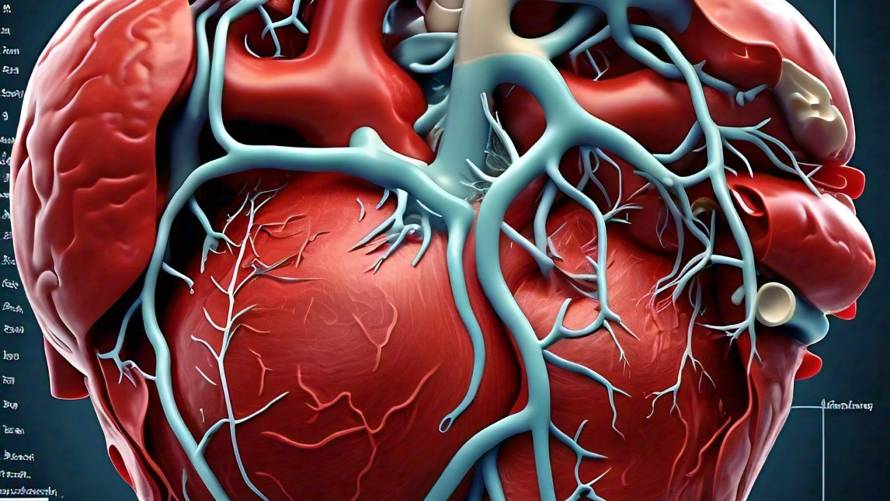
When surgeons reconnected just a fraction of the vagus nerve to hearts in a new study, they expected modest improvements at best. What they found was closer to a biological threshold: hearts with even 20 percent of their nerve fibers restored kept nearly normal function, while fully cut-off hearts aged rapidly. They built up scar tissue, lost strength, and developed the jerky motion typical of organs decades older. The finding, published in Science Translational Medicine, suggests the heart doesn’t need a complete conversation with the brain to stay young. It just needs enough signal to listen.
The research team at Sant’Anna School in Pisa tracked animal hearts for four months after cutting the vagus nerve during surgery. This mimics what happens routinely during transplants and major chest operations. Untreated hearts showed clear decline. Hearts reconnected with a tiny tube kept nearly perfect performance despite the limited regrowth—frankly surprising the researchers who expected the benefits to scale with the number of restored fibers.
Why the Right Branch Matters More Than Anyone Thought
The vagus nerve splits into two main branches going into the chest. The left mainly controls heart rate—the obvious function doctors have long understood. The right branch does something subtler and apparently more crucial: it acts directly on heart muscle cells to prevent cell aging, working apart from any rhythm effects.
When this connection is lost, heart cells get increased stress and scarring. That speeds up the biological clock. The study used advanced MRI to measure how well heart walls moved. Even limited nerve reconnection stopped the jerky contractions typical of early heart failure. The protected hearts kept smooth wall movement while cut-off hearts developed the choppy motion that eventually leads to pump failure.
“When the integrity of the connection to the vagus nerve is lost, the heart ages more rapidly,” Vincenzo Lionetti explains.
What makes this mechanism striking is its efficiency. The vagus input appears to work more like a control signal than direct command. A small amount of communication stops widespread cell breakdown. The heart seems to run on a binary: enough signal to maintain balance, or too little signal leading to rapid decline.
The Tube That Disappears
The nerve tube is a sleeve made from chitosan—a biodegradable polymer from shellfish—reinforced with 3D-printed mesh. It provides a stable channel through the moving tissue of the chest, guiding nerve fibers as they grow back toward the heart while blocking scar tissue from stopping the path. Over several months, the body absorbs the material fully. What remains is a restored connection between brain and heart.
Designing something that works in the chest presents unique challenges. Constant heart and lung motion means rigid structures block organ movement while overly flexible materials collapse under stress. Traditional nerve repair methods fail in this setting. The Sant’Anna team solved this by creating a structure porous enough for blood flow but stable enough to keep its channel despite the surrounding motion.
The clinical implications are direct. Roughly 3,500 heart transplants occur in the US each year, and tens of thousands more patients undergo chest surgeries that sever vagal connections. Current practice treats this nerve damage as unavoidable when accessing the heart. If surgeons began repairing vagal connections at the time of initial operations, they might prevent the gradual heart decline many patients experience years later. The approach would shift heart surgery from managing late problems toward stopping the initial cell damage that builds up when the heart-brain dialogue stops.
The study didn’t address how long the protection lasts or whether the effect holds in older hearts with existing damage. Those questions remain open as the technology moves toward human trials.
Science Translational Medicine: 10.1126/scitranslmed.aea4306