

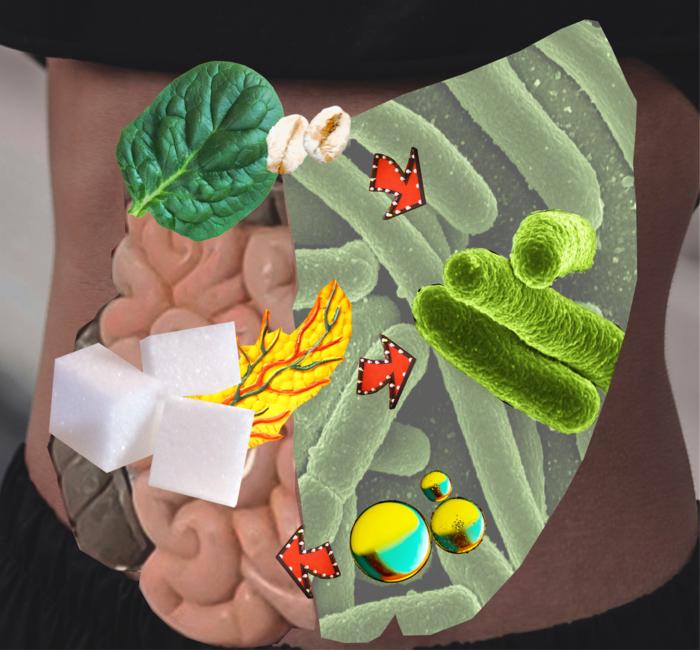
In a surprising twist to what we know about our relationship with the trillions of microbes living in our intestines, researchers have discovered that our bodies actively feed sugar directly to gut bacteria—a previously unknown biological exchange that challenges conventional understanding of how we coexist with our microbial partners.
The discovery, published March 3 in Communications Medicine by a team from Kobe University, reveals that glucose—the body’s primary energy source—is continuously secreted from our bloodstream directly into the intestine, where resident bacteria transform it into essential compounds our bodies need but cannot produce themselves.
This finding overturns the long-held belief that gut bacteria primarily subsist on undigested dietary fiber and opens new possibilities for treating metabolic disorders like diabetes.
Sugar Secretion: A Two-Way Street
Using advanced imaging techniques developed specifically for this research, the team observed that glucose is actively excreted from the bloodstream into the jejunum—part of the small intestine—and then moves through the intestinal tract to the large intestine.
“It was surprising to find that even individuals not taking metformin exhibited a certain level of glucose excretion into the intestine. This finding suggests that intestinal glucose excretion is a universal physiological phenomenon in animals, with metformin acting to enhance this process,” explains OGAWA Wataru, an endocrinologist at Kobe University who led the study.
The researchers made this discovery while investigating how metformin—the world’s most widely prescribed diabetes medication—works in the body. Previous observations had hinted that metformin somehow increased glucose accumulation in the intestine, but the mechanism remained elusive.
Through careful measurements in both humans and mice, the team found that metformin increases this natural glucose excretion nearly fourfold. The effect occurs regardless of whether subjects have diabetes, suggesting this is an enhancement of a normal biological process rather than a correction of disease.
Bacteria Transform Our Gift Into Something We Need
The study further revealed what happens to this glucose once it enters the intestine. As it travels through the gut, bacteria metabolize the sugar into short-chain fatty acids—compounds vital for numerous bodily functions, from providing energy to intestinal cells to regulating immune responses.
“The production of short-chain fatty acids from the excreted glucose is a huge discovery. While these compounds are traditionally thought to be produced through the fermentation of indigestible dietary fibers by gut microbiota, this newly identified mechanism highlights a novel symbiotic relationship between the host and its microbiota,” Ogawa notes.
Using mice injected with specially labeled glucose molecules (containing the stable isotope carbon-13), the researchers tracked how the sugar was transformed into short-chain fatty acids in the intestine. When they administered antibiotics to kill gut bacteria, this conversion stopped, confirming that microbes were responsible for the transformation.
Quantifying the Exchange
The scale of this glucose secretion is substantial. The researchers calculated that in people not taking metformin, the body excretes approximately 0.41 grams of glucose per hour into the intestine. In those taking metformin, this increases to about 1.65 grams per hour—roughly 20% of the total glucose output by the liver during fasting.
For comparison, this amount is similar to the glucose excreted in urine by patients taking SGLT2 inhibitors, another class of diabetes drugs that work by causing the kidneys to remove sugar from the bloodstream.
To put these findings in perspective, the researchers used advanced bioimaging techniques to precisely track glucose movement. They monitored radioactively labeled glucose (fluorodeoxyglucose or FDG) using a combination of positron emission tomography (PET) and magnetic resonance imaging (MRI)—creating a novel method they called PET-MRE (magnetic resonance enterography).
Implications for Health and Disease
This newly discovered glucose pathway may help explain some of metformin’s beneficial effects beyond blood sugar control. The drug has been associated with improved gut health and changes in the microbiome composition, which might partly result from its enhancement of this natural feeding process.
The findings could also open new avenues for treating metabolic disorders by targeting the mechanisms that control glucose secretion into the intestine or by directly modulating how gut bacteria process this glucose.
“Intestinal glucose excretion represents a previously unrecognized physiological phenomenon. Understanding the underlying molecular mechanisms and how drugs interfere with this process could lead to the development of novel therapeutics aimed at the regulation of gut microbiota and their metabolites,” Ogawa says.
While the exact mechanism of how glucose is transported from the bloodstream into the intestine remains unclear, the researchers suspect it may involve glucose transporter proteins that are known to be influenced by metformin.
A Two-Way Relationship
This study adds an important dimension to our understanding of the human-microbiome relationship. Rather than simply providing a habitat for bacteria and benefiting from their metabolic outputs, it appears our bodies actively contribute resources to support microbial communities.
The research reveals a more complex and interdependent relationship than previously recognized—one where we directly feed our microbial partners, who in turn produce compounds essential for our health.
As the researchers continue to explore this pathway, they hope to reveal how other diabetes medications might influence this process and potentially develop new therapeutic approaches that leverage this newly discovered aspect of our relationship with gut microbes.
For now, the discovery serves as a reminder of how much we still have to learn about the intricate biological exchanges happening within our bodies every day—and how the line between “us” and the microbes we host continues to blur as science advances.