

Every breath you take, every beat of your heart, the simple fact that you are conscious and reading these words right now, all of it depends on a fistful of nerve cables buried deep inside your brainstem. These bundles of white matter, each one a tightly packed highway of fat-coated nerve fibres, carry the signals that keep you alive. And until very recently, we had almost no way of seeing them clearly in a living person.
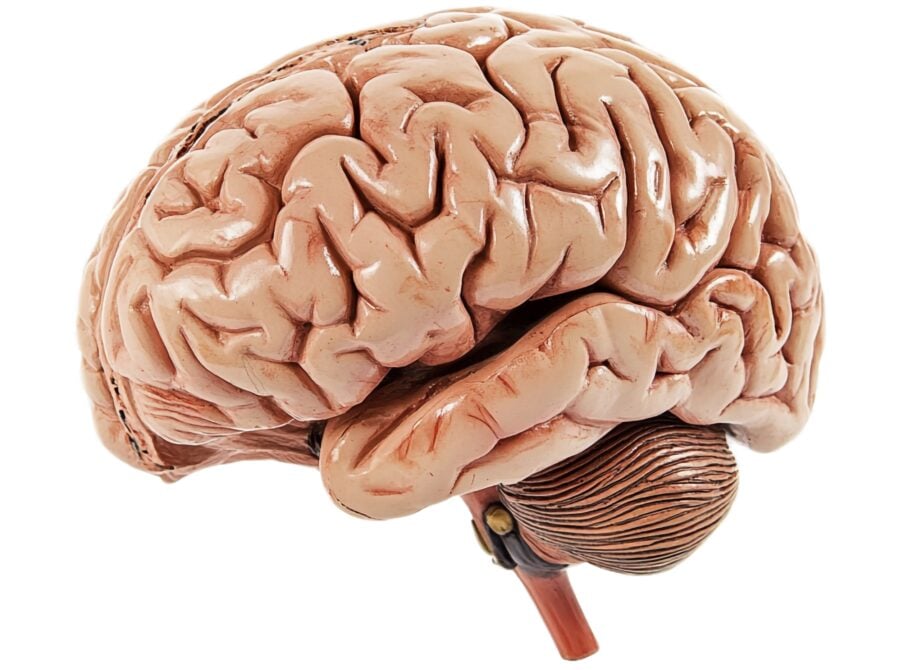
The brainstem sits at the base of the brain, roughly where your skull meets your spine, a compact stalk no bigger than your thumb that punches well above its weight. It orchestrates breathing, sleep, heart rate, consciousness. Damage even a small part of it and the consequences can be catastrophic. Yet for all its importance, brain imaging has largely treated this region as a blurry afterthought. “The brainstem is a region of the brain that is essentially not explored because it is tough to image,” says Mark Olchanyi, a doctoral candidate at MIT. “People don’t really understand its makeup from an imaging perspective.”
The trouble is partly one of size (the individual bundles are tiny) and partly one of noise. Every heartbeat sends a pulse of fluid sloshing through the brainstem, and every breath shifts it slightly, creating artefacts that muddy the picture in diffusion MRI scans. Existing algorithms could pick out the big motorways of the brain, things like the corticospinal tracts that run from cortex to spinal cord, but the smaller routes threading through the brainstem? Those have remained stubbornly invisible to automated tools.
Now Olchanyi and colleagues at MIT, Harvard and Massachusetts General Hospital have built software that changes this. Their BrainStem Bundle Tool, or BSBT, can automatically identify eight distinct white matter bundles in the brainstem from a standard diffusion MRI scan, no manual tracing required. The work, published in the Proceedings of the National Academy of Sciences, represents a kind of cartographic breakthrough for one of the brain’s most vital and least understood territories.
To build BSBT, the team took a somewhat indirect approach. Rather than trying to trace bundles directly within the brainstem itself, where the signal is poor, the algorithm follows fibre pathways that plunge into the brainstem from neighbouring structures above it, the thalamus and the cerebellum, to produce what the researchers call a probabilistic fibre map. An AI module, a convolutional neural network, then combines this map with other imaging data from within the brainstem to distinguish the eight individual bundles. Think of it as triangulating the position of underground cables by tracking where the wires enter the ground from above.
Training the network required showing it 30 scans from volunteers in the Human Connectome Project, each one painstakingly annotated by hand. Olchanyi then validated the results against dissections of post-mortem brains where the bundles had been precisely delineated under the microscope, essentially the gold standard. “We put the neural network through the wringer,” says Olchanyi. “We wanted to make sure that it’s actually doing these plausible segmentations and it is leveraging each of its individual components in a way that improves the accuracy.”
And in test after test, the tool held up. When 40 volunteers were scanned twice, about two months apart, BSBT found the same bundles in the same locations each time, with high reliability scores across nearly all eight structures. The team also systematically disabled individual components of the algorithm (a process called ablation testing) to check that each part was genuinely contributing. Removing the probabilistic fibre map, for instance, caused the biggest drop in accuracy, confirming that this indirect mapping strategy was doing the heavy lifting.
But the real promise lies in what BSBT can reveal about disease. The team applied their tool to brain scans from patients with Parkinson’s disease, multiple sclerosis, Alzheimer’s and traumatic brain injury, comparing each group to healthy controls. In every condition, distinct patterns of change emerged in specific bundles. Parkinson’s patients showed reduced structural integrity in three of the eight bundles, with further volume loss appearing in a fourth bundle over a two-year follow-up. In MS, the pattern was different: four bundles showed integrity reductions and three lost volume, consistent with the demyelination that characterises the disease. Patients with traumatic brain injury didn’t show significant volume loss in any bundles, but the majority displayed signs of microstructural damage. Even in Alzheimer’s, where brainstem involvement is thought to be relatively modest, one bundle connecting arousal nuclei to the hippocampus showed measurable volume reduction.
Perhaps the most striking case involved a 29-year-old man who suffered a severe traumatic brain injury that left him in a coma. MRI scanning seven days after his injury revealed a large haemorrhage running along the entire midsagittal extent of his midbrain, the sort of lesion that typically means a poor long-term outcome. But when Olchanyi applied BSBT to the scans, something unexpected emerged. The brainstem bundles had been displaced, shoved aside by the bleeding, but they hadn’t been severed. Over the following seven months, as the man gradually regained consciousness, communication and partial independence, follow-up scans showed the lesion shrinking to roughly a third of its original volume and the displaced bundles shifting back towards their normal positions.
That single case hints at where this technology might prove most valuable. The brainstem controls whether you wake up or stay in a coma, whether you breathe on your own or need a ventilator, yet clinicians currently have few tools for assessing the fine-grained state of its wiring after an injury. Emery N. Brown, a co-senior author of the study and a professor at MIT’s Picower Institute, puts the stakes plainly: “The brainstem is one of the body’s most important control centers … By enhancing our capacity to image the brainstem, he offers us new access to vital physiological functions such as control of the respiratory and cardiovascular systems, temperature regulation, how we stay awake during the day and how we sleep at night.”
BSBT is freely available and the team have released their code publicly. It won’t replace existing diagnostic methods on its own, and the researchers are careful to position it as a complement to established imaging tools rather than a standalone diagnostic. But the ability to track individual brainstem bundles over time, watching which ones degrade and which ones heal, opens up possibilities that simply weren’t available before. For a region of the brain that controls so much of what keeps us alive, we have been navigating largely in the dark. That is starting to change.
Study link: https://www.pnas.org/doi/10.1073/pnas.2509321123