Skip to content
ScienceBlog.com
  • Featured Blogs
    • EU Horizon Blog
    • ESA Tracker
    • Experimental Frontiers
    • Josh Mitteldorf’s Aging Matters
    • Dr. Lu Zhang’s Gondwanaland
    • NeuroEdge
    • NIAAA
    • SciChi
    • The Poetry of Science
    • Wild Science
  • Topics
    • Brain & Behavior
    • Earth, Energy & Environment
    • Health
    • Life & Non-humans
    • Physics & Mathematics
    • Social Sciences
    • Space
    • Technology
  • Our Substack
  • Follow Us!
    • Bluesky
    • Threads
    • FaceBook
    • Google News
    • Twitter/X
  • Contribute/Contact

Josh Mitteldorf

Josh Mitteldorf studies evolutionary theory of aging using computer simulations.The surprising fact that our bodies are genetically programmed to age and to die offers an enormous opportunity for medical intervention. It may be that therapies to slow the progress of aging need not repair or regenerate anything, but only need to interfere with an existing program of self-destruction. Mitteldorf has taught a weekly yoga class for thirty years. He is an advocate for vigorous self care, including exercise, meditation and caloric restriction.After earning a PhD in astrophysicist, Mitteldorf moved to evolutionary biology as a primary field in 1996. He has taught at Harvard, Berkeley, Bryn Mawr, LaSalle and Temple University. He is presently affiliated with MIT as a visiting scholar.In private life, Mitteldorf is an advocate for election integrity as well as public health. He is an avid amateur musician, playing piano in chamber groups, French horn in community orchestras. His two daughters are among the first children adopted from China in the mid-1980s.Much to the surprise of evolutionary biologists, genetic experiments indicate that aging has been selected as an adaptation for its own sake. This poses a conundrum: the impact of aging on individual fitness is wholly negative, so aging must be regarded as a kind of evolutionary altruism. Unlike other forms of evolutionary altruism, aging offers benefits to the community that are weak, and not well focussed on near kin of the altruist. This makes the mechanism challenging to understand and to model.more at http://mathforum.org/~josh

Where did COVID-19 come from? Part 2

Where did COVID-19 come from?

Overreaction

The “Scientific World-view” Needs an Update

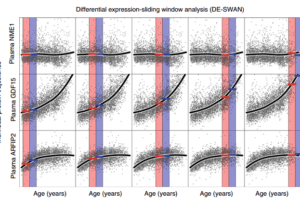
New Aging Clock based on Proteins in the Blood

Pulsed Yamanaka Factors Set Back Epigenic Age

Telomeres: The Longer the Better

Interview with Josh Mitteldorf

Aging illustration

Methylation Clocks and True Biological Age

1st Age Reversal Results—Is it HGH or Something Else?

Rejuvenation at the Cell Level

Money in Aging Research, Part II

Money in Aging Research, Part I

Eat Glutathione

Older posts
Newer posts
← Previous Page1 … Page7 Page8 Page9 … Page13 Next →
Substack subscription form sign up

Comments

  • Marco Messina on More Than a Third of Americans Have Lost Relationships Over Politics
  • Anon on Why Fructose Behaves Less Like a Calorie and More Like a Hormone
  • Mark Mellinger on Living Plastic Can Self-Destruct on Command
  • Marie Feret on The Silent Frequency That Makes Old Buildings Feel Haunted
  • Dax on The Silent Frequency That Makes Old Buildings Feel Haunted
© 2026 ScienceBlog.com | Follow our RSS / XML feed