

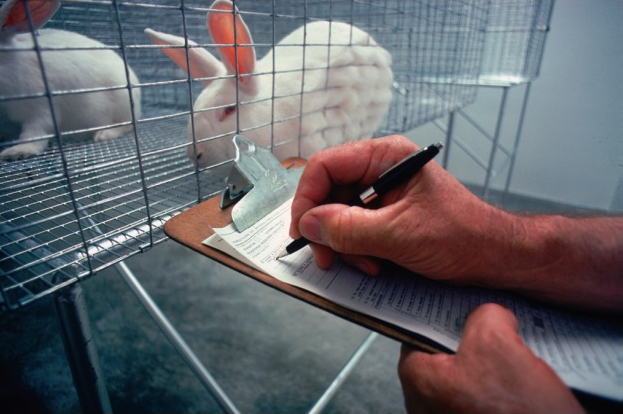
On a gray November morning in London, ministers, scientists, and animal welfare advocates did something rare: they all applauded the same announcement. The UK government unveiled a sweeping roadmap to phase out animal testing, promising to accelerate the shift toward humane, high-tech alternatives that could redefine modern science itself.
Backed by £75 million in new funding, the plan outlines a decade-long mission to replace regulatory animal testing with technologies such as organ-on-a-chip systems, artificial intelligence models, and 3D bioprinted tissues. These tools, built from real human cells and digital simulations, aim to replicate biology more faithfully than mice, rabbits, or dogs ever could. If fully realized, the initiative would not only spare animals but also make drug and chemical testing faster, cheaper, and more accurate.
A Turning Point for Science and Ethics
For decades, animal testing has been a painful compromise at the heart of biomedical progress. From vaccines to cancer drugs, animal experiments have saved lives, yet they have also sparked fierce ethical and scientific debates. Now, the UK’s Replacing Animals in Science Strategy, published November 11, 2025, signals a major cultural and technological pivot. It sets specific deadlines: by 2026, no animals will be used to test skin or eye irritation or sensitization; by 2027, mouse-based botulinum toxin (Botox) potency tests will end; and by 2030, pharmacokinetic studies on dogs and non-human primates will be substantially reduced.
Science Minister Lord Vallance, who will chair the new oversight committee, described the shift as a moral and scientific imperative. He said the government’s approach will ensure progress without sacrificing safety.
“Nobody in our country of animal lovers wants to see suffering and our plan will support work to end animal testing wherever possible and roll out alternatives as soon as it is safe and effective to do so,” said Lord Vallance.
The strategy’s architects insist it will not simply ban experiments overnight. Instead, it establishes a phased model that supports researchers with funding, validation, and regulatory clarity. The plan’s two new institutions, a Preclinical Translational Models Hub and a UK Centre for the Validation of Alternative Methods, will coordinate data, technology, and expertise to bring non-animal models from lab to law more quickly. A separate £15.9 million research call, jointly funded by the Medical Research Council, Innovate UK, and the Wellcome Trust, will advance human in vitro models of the liver, brain, cancer, pain, and vascular systems.
For researchers used to navigating decades-old protocols, the roadmap promises something radical: a predictable pathway to regulatory acceptance. That clarity could make the UK a magnet for innovation in a field poised to explode globally.
Rethinking How Science Tests Itself
The roadmap builds on Britain’s pioneering legacy through the National Centre for the Replacement, Refinement and Reduction of Animals in Research (NC3Rs), founded in 2004. The NC3Rs has already demonstrated that replacing animal tests with human-based systems can speed discovery and cut costs, while yielding more relevant results. But the new plan aims to knit those advances into national policy, tying scientific progress directly to ethical responsibility.
For advocates long frustrated by slow movement, the shift feels overdue. Barney Reed, Science and Policy Manager for the RSPCA, called the plan transformative.
“This strategy sets a clear ambition towards eliminating animal use and supports increased access to the infrastructure, collaborations and resources required to facilitate the further development and uptake of non-animal methods,” said Reed. “If supported and implemented effectively, the strategy should create a good foundation for accelerating the replacement of animals, which will be positive news for animals, science and society.”
Industry voices have also rallied behind the move. Pharmaceutical companies, often portrayed as slow to change, have been developing computational and cell-based toxicology systems for years. The Association of the British Pharmaceutical Industry (ABPI) described the plan as pragmatic, not ideological, a bridge between rigorous safety standards and modern innovation. As ABPI Chief Executive Richard Torbett noted, patient safety still depends on solid evidence, but new technologies can generate that evidence without pain or sacrifice.
Still, scientists caution that some complexity cannot yet be captured in glass and silicon. Whole-organism interactions, how a drug moves through metabolism, affects behavior, or triggers immune responses, remain challenging to simulate. That reality explains why the roadmap sets goals rather than bans, coupling ethical intent with technical humility. In its language and its structure, the plan reads less like a manifesto and more like a collaborative engineering blueprint.
The science behind these replacements is rapidly evolving. Organ-on-a-chip devices now mimic miniature versions of lungs, livers, and hearts, complete with bloodlike fluid flow. Artificial intelligence tools can predict chemical toxicity based on molecular structure and prior datasets. And 3D bioprinting techniques can now fabricate living tissue slices from human cells, creating experimental models so realistic that one researcher described them as “tiny avatars of ourselves.”
Each method, though powerful, faces its own hurdles: standardization, reproducibility, and regulatory recognition. The UK Centre for the Validation of Alternative Methods (UKCVAM) will focus precisely on these challenges, helping to ensure that once new approaches are proven, they can swiftly replace animal models in law and practice.
The plan also mandates transparency and training. Starting next year, early-career scientists will receive foundational education in non-animal methods, ensuring the next generation grows up fluent in both ethics and emerging technology. Lists of priority research areas will be published every two years beginning in 2026, keeping momentum and accountability high.
From an economic standpoint, the roadmap aligns animal welfare with national competitiveness. By reducing reliance on animal facilities and accelerating regulatory approval for safer alternatives, the government aims to strengthen the UK’s life sciences sector, which contributes over £90 billion annually to the economy. In an era when science policy often divides, this initiative has managed to unify cabinet ministers, charities, industry leaders, and the public around a shared vision of progress with conscience.
Baroness Hayman, the government’s Animal Welfare Minister, framed it simply: “By harnessing our scientific excellence, we can deliver real benefits for animal welfare while advancing innovative research that improves lives.”
Even the traditionally cautious Royal Society of Biology lent its endorsement, describing the strategy as both ambitious and realistic. That duality may prove its greatest strength. The roadmap acknowledges that animals will remain necessary for some time to come, but only until validated alternatives exist. It pledges that, wherever those alternatives emerge, regulation will adapt to make their use the default, not the exception.
For now, dogs and primates will still participate in pharmacokinetic testing, and mice will remain part of basic research. But the writing on the lab wall is clear. The government has committed to measurable progress, to independent oversight, and to public reporting of performance indicators. It has also rekindled a conversation that spans morality, science, and industry: what it means to innovate without harm.
As one NC3Rs scientist put it quietly after the announcement, the shift is not just about replacing animals in experiments, it is about redefining what counts as good science. If the UK delivers on this vision, future generations of researchers might never again need to justify the suffering of sentient beings in the name of knowledge.