

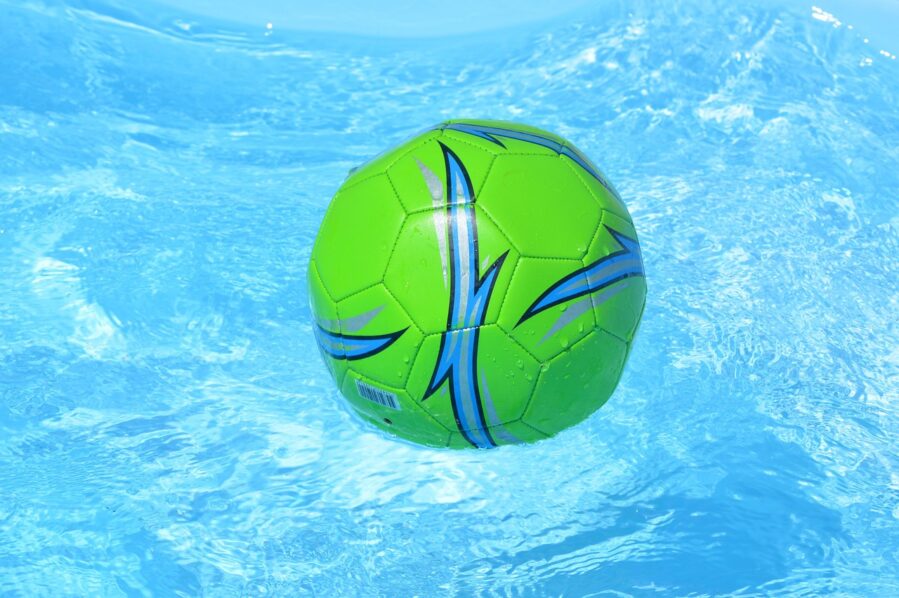
When you see a ball bounce down stairs, your brain processes it differently than when you see water cascading the same way.
A new MIT study has found that our brains draw a clear line between solid “things” like objects, and flowing “stuff” like liquids or sand. Specialized regions of the brain’s visual cortex light up for each, helping us understand, and interact with, the physical world around us.
Different Material, Different Brain Response
The study, published July 31 in Current Biology, reveals that both the brain’s ventral and dorsal visual pathways contain distinct regions that respond more strongly to either things or stuff. This marks the first time scientists have observed such a clear neural split between solid and nonsolid material processing.
“When you’re looking at some fluid or gooey stuff, you engage with it in different way than you do with a rigid object,” said senior author Nancy Kanwisher, professor of cognitive neuroscience at MIT. “With a rigid object, you might pick it up or grasp it, whereas with fluid or gooey stuff, you probably are going to have to use a tool to deal with it.”
The Experiment: Watching Things and Stuff
Lead author Vivian Paulun, now joining the University of Wisconsin at Madison, created more than 100 video clips showing solid and nonsolid materials in motion: sliding, bouncing, sloshing, and flowing. Participants watched these clips inside an fMRI scanner while the researchers tracked activity across their visual cortices.
Results showed that:
- The lateral occipital complex (LOC) responded strongly to both rigid and deformable objects
- The frontoparietal physics network (FPN) responded to both “stuff” and “things” but had distinct subregions for each
- Each visual pathway showed functional separation, with subregions favoring either solid or nonsolid material types
“We haven’t seen this before because nobody has asked that before,” Paulun said.
Why the Brain Might Need This Division
The study suggests the brain may process these categories similarly to artificial physics engines used in animation and video games. In those systems, solid objects are treated as meshes, while fluids are represented as particles. The researchers believe the human brain may use analogous mental algorithms.
Paulun noted, “Maybe the brain, similar to artificial game engines, has separate computations for representing and simulating ‘stuff’ and ‘things.'”
What’s Next for Brain and Material Research
Future studies will look at how these brain regions relate to motor planning, such as whether object-grasping circuits are linked with the areas that process rigid materials. Researchers also plan to explore how the brain handles specific features like fluid viscosity or object elasticity.
This line of work could reshape how we understand human perception, robotics, and even AI. Because at the end of the day, your brain doesn’t just see the world, it simulates how to act on it.
Journal: Current Biology
DOI: 10.1016/j.cub.2025.07.027
Article title: Dissociable Cortical Regions Represent Things and Stuff in the Human Brain
Published: July 31, 2025