

American parents are sounding the alarm about their children’s well-being. A new nationally representative poll from the University of Michigan Health C.S. Mott Children’s Hospital finds that two-thirds of parents believe kids’ physical health is worsening, and four in five say mental health is on the decline.
As the new school year begins, top concerns include the influence of social media, excessive screen time, and internet safety, along with nutrition and exercise. The Mott Children’s Hospital National Poll on Children’s Health, which surveyed over 2,000 parents of children ages 1 to 18, highlights how technology, lifestyle, and systemic issues are shaping the health landscape for U.S. families.
Technology Tops Parents’ Concerns
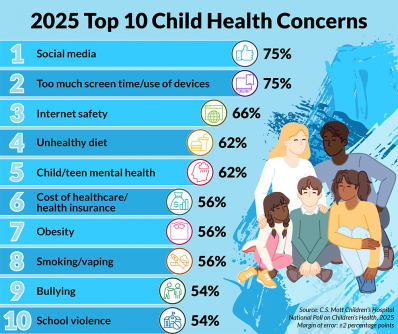
Parents ranked social media, screen time, and internet safety as the leading threats to child health. The poll’s co-director, pediatrician Susan Woolford, noted:
“Parents continue to express concern about the pervasive role of technology in their children’s lives. Excessive screen time and social media exposure are linked to poor sleep, less physical activity, and negative mental health outcomes, including anxiety, low self-esteem, and unhealthy social comparisons.”
Woolford emphasized that parents’ worries shift depending on the age of their children. Families with younger children often worry about attention and learning, while parents of teens cite concerns about self-image, peer pressure, and worldview.
Growing Awareness of Mental Health Struggles
The findings reflect a heightened recognition of child and teen mental health challenges. Mothers were more likely than fathers to rate mental health as a major issue, a difference researchers say may relate to caregiving roles and open conversations about emotions.
Parents’ concerns mirror wider public health trends. Rates of child depression and anxiety were rising even before the COVID-19 pandemic and accelerated in its aftermath. The poll suggests families are increasingly aware of these struggles in their own homes and communities.
Nutrition, Obesity, and Exercise on the Radar
Parents also expressed worries about physical health. Among the top issues:
- Unhealthy diet (No. 4)
- Obesity (No. 7)
- Lack of physical activity (No. 11)
Woolford explained that parents recognize the importance of healthy eating and regular exercise but may struggle to find accessible, affordable options that children accept. Time constraints, cost, and availability of safe spaces for activity add to the challenge.
Broader Concerns Beyond the Home
Beyond lifestyle issues, parents highlighted serious societal challenges. Over half identified guns and gun-related injuries as a top worry. Concerns about abduction, sex trafficking, and substance use were also widely cited. Systemic issues like lack of mental health services, poverty, child abuse, and healthcare costs ranked high on the list.
Nearly every parent said at least one area of child health was a major problem, with nearly two-thirds identifying ten or more concerns. Unequal access to healthcare and affordability of care stood out as issues that may intensify as policy changes reshape Medicaid coverage.
Looking Ahead
As children return to classrooms across the country, the poll underscores how many parents feel unprepared to navigate overlapping pressures of technology, mental health, physical well-being, and systemic inequities. The findings suggest a call to action for educators, healthcare providers, and policymakers to better support families.
Source: University of Michigan Health C.S. Mott Children’s Hospital National Poll on Children’s Health, published August 13, 2025.
