

Critics have spent decades insisting that popular music was abandoning storytelling in favor of mood and atmosphere. The evidence suggests they had it backward.
A computational analysis of more than 5,700 hit songs reveals that narrativity in pop lyrics has climbed steadily over the past 60 years, with the sharpest increases arriving not during folk music’s heyday but decades later, as hip-hop reshaped the charts.
Researchers at UC Berkeley trained a machine learning model to measure storytelling across songs from Billboard’s Year-End Hot 100 between 1960 and 2024. The model scored lyrics based on three narrative elements: distinct characters or agents, events unfolding in sequence, and concrete details that build an inhabitable world. After human annotators evaluated over 1,000 tracks to establish baseline judgments, the algorithm scaled up the analysis across six decades of popular music.
Average narrativity scores rose by more than a full point on a five-point scale from 1960 to the present. The steepest climb coincided with hip-hop’s commercial ascent starting in the 1990s. Among all genres, hip-hop scored highest for narrative density, followed by country. Disco and soul consistently emphasized feeling over plot, landing at the bottom of the rankings.
When the Algorithm Learned to Read Like a Literary Critic
David Bamman, an associate professor in Berkeley’s School of Information and the study’s first author, framed the challenge simply: “We wanted to see if computational methods could measure the stories that are present in songs in order to help us understand how storytelling in music has changed on a larger scale.” The team borrowed from literary theory to define what makes a lyric narrative rather than purely expressive. Clear agents, temporal progression, tangible settings. The model had to distinguish between a verse that sketches an emotional landscape and one that tracks specific people doing specific things.
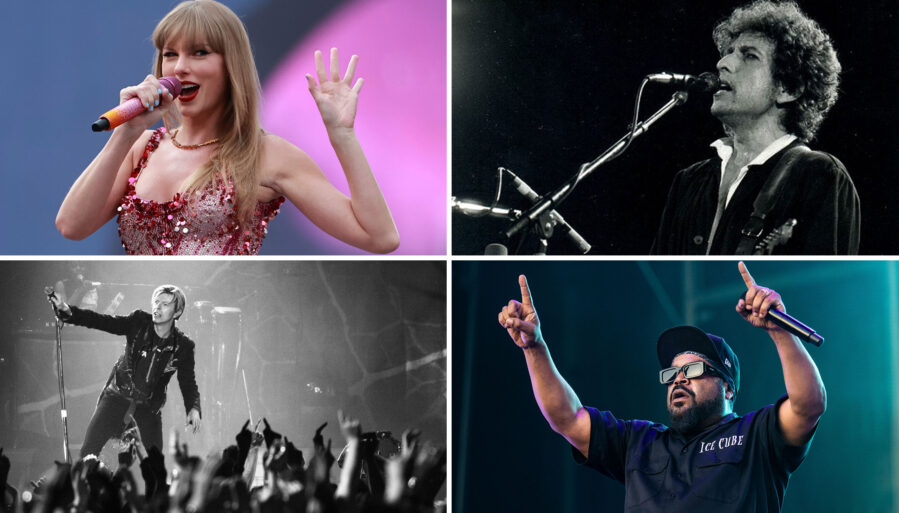
To test whether the results reflected genuine trends rather than algorithmic bias, the researchers ran validation checks. They verified that the machine learning model hadn’t simply invented patterns and confirmed that human annotators weren’t unconsciously favoring songs they recognized. The upward trend in narrativity held across both tests. Ice Cube’s “It Was a Good Day” ranked among the top five most narrative songs in the dataset, just ahead of Taylor Swift’s “All Too Well.” Both anchor emotion in concrete moments: a particular afternoon cruising through South Central Los Angeles, a scarf left behind in a drawer.
“Many of us are excited about the computational modeling of cultural data because it grounds claims that otherwise rely on small samples,” said Tom McEnaney, a Berkeley literary scholar and co-author of the study.
Country Music’s Grammy Problem
The analysis also exposed a divide within country music. Grammy-nominated Best Country songs displayed significantly higher narrativity than non-nominated tracks from the same albums, even when commercial performance was held constant. Storytelling, it seems, carries institutional prestige in at least one genre. The pattern suggests that industry gatekeepers reward narrative craft independently of a song’s chart success.
For McEnaney, the findings challenge entrenched ideas in literary theory that position lyric poetry as inherently non-narrative. Hip-hop, often celebrated as the most lyrically dense of modern genres, turns out to be one of popular music’s strongest storytelling forces. The 1960s folk revival remains culturally significant, but the data show that Dylan and Baez’s narrative legacy didn’t mark a peak. It marked a starting point for a much longer arc, one that accelerated as rappers brought character, sequence, and setting back to the center of popular songwriting. Rhyme and rhythm, the study implies, don’t compete with narrative structure. In contemporary pop, they amplify it.