

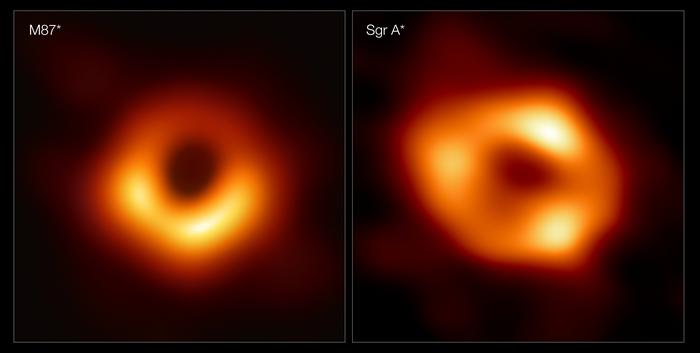
The two fuzzy doughnuts that stunned the world in 2019 and 2022, humanity’s first direct images of black holes, were revolutionary, but they captured only a moment. Gas swirls around these cosmic engines at nearly light speed, magnetic fields twist and snap, and spacetime itself warps under extreme gravity. None of that motion appeared in those static snapshots. Dr. Kazunori Akiyama, who helped create those landmark images, is now moving from MIT to Scotland with £4 million in funding to build something entirely different: 3D movies showing how black holes actually behave across time.
The project, called TomoGrav and hosted by Heriot-Watt University, brings together two distinct scientific communities. Akiyama co-led the imaging team for the Event Horizon Telescope Collaboration, which produced those first black hole photographs. Professor Yves Wiaux runs Heriot-Watt’s Biomedical and Astronomical Signal Processing Laboratory, where his team has developed artificial intelligence algorithms that reconstruct images from incomplete data. Their collaboration, supported by 10 international partners, aims to transform how scientists visualize the universe’s most extreme environments.
From snapshots to cinema
Black holes warp spacetime so severely that gas orbiting them reaches temperatures of millions of degrees. That superheated plasma generates magnetic fields strong enough to launch jets thousands of light years long—structures that appear to shape how galaxies form and evolve. Scientists can observe these jets from Earth, but the mechanism behind their formation remains hidden. Time-lapse 3D maps would reveal, for the first time, how magnetic fields channel energy from infalling matter into those enormous outflows.
The technique Akiyama and Wiaux are developing—dynamic gravitational tomography—will construct three-dimensional models of plasma flows around M87* and Sagittarius A*, the two black holes previously photographed. Rather than capturing a single moment, these reconstructions will show how structures evolve, tracking changes in magnetic field geometry and plasma density as matter spirals toward the event horizon.
“The first images of black holes were extraordinary steps forward, but they were only fragments of what these astronomical objects are doing,” Akiyama explains. “Instead of a single blurred frame, we will see how plasma moves, how magnetic fields evolve and how gravity shapes everything around the event horizon.”
The work depends on combining telescope observations with computational methods that fill gaps in incomplete data. Radio telescopes worldwide link together to form the Event Horizon Telescope, creating a virtual instrument the size of Earth. Even with that scale, the data arrives with holes—certain angles and frequencies go unobserved. Wiaux’s AI algorithms excel at turning partial information into coherent images, a capability the team plans to extend into the temporal dimension.
Measuring what matters
One immediate target: black hole spin. The rotation rate determines how much energy can be extracted from matter falling inward, which in turn controls the power output of those galaxy-spanning jets. Current measurements of spin remain indirect, inferred from X-ray emissions and other secondary effects. Mapping how plasma flows near the event horizon would provide the first direct spin measurements.
The team will also work with the proposed Black Hole Explorer mission, which aims to extend the Event Horizon Telescope into space and capture photon rings—light that has completed at least one full orbit around a black hole before escaping. Those rings encode information about spacetime curvature in the most extreme gravitational fields known to exist. Precisely mapping them would test Einstein’s general relativity with unprecedented rigor.
The same mathematical techniques that reconstruct black hole structure from sparse radio data can accelerate medical imaging. MRI and CT scans require patients to remain still while machines collect measurements from multiple angles. Reducing the number of measurements needed shortens scan times and lowers costs. The algorithms developed for TomoGrav will also improve Earth monitoring systems, particularly measurements of sea level and planetary rotation, where incomplete data remains a persistent challenge.
By the end of the five-year fellowship, Heriot-Watt expects to have delivered working technology for creating high-resolution 3D movies from upcoming telescope observations and designed optimal configurations for future space-based instruments. The arrival of both Akiyama and Professor Sera Markoff at Cambridge positions the UK to contribute meaningfully to a field that barely existed five years ago.