Skip to content
ScienceBlog.com
  • Featured Blogs
    • EU Horizon Blog
    • ESA Tracker
    • Experimental Frontiers
    • Josh Mitteldorf’s Aging Matters
    • Dr. Lu Zhang’s Gondwanaland
    • NeuroEdge
    • NIAAA
    • SciChi
    • The Poetry of Science
    • Wild Science
  • Topics
    • Brain & Behavior
    • Earth, Energy & Environment
    • Health
    • Life & Non-humans
    • Physics & Mathematics
    • Social Sciences
    • Space
    • Technology
  • Our Substack
  • Follow Us!
    • Bluesky
    • Threads
    • FaceBook
    • Google News
    • Twitter/X
  • Contribute/Contact

Biology

Mosquito

Mosquitoes hate coconut-scented soap

Bee flying mid-air

Buzzworthy Research Suggests Insect Brains May Help Us Understand Our Own

A new study explains how California blackworms can twist and curl around each other by the thousands, forming tightly wound balls and then untangling just as quickly. Credits:Image: Harry Tuazon

How to untangle a worm ball: Mathematicians solve a knotty mystery

Mudskipper CREDIT Georgia Tech

Mudskippers could be key to understanding evolution of blinking

Spiderweb with dew in the morning

Orb weaver spider glue properties evolve faster than their glue genes

A male yellow crazy ant (Anoplolepis gracilipes)

Male yellow crazy ants are real-life chimeras

Senior beautiful woman wearing casual t-shirt standing over isolated pink background showing arms muscles smiling proud. Fitness concept.

Getting around muscle aging

African frog on a bright green leaf. Photo Credit: Copyright 2010 by Eli Greenbaum

‘The Last of Us’ fungus attacking African amphibians

A mouse covering its eyes

Humans are not just big mice

Mosquito closeup

Humans bite back by deactivating mosquito sperm

A bee above a purple flower

Making Beelines

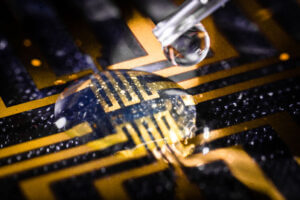
With the injectable gel the researchers were able to grow electrodes in living tissue. Here it is tested on a microfabricated circuit.

Researchers grow electrodes in living brain tissue

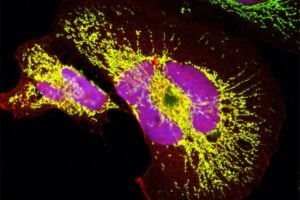
The microprotein in the mitochondria (green) and in the nucleus (blue) was overexpressed in human cells. The yellow and pink areas show that the signal of the microprotein overlaps with the mitochondrial and nuclear signals.

Evolution: Miniproteins appeared “from nowhere”

Closeup of ant with object in its jaws

These ants don’t just walk randomly; they “meander” systematically

Older posts
Newer posts
← Previous Page1 … Page3 Page4 Page5 Next →
Substack subscription form sign up

Comments

  • Karoly Mirnics on Common Prescription Drugs May Disrupt Cholesterol Pathways in the Womb and Raise Autism Risk
  • Aizen on Laziness helped lead to extinction of Homo erectus
  • Norwood johnson on Electrons in New Crystals Behave as If They Live in Four Dimensions
  • ScienceBlog.com on Hidden Geometry Could Finally Fix Quantum Computers
  • Theo Prinse on America Is Going Back to the Moon. This Time, It Plans to Stay
© 2026 ScienceBlog.com | Follow our RSS / XML feed