Skip to content
ScienceBlog.com
  • Featured Blogs
    • EU Horizon Blog
    • ESA Tracker
    • Experimental Frontiers
    • Josh Mitteldorf’s Aging Matters
    • Dr. Lu Zhang’s Gondwanaland
    • NeuroEdge
    • NIAAA
    • SciChi
    • The Poetry of Science
    • Wild Science
  • Topics
    • Brain & Behavior
    • Earth, Energy & Environment
    • Health
    • Life & Non-humans
    • Physics & Mathematics
    • Social Sciences
    • Space
    • Technology
  • Our Substack
  • Follow Us!
    • Bluesky
    • Threads
    • FaceBook
    • Google News
    • Twitter/X
  • Contribute/Contact

materials science

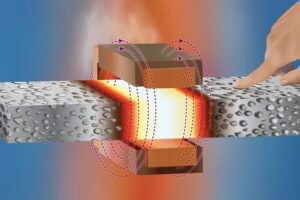
Composite metal foams (CMFs) being welded together

Welding metal foam without melting its bubbles

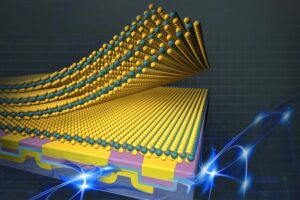
This artist’s rendition shows the newly developed integration platform. By engineering surface forces, researchers are able to directly integrate 2D materials into devices in a single contact-and-release step. Credits:Image: Courtesy of Sampson Wilcox/Research Laboratory of Electronics

Researchers safely integrate fragile 2D materials into devices

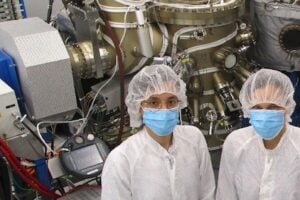
Graduate student Emine Bakali (left) and her supervisor Silke Paschen of TU Wien in front of the molecular beam epitaxy chamber of TU Wien’s clean room that was used for the growth of the YbRh2Si2 thin films. (Photo by Maxwell Andrews/TU Wien)

Unraveling the Puzzle of ‘Strange Metals’: Surprising Insights into Electric Charge Movement

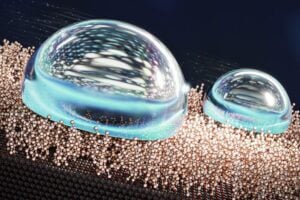
An artist's depiction of the liquid-like layer of molecules repelling water droplets.

Researchers create the most water-repellent surface ever

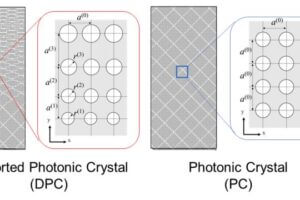
A conceptual image of the distorted photonic crystal and photonic crystal.

Photonic crystals bend light as though it were under the influence of gravity

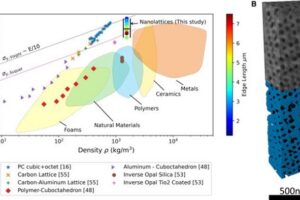
A graph comparing the nanolattice in this experiment to the relative strength of various materials

New glass made of DNA

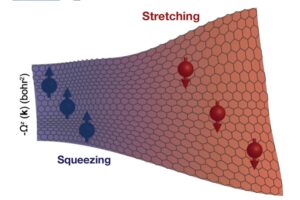
In a graphic representation of a two-dimensional material, squeezing and stretching leads to, respectively, positive and negative signs of the anomalous Hall effect, represented by arrows. Credits:Image: Hang Chi

New quantum magnet unleashes electronics potential

Sandia National Laboratories researcher Ryan Schoell uses a specialized transmission electron microscope technique developed by Khalid Hattar, Dan Bufford and Chris Barr to study fatigue cracks at the nanoscale.

‘Stunning’ discovery: Metals can heal themselves

Flying taxi. Pixabay

Developing new materials to accelerate the arrival of ‘air taxis’

Digital brain illustration. Pixabay

Quantum Computers Embrace Quantum Mechanics

Actuation of ferroelectric polymers driven by Joule heating. Credit: Qing Wang. All Rights Reserved.

New ferroelectric material could give robots muscles

Compressing this soft material blocks a wide range of wavelengths, including visible light (left), and stretching it out lets them through (right).

Squid-inspired soft material is a switchable shield for light, heat, microwaves

MIT engineers have synthesized a superabsorbent material that can soak up a record amount of moisture from the air, even in desert-like conditions. Pictured are the hydrogel discs swollen in water. Credits:Image: Gustav Graeber and Carlos D. Díaz-Marín

Engineers Develop Superabsorbent Material for Harvesting Water from Desert Air

A snapshot of a lattice of frustrated nanomagnets.

Nanomagnetic strings that wiggle and hook up

Older posts
Newer posts
← Previous Page1 Page2 Page3 Page4 Next →
Substack subscription form sign up

Comments

  • Karoly Mirnics on Common Prescription Drugs May Disrupt Cholesterol Pathways in the Womb and Raise Autism Risk
  • Aizen on Laziness helped lead to extinction of Homo erectus
  • Norwood johnson on Electrons in New Crystals Behave as If They Live in Four Dimensions
  • ScienceBlog.com on Hidden Geometry Could Finally Fix Quantum Computers
  • Theo Prinse on America Is Going Back to the Moon. This Time, It Plans to Stay
© 2026 ScienceBlog.com | Follow our RSS / XML feed